Want to increase kids' vegetable intake? Serving larger portions of vegetables may help!
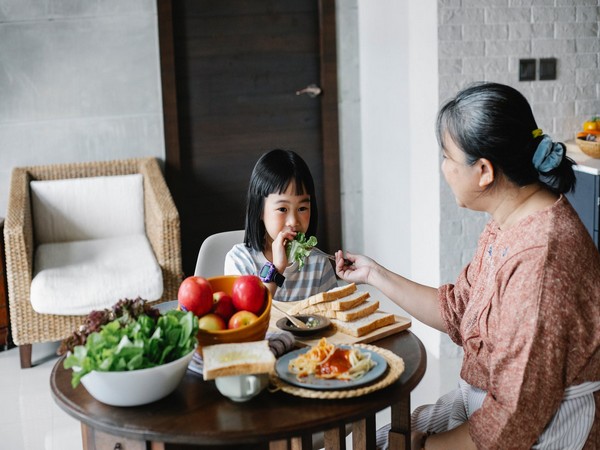
Washington [US], June 27 (ANI): Getting kids to eat enough vegetables can be quite a task, but a new Penn State study found that simply adding more veggies to their plates resulted in children consuming more vegetables during the meal.
ANI
Jun 27, 2021 20:09 IST

Washington [US], June 27 (ANI): Getting kids to eat enough vegetables can be quite a task, but a new Penn State study found that simply adding more veggies to their plates resulted in children consuming more vegetables during the meal.
The findings of the study were published in the journal 'Appetite'.
The researchers found that when they doubled the amount of corn and broccoli served at a meal -- from 60 to 120 grams -- the children ate 68 per cent more of the veggies or an additional 21 grams.
Seasoning the vegetables with butter and salt, however, did not affect consumption.
The daily recommended amount of vegetables for kids is about 1.5 cups a day, according to the official Dietary Guidelines for Americans as set by the US Departments of Agriculture and Health and Human Services.
"The increase we observed is equal to about one third of a serving or 12 per cent of the daily recommended intake for young children," said Hanim Diktas, a graduate student in nutritional sciences.
"Using this strategy may be useful to parents, caregivers and teachers who are trying to encourage kids to eat the recommended amount of vegetables throughout the day," added Diktas.
Barbara Rolls, Helen A. Guthrie Chair and director of the Laboratory for the Study of Human Ingestive Behavior at Penn State, said the findings support the MyPlate guidance from the US Department of Agriculture, which recommends meals high in fruits and vegetables.
"It's important to serve your kids a lot of vegetables, but it's also important to serve them ones they like because they have to compete with the other foods on the plate," Rolls said.
"Parents can ease into this by gradually exposing kids to new vegetables, cooking them in a way their child enjoys, and experimenting with different flavors and seasonings as you familiarize them," Rolls added.
According to the researchers, the majority of children in the US don't eat the recommended daily amount of vegetables, which could possibly be explained by children having a low preference for them. And while serving larger portions has been found to increase the amount of food children eat -- called the "portion size effect" -- kids tend to eat smaller amounts of vegetables in response to bigger portions compared to other foods.
For this study, the researchers were curious if increasing just the amount of vegetables while keeping the portions of other foods the same would help increase veggie consumption in kids. They also wanted to experiment with whether adding light butter and salt to the vegetables would increase their palatability and also affect consumption.
For the study, the researchers recruited 67 children between the ages of three and five. Once a week for four weeks, the participants were served lunch with one of four different preparations of vegetables: a regular-sized serving of plain corn and broccoli, a regular-sized serving with added butter and salt, a doubled serving of plain corn and broccoli, and a doubled serving with added butter and salt.
During each meal, the vegetables were served alongside fish sticks, rice, applesauce and milk. Foods were weighed before and after the meal to measure consumption.
"We chose foods that were generally well-liked but also not the kids' favorite foods," Rolls said.
"If you offer vegetables alongside, say, chicken nuggets you might be disappointed. Food pairings are something you need to be conscious of, because how palpable the vegetables are compared to the other foods on the plate is going to affect the response to portion size. You need to make sure your vegetables taste pretty good compared to the other foods," Rolls added.
After analyzing the results, the researchers found that while the larger portions of vegetables were associated with greater intake, the addition of butter and salt was not. The children also reported liking both versions -- seasoned and unseasoned -- about the same. About 76 per cent of kids rated the vegetables as "yummy" or "just ok."
"We were surprised that the butter and salt weren't needed to improve intake, but the vegetables we served were corn and broccoli, which may have been already familiar to and well-liked by the kids," Diktas said. "So for less familiar vegetables, it's possible some extra flavoring might help to increase intake."
Diktas said that while serving larger portions may increase vegetable consumption, it also has the potential to increase waste if kids don't eat all of the food that is served.
"We're working on additional research that looks into substituting vegetables for other food instead of just adding more vegetables," Diktas said.
"In the future, we may be able to give recommendations about portion size and substituting vegetables for other foods, so we can both limit waste and promote veggie intake in children," Diktas concluded. (ANI)
Get the App