

ADD ANI AS A TRUSTED SOURCE
googleads
ANI Logo
Menu
Health

Walking with a purpose is healthier than a casual stroll: Study

Washington D.C. [USA], August 16 (ANI): While taking a walk is helpful in maintaining physical fitness, a recent study has revealed that walking with a purpose - especially walking to get to work, makes people walk faster and consider themselves to be healthier.

ANI Aug 16, 2020 09:14 IST googleads

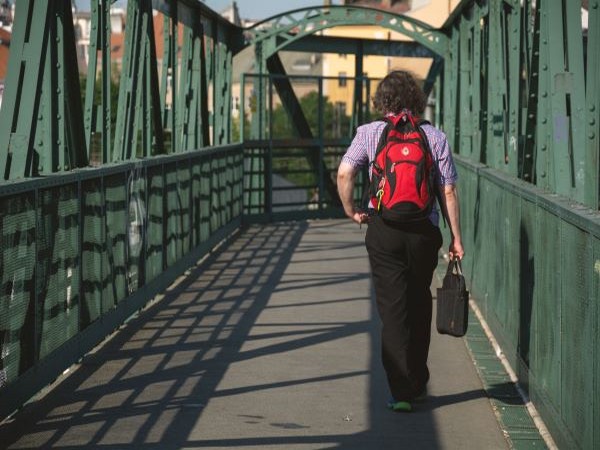
Representative image

Washington D.C. [USA], August 16 (ANI): While taking a walk is helpful in maintaining physical fitness, a recent study has revealed that walking with a purpose - especially walking to get to work, makes people walk faster and consider themselves to be healthier.
The study, published online earlier this month in the Journal of Transport and Health, found that walking for different reasons yielded different levels of self-rated health. People who walked primarily to places like work and the grocery store from their homes, for example, reported better health than people who walked mostly for leisure.
"We found that walking for utilitarian purposes significantly improves your health and that those types of walking trips are easier to bring into your daily routine," said Gulsah Akar, an associate professor of city and regional planning in The Ohio State University Knowlton School of Architecture.
"So, basically, both as city planners and as people, we should try to take advantage of this as much as possible."
The study used data from the 2017 National Household Travel Survey, a U.S. dataset collected from April 2016 to May 2017.
The researchers analysed self-reported health assessments from 125,885 adults between the ages of 18 and 64. Those adults reported the number of minutes they spent walking for different purposes - from home to work, from home to shopping, from home to recreation activities and walking trips that did not start at their homes.
And, the survey respondents ranked how healthy they were on a scale of 1 to 5. The dataset the researchers analysed included more than 500,000 trips.
The researchers - Akar and Ohio State doctoral student Gilsu Pae - found that walking for any duration, for any purpose, increased how healthy a person felt.
But they also found that an additional 10 minutes of walking per trip from home for work-based trips - say, from a person's house to the bus stop 10 minutes away - increased that person's odds of having a higher health score by 6 per cent compared with people who walk for other reasons. People who walked from home for reasons not connected to work, shopping or recreation were 3 per cent more likely to have a higher health score.
And, the researchers found, people who walked for work walked faster - on average, about 2.7 miles per hour - than people who walked for other reasons. People who walked for recreational purposes - say, an after-dinner stroll - walked, on average, about 2.55 miles per hour.
The researchers also found that walking trips that begin at home are generally longer than walking trips that begin somewhere else. The team found that 64 per cent of home-based walking trips last at least 10 minutes, while 50 per cent of trips that begin elsewhere are at least that long.
Akar has studied the ways people travel for years and said she was surprised to see that walking for different purposes led to a difference in how healthy people believed they were.
"I was thinking the differences would not be that significant, that walking is walking, and all forms of walking are helpful," she said. "And that is true, but walking for some purposes has a significantly greater effect on our health than others."
Akar said the findings suggest that building activity into parts of a day that are otherwise sedentary - commuting by foot instead of by car, for example - can make a person feel healthier.
"That means going to a gym or a recreation centre aren't the only ways to exercise," Akar said. "It's an opportunity to put active minutes into our daily schedules in an easy way." (ANI)


Get the App

What to Read Next

Health

The truth about ‘Eating for Two’ explained by doctors

The truth about ‘Eating for Two’ explained by doctors

Health experts warn that interpreting the advice literally can lead to excessive calorie intake, unhealthy weight gain and a higher risk of Gestational Diabetes Mellitus (GDM), a condition that affects blood sugar levels during pregnancy.

Read More
Health

High-fat keto diet may boost exercise benefits

High-fat keto diet may boost exercise benefits

A new study suggests that eating more fat rather than less could help the body gain greater benefits from exercise when blood sugar levels are high, offering an unexpected perspective on how diet and physical activity work together to support metabolic health.

Read More
Health

Pre-workout supplements may cut sleep in half for young users

Pre-workout supplements may cut sleep in half for young users

A popular fitness trend among young people may be quietly undermining their sleep. A new study led by researchers at the University of Toronto has found that teenagers and young adults who use pre-workout supplements are significantly more likely to experience extremely short sleep durations.

Read More
Health

The more you fear aging, the faster your body may age

The more you fear aging, the faster your body may age

Worrying about getting older especially fearing future health problems may actually speed up aging at the cellular level, according to new research from NYU.

Read More
Health

Scientists discover reason high altitude protects against diabete

Scientists discover reason high altitude protects against diabete

Living at high altitude appears to protect against diabetes, and scientists have finally discovered the reason. When oxygen levels drop, red blood cells switch into a new metabolic mode and absorb large amounts of glucose from the blood.

Read More
Health

Scientists reveal how exercise protects brain from Alzheimer's

Scientists reveal how exercise protects brain from Alzheimer's

Exercise may sharpen the mind by repairing the brain's protective shield. Researchers found that physical activity prompts the liver to release an enzyme that removes a harmful protein, causing the blood-brain barrier to become leaky with age.

Read More
Health

Scientists find clue to human brain evolution in finger length

Scientists find clue to human brain evolution in finger length

Human evolution has long been tied to growing brain size, and new research suggests prenatal hormones may have played a surprising role. By studying the relative lengths of the index and ring fingers, a marker of prenatal exposure to oestrogen and testosterone, researchers found that higher prenatal oestrogen exposure was associated with larger head size in newborn boys.

Read More
Health

MRI scans show exercise can make the brain look younger

MRI scans show exercise can make the brain look younger

New research suggests that consistent aerobic exercise can help keep your brain biologically younger. Adults who exercised regularly for a year showed brains that appeared nearly a year younger than those who didn't change their habits.

Read More
Health

Scientists solve a major roadblock in cancer cell therapy: Study 

Scientists solve a major roadblock in cancer cell therapy: Study 

Researchers have found a reliable way to grow helper T cells from stem cells, solving a major challenge in immune-based cancer therapy. Helper T cells act as the immune system's coordinators, helping other immune cells fight longer and harder.

Read More
Health

Swedish study reveals when fitness and strength begin to fade

Swedish study reveals when fitness and strength begin to fade

A long-running Swedish study has followed adults for nearly five decades, uncovering when physical decline truly begins. Fitness and strength start slipping around age 35, then worsen gradually with age.

Read More
Home About Us Our Products Advertise Contact Us Terms & Condition Privacy Policy

Copyright © aninews.in | All Rights Reserved.
