

ADD ANI AS A TRUSTED SOURCE
googleads
ANI Logo
Menu
Health

Voice-control devices may have an impact on children's social, emotional development: Study

Washington [US], October 1 (ANI): According to a study, the use of artificial intelligence and machine learning in healthcare, as well as voice-control smart devices like Alexa, Siri, and Google Home, may be harmful to children's social and emotional development.

ANI Oct 01, 2022 18:20 IST googleads

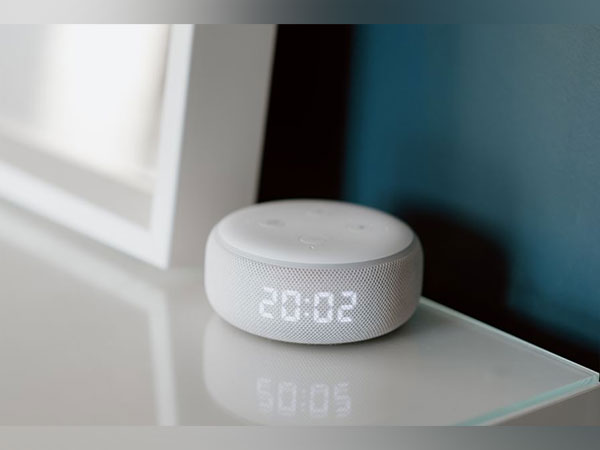
Representative image

Washington [US], October 1 (ANI): According to a study, the use of artificial intelligence and machine learning in healthcare, as well as voice-control smart devices like Alexa, Siri, and Google Home, may be harmful to children's social and emotional development.
The findings of the study were published online in the Archives of Disease in Childhood.
These devices might have long-term effects by impeding children's critical thinking, capacity for empathy and compassion, and their learning skills, says Anmol Arora of the University of Cambridge.
While voice-control devices may act as 'friends' and help to improve children's reading and communication skills, their advanced AI and 'human' sounding voices have prompted concerns about the potential long-term effects on children's brains at a crucial stage of development.
There are three broad areas of concern, explains the author. These comprise inappropriate responses; impeding social development; and hindering learning.
He cites some well publicised examples of inappropriate responses, including a device suggesting that a 10-year old should try touching a live plug with a coin.
"It is difficult to enforce robust parental controls on such devices without severely affecting their functionality," he suggests, adding that privacy issues have also arisen in respect of the recording of private conversations.
These devices can't teach children how to behave politely, because there's no expectation of a "please" or "thank you", and no need to consider the tone of voice, he points out.
"The lack of ability to engage in non-verbal communication makes use of the devices a poor method of learning social interaction," he writes. "While in normal human interactions, a child would usually receive constructive feedback if they were to behave inappropriately, this is beyond the scope of a smart device."
Preliminary research on the use of voice assistants as social companions for lonely adults is encouraging. But it's not at all clear if this also applies to children, he notes.
"This is particularly important at a time when children might already have had social development impaired as a result of COVID-19 restrictions and when [they] might have been spending more time isolated with smart devices at home," he emphasises.
Devices are designed to search for requested information and provide a concise, specific answer, but this may hinder traditional processes by which children learn and absorb information, the author suggests.
When children ask adults questions, the adult can request contextual information, explain the limitations of their knowledge and probe the child's reasoning--a process that these devices can't replicate, he says.
Searching for information is also an important learning experience, which teaches critical thinking and logical reasoning, he explains.
"The rise of voice devices has provided great benefit to the population. Their abilities to provide information rapidly, assist with daily activities, and act as a social companion to lonely adults are both important and useful, the author acknowledges.
"However, urgent research is required into the long-term consequences for children interacting with such devices," he insists.
"Interacting with the devices at a crucial stage in social and emotional development might have long-term consequences on empathy, compassion, and critical thinking," he concludes. (ANI)


Get the App

What to Read Next

Health

Pre-workout supplements may cut sleep in half for young users

Pre-workout supplements may cut sleep in half for young users

A popular fitness trend among young people may be quietly undermining their sleep. A new study led by researchers at the University of Toronto has found that teenagers and young adults who use pre-workout supplements are significantly more likely to experience extremely short sleep durations.

Read More
Health

MRI scans show exercise can make the brain look younger

MRI scans show exercise can make the brain look younger

New research suggests that consistent aerobic exercise can help keep your brain biologically younger. Adults who exercised regularly for a year showed brains that appeared nearly a year younger than those who didn't change their habits.

Read More
Health

Swedish study reveals when fitness and strength begin to fade

Swedish study reveals when fitness and strength begin to fade

A long-running Swedish study has followed adults for nearly five decades, uncovering when physical decline truly begins. Fitness and strength start slipping around age 35, then worsen gradually with age.

Read More
Health

Scientists find hidden synapse hotspots in the teen brain: Study

Scientists find hidden synapse hotspots in the teen brain: Study

The scientists have discovered that the adolescent brain does more than prune old connections. During the teen years, it actively builds dense new clusters of synapses in specific parts of neurons.

Read More
Health

Researchers use AI to create first 100-billion-star Milky Way

Researchers use AI to create first 100-billion-star Milky Way

Researchers combined deep learning with high-resolution physics to create the first Milky Way model that tracks over 100 billion stars individually.

Read More
Health

Hypertension affects brain much earlier than expected: Study

Hypertension affects brain much earlier than expected: Study

Hypertension may impair the brain far earlier than previously understood -- even before a measurable rise in blood pressure occurs -- according to a new preclinical study from Weill Cornell Medicine. The changes help explain why hypertension is a major risk factor for developing cognitive disorders, such as vascular cognitive impairment and Alzheimer's disease.

Read More
Health

Pregnancy hypertension linked to heart risk

Pregnancy hypertension linked to heart risk

Women who experience hypertensive disorders of pregnancy (HDP) face significantly higher risks of cardiovascular complications, including heart attack, stroke, heart failure, and death, within five years of giving birth, according to a new study by Intermountain Health researchers.

Read More
Health

Single protein rewires leukemia cells to fuel their growth: Study

Single protein rewires leukemia cells to fuel their growth: Study

Researchers at the UCLA Health Jonsson Comprehensive Cancer Centre have identified a single protein, IGF2BP3, that links these two processes together in leukaemia cells. The protein alters how cells break down sugar, favouring a fast but inefficient energy pathway, while also modifying RNA that helps produce the proteins leukaemia cells need to survive and multiply.

Read More
Health

Research says heart attacks can actually be infectious

Research says heart attacks can actually be infectious

Scientists from Finland and the UK have uncovered groundbreaking evidence that heart attacks may be triggered by infectious processes rather than just cholesterol and lifestyle factors.

Read More
Health

Development of  multi-stage Malaria vaccine ‘AdFalciVax’ is under

Development of  multi-stage Malaria vaccine ‘AdFalciVax’ is under

The Indian Council of Medical Research (ICMR), through its Regional Medical Research Centre, Bhubaneswar (RMRCBB) and National Institute of Malaria Research (NIMR), in partnership with the Department of Biotechnology-National Institute of Immunology (DBT-NII), is currently developing a novel recombinant chimeric malaria vaccine candidate, named AdFalciVax.

Read More
Home About Us Our Products Advertise Contact Us Terms & Condition Privacy Policy

Copyright © aninews.in | All Rights Reserved.
