Vitamin B3 protects skin cells from the effects of UV exposure, new research finds
Washington [US], November 1 (ANI): Increasing the consumption of vitamin B3 will protect skin from some of the effects of ultraviolet (UV) exposure, potentially reducing the incidence of non-melanoma skin cancers, recent research shows.
ANI
Nov 01, 2020 09:08 IST


Washington [US], November 1 (ANI): Increasing the consumption of vitamin B3 will protect skin from some of the effects of exposure to ultraviolet (UV) rays, potentially reducing the incidence of non-melanoma skin cancers, recent research shows.
The research was presented at the 29th Congress of the European Academy of Dermatology and Venereology (EADV) -- EADV Virtual.
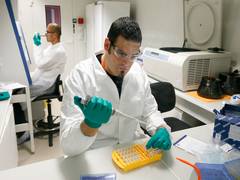
Researchers in Italy isolated cells (human primary keratinocytes) from the skin of patients with non-melanoma skin cancers. These cells were treated with three different concentrations of nicotinamide (NAM), a form of vitamin B3, for 18, 24, and 48 hours and then exposed to UVB rays.
Results show that pre-treatment with 25mM of NAM 24 hours before UV irradiation protected the skin cells from the effects of UV-induced oxidative stress, including DNA damage. The NAM enhanced DNA repair, demonstrated by decreased expression of the DNA repair enzyme OGG1. Furthermore, it decreased antioxidant expression and blocked local inflammation by showing decreased nitric oxide release and reactive oxygen species (ROS) production and reduced iNOS protein expression.
Lara Camillo, a research student from the dermatological unit of AOU universitaria Maggiore della Carita, Novara, Italy says: "Our study indicates that increasing the consumption of vitamin B3, which is readily available in the daily diet, will protect the skin from some of the effects of UV exposure, potentially reducing the incidence of non-melanoma skin cancers. However, the protective effect of vitamin B3 is short-acting, so it should be consumed no later than 24 to 48 hours before sun exposure."
Non-melanoma skin cancers are the most common malignancies in the Caucasian population and the incidence is increasing worldwide. The main risk factor is UV radiation exposure, which damages the DNA, increases ROS production, activates local inflammation, and depletes cellular energy, leading to genomic instability and cell death. (ANI)
Get the App