 हिंदी खबर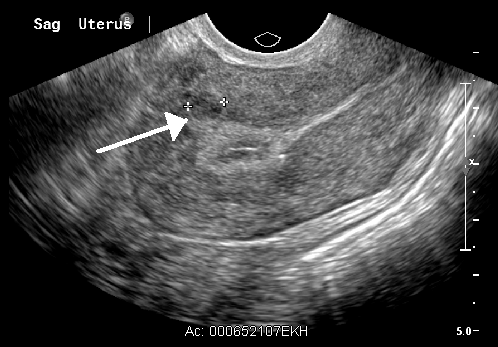

Washington D.C. [USA], Mar 25 (ANI): A new research has established that uterine fibroid embolisation (UFE) effectively treats uterine fibroids with fewer post-procedure complications compared to myomectomy.
The study was presented at the Society of Interventional Radiology's 2019 annual scientific meeting.
Women who received this minimally-invasive treatment also had a slightly lower need for additional treatment than those who underwent surgery.
UFE is a minimally-invasive treatment for uterine fibroids that is less painful, preserves the uterus and allows women to get back to their lives sooner than surgical options.
However, past research suggests that US women, a majority of who will experience uterine fibroids by the age of 50, are largely unaware of the UFE.
"Women have options for treating their uterine fibroids. UFE and myomectomy are procedures with similar efficacy and durability for treating fibroids, but the UFE has fewer complications and shorter hospital stays," said Jemianne Bautista-Jia, MD, radiology resident at Kaiser Permanente and lead author of the study.
“There are important factors women should consider when choosing between the procedures. These factors include a risk of bleeding, a possibility of infections, and recovery time,” said Bautista-Jia.
A uterine fibroid (leiomyoma) is a noncancerous tumour that occurs in the muscle cells of the uterus. These growths do not spread to other regions of the body and are typically not dangerous.
While some women do not experience symptoms, others have very heavy and prolonged bleeding that can be debilitating, as well as pelvic pain and abdominal enlargement.
In the retrospective cohort study, researchers analysed the treatment outcomes of 950 uterine fibroid patients from January 1, 2008, through December 31, 2014. Half of the patients underwent the UFE, a non-surgical treatment that eliminates the blood supply to fibroids, causing them to shrink or disappear. The other half was treated surgically through myomectomy, a procedure that removes existing fibroids.
After an average seven-year follow up, the study found out that women who underwent myomectomy had a higher rate of postprocedural complications, including a 2.9 per cent rate of blood transfusion, which was significantly higher than the 1.1 per cent rate for those who were treated using the UFE.
Patients in both the treatment groups demonstrated a significant increase in haemoglobin one year after the initial procedure due to reduced bleeding. The two methods were comparably effective based on the rate at which secondary interventions, including the UFE, myomectomy, and hysterectomy, were needed.
Second interventions were completed in 8.6 per cent of women who received an initial UFE compared to 9.9 per cent for women who initially underwent a myomectomy.
This study also showed similar rates of miscarriage for women who underwent either the UFE or myomectomy. Future research should explore the impact of all uterine-sparing fibroid procedures on pregnancy, which still remains poorly understood.
Treatments for uterine fibroids can range from monitoring the fibroids or administering medications to relieve the symptoms, to more invasive approaches, such as myomectomy and hysterectomy. (ANI)
Uterine fibroid embolisation safe and as effective as surgical treatment
ANI | Updated: Mar 25, 2019 19:29 IST




