

ADD ANI AS A TRUSTED SOURCE
googleads
ANI Logo
Menu
Health

US: Minorities bear disproportionate burden from air pollution, study suggests

Washington D.C. [USA] Mar 12 (ANI): According to a recent study, Black and Hispanic Americans population bear a disproportionate burden from air pollution caused mainly by non-Hispanic white Americans.

ANI Mar 12, 2019 18:19 IST googleads

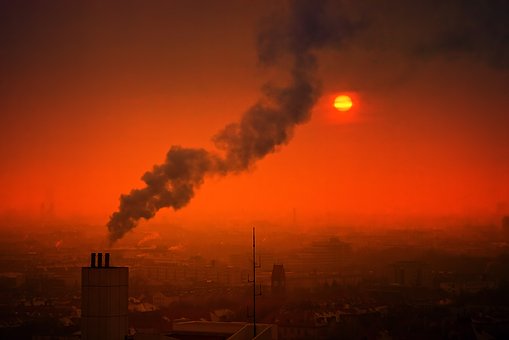
Representative Image

Washington D.C. [USA] Mar 12 (ANI): According to a recent study, Black and Hispanic Americans population bear a disproportionate burden from air pollution caused mainly by non-Hispanic white Americans.
As part of the study, researchers tried to quantifies for the first time the racial gap between who causes air pollution and who breathes it.
Poor air quality is one of the largest environmental health risks in the United States. Fine particulate matter (PM2.5) pollution is especially harmful and is responsible for more than 100,000 deaths each year from heart attacks, strokes, lung cancer and other diseases.
But not everyone is equally exposed to poor air quality, nor are all people equally responsible for causing it.
Researchers found that PM2.5 pollution is disproportionately caused by the consumption of goods and services by the non-Hispanic white majority, but disproportionately inhaled by black and Hispanic minorities.
In the report, researchers linked air pollution exposure to the consumption activities that cause it in order to explore "pollution inequity" -- the difference between the environmental health damage caused by a racial-ethnic group and the damage that group experiences.
"Our work is at the intersection of many important and timely topics such as race, inequality, affluence, environmental justice and environmental regulation," said Jason Hill, lead researcher of the study published in the Journal of Proceedings of the National Academy of Sciences.
According to the study, on average, non-Hispanic whites experience a "pollution advantage," meaning they experience approximately 17 percent less air pollution exposure than is caused by their consumption.
Black and Hispanic populations, however, bear a "pollution burden." On average, blacks are exposed to about 56 percent more PM2.5 pollution than is caused by their consumption. For Hispanics, it is slightly higher -- 63 percent.
The pollution inequity metric is driven by disparities in the amount of goods and services that groups consume, and in exposure to the resulting pollution. These disparities are influenced by longstanding societal trends, such as income inequality and political representation.
Because white Americans consume greater amounts of pollution-intensive goods and services, they are responsible for the creation of more PM2.5 pollution than other racial groups. Further, American blacks and Hispanics tend to live in locations with higher PM2.5 concentrations than white Americans, increasing their average daily exposure to the pollution.
In the U.S., a racial pattern in where people live often reflects conditions from decades earlier, such as racial segregation.
"Similar to previous studies, we show that racial-ethnic minorities are exposed to more pollution on average than non-Hispanic whites. What is new is that we find that those differences do not occur because minorities on average cause more pollution than whites -- in fact, the opposite is true," said lead author Christopher Tessum.
The United States has made strides to reduce air pollution across the country and for all ethnic groups. Average PM2.5 exposure declined approximately 50 percent between 2003 and 2015, but pollution inequity has remained high over that same period. This study is the first to quantify pollution inequity and to track it over time.
Researchers say their pollution inequity metric can be applied to other types of environmental burdens, providing a simple and intuitive way for policymakers and the public to see the disparity between the pollution that population groups cause and the pollution to which they are exposed. (ANI)

Get the App

What to Read Next

Health

Air pollution may reduce health benefits of exercise: Study

Air pollution may reduce health benefits of exercise: Study

A new study led by researchers at University College London (UCL) shows that chronic exposure to toxic air can significantly diminish the health benefits of regular physical activity.

Read More
Health

Antibiotics from human use are contaminating rivers: Study

Antibiotics from human use are contaminating rivers: Study

Millions of kilometers of rivers around the world are carrying antibiotic pollution at levels high enough to promote drug resistance and harm aquatic life, a new study warns.

Read More
Health

Study raises possibility of country without butterflies

Study raises possibility of country without butterflies

The results: between 2000 and 2020, total butterfly abundance fell by 22 per cent across the 554 species counted. That means that for every five individual butterflies within the contiguous US in the year 2000, there were only four in 2020.

Read More
Health

Air pollution may be higher inside your home than outdoors: Study

Air pollution may be higher inside your home than outdoors: Study

A new study reveals that people may be exposed to unhealthy levels of airborne pollutants inside their homes, even if the outdoor air quality is good.

Read More
Health

Scientists aim to decode genetic roots of mental illness

Scientists aim to decode genetic roots of mental illness

To get to the bottom of this, the National Institute of Mental Health (NIMH) initiated a consortium called SSPsyGene (sspsygene.ucsc.edu) in 2023, uniting research teams from renowned US universities with the joint goal of characterising the genetic origins of NPD, focusing on 250 selected high-risk genes.

Read More
Health

Social media has impact on sleep patterns, finds study

Social media has impact on sleep patterns, finds study

Concerns regarding the influence of social media platforms on youth mental health led the US Surgeon General to suggest a warning label for them. The Surgeon General's Advisory on Social Media and Youth Mental Health highlighted potential links between social media use and poor sleep quality in youth. Given these issues, what particular measures should teenagers and parents take to enhance sleep?

Read More
Health

Climate initiatives that reduce motor vehicle emissions

Climate initiatives that reduce motor vehicle emissions

According to recent research, limiting carbon dioxide (CO2) emissions from motor vehicles, as well as investing in electric cars and public transport, would reduce air pollution and improve children's health. They'd also save money.

Read More
Health

Children born in October are least likely to get influenza

Children born in October are least likely to get influenza

According to a US study, children born in October are more likely to be vaccinated against influenza and less likely to be diagnosed with the disease than children born in other months.

Read More
Health

Air pollution linked to higher hospitalisations for heart disease

Air pollution linked to higher hospitalisations for heart disease

According to the Global Burden of Disease study, exposure to PM2.5 accounts for an estimated 7.6 per cent of total global mortality and 4.2 per cent of global disability-adjusted life years (a measure of years lived in good health).

Read More
Health

Lab-grown retinas explain why people see colours dogs can't

Lab-grown retinas explain why people see colours dogs can't

Researchers used human retinas grown in a petri dish to discover how an offshoot of vitamin A produces the specialised cells that allow us to see millions of colours, a talent that dogs, cats, and other mammals lack.

Read More
Home About Us Our Products Advertise Contact Us Terms & Condition Privacy Policy

Copyright © aninews.in | All Rights Reserved.




