 हिंदी खबर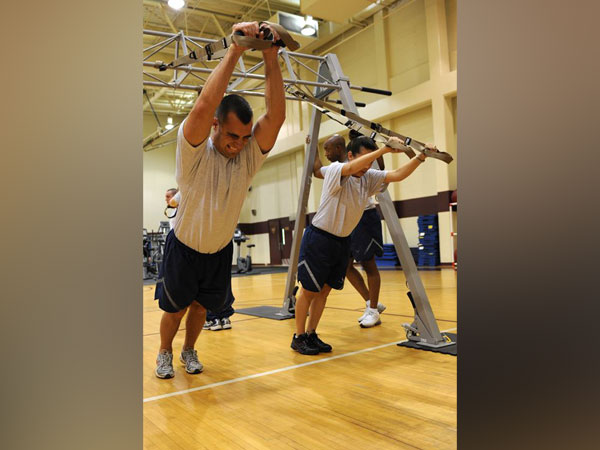

Washington D.C [USA], Nov 27 (ANI): Researchers have recommended using typical resistance exercises such as leg press to overcome the problem of muscle inactivity.
Several years of hospitalisation, one example of muscle inactivity, causes a disproportionate decline in the muscle strength known to affect balance, increase the risk of joint injuries, and hinder movements involved in sports, according to research from the University of Roehampton, published in --Experimental Physiology.
Thus, rehabilitation programmes should work to build the strength involved in these types of activities, using typical resistance exercises, but with the attention of lifting the resistance as rapidly as possible.
The effects of long-term muscle inactivity (via e.g., sedentary behaviour, hospitalisation, or space travel) have proven difficult to study in a laboratory environment, as there are ethical issues with enforcing prolonged physical inactivity.
Previous research has shown that the thigh muscles of individuals with an amputation below the knee are used less during movement and therefore become weak.
Amy Sibley, Neale Tillin and colleagues at the University of Roehampton, therefore, used below-knee amputees as a model to understand muscular changes that happen with long-term inactivity.
Similar changes might happen in the muscles of someone who is hospitalised, sedentary, or travelling in space.
Scientific studies have previously defined two main types of strength: maximum and explosive.
Maximum strength is what it sounds like, the maximum capacity of your muscles for producing force. People rarely need to utilise this maximum capacity in daily activities.
Explosive strength is the ability to quickly produce force and is relevant during many daily activities such as recovering from a loss of balance, avoiding joint injuries, and when playing sports.
The researchers showed that when they compared maximum and explosive strength, amputees lost comparatively more explosive strength.
They also found that the muscular changes that accompanied this reduction in strength could not have been anticipated from the typical short-term bedrest studies, and were specific to the type of strength examined.
Therefore, rehabilitation regimens (for amputees or other populations who have experienced inactivity) should be tailored to help them recover explosive strength specifically.
"This research has exciting potential to help people who have been inactive long-term, due to hospitalisation, for example, regain the strength they need for daily activities such as avoiding falls," said Amy Sibley, first author of the study.
"To achieve this aim, clinicians need to be specific about the type of strength training they use, for example, typical resistance exercises (e.g., leg press) should be performed with the intention of lifting the resistance as rapidly as possible," added Sibley. (ANI)
Typical resistance exercises help in recovery from years of inactivity: Study
ANI | Updated: Nov 27, 2019 13:53 IST


