

ADD ANI AS A TRUSTED SOURCE
googleads
ANI Logo
Menu
Health

Tuberculosis infection is not life-long in most people: Study

Washington DC [USA], Oct 25 (ANI): A recent study challenged the earlier belief that tuberculous infection stays forever and that it could come back at any point and cause the disease again.

ANI Oct 25, 2019 23:10 IST googleads

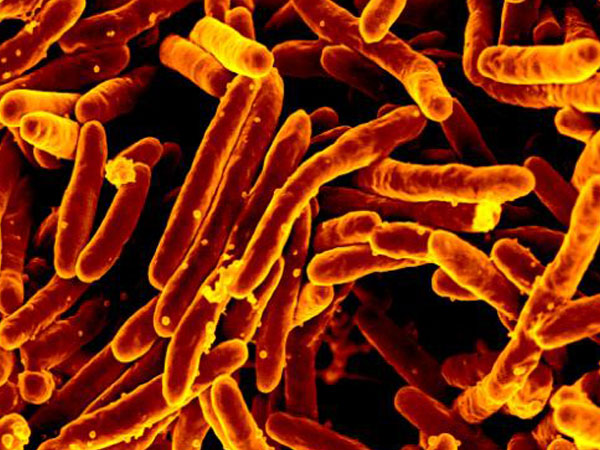
Representative image

Washington DC [USA], Oct 25 (ANI): A recent study challenged the earlier belief that tuberculous infection stays forever and that it could come back at any point and cause the disease again.
Based on a review of clinical studies, researchers from the Perelman School of Medicine at the University of Pennsylvania and colleagues show that people who test positive with immunologic TB skin or blood tests rarely develop TB.
They suggest it's because the infecting organism, Mycobacterium tuberculosis, is likely dead, wiped out naturally by people's immune systems.
Despite that, these people retain an immunological memory to the disease, which the authors said likely explained why standard TB tests show a positive result since those tests look for an immune response and not live bacteria.
The study was published this week in the journal -- BMJ.
The findings upend commonly held beliefs, as well as approaches to care and research around the world, for the two billion people who test positive for TB and are thought to be persistently infected and at risk for active disease.
"The National Institutes of Health and other non-profit organisations spend millions of dollars on studies of the latent state because of the assumption that TB infection is life-long, held in check by the immune system," said co-author Paul H. Edelstein, MD, an emeritus professor of Pathology and Laboratory Medicine at Penn.
"However, based on our analysis, we believe that it is rarely life-long, and in 90 per cent or more of infected people, there is no possibility of TB development even with severe immunosuppression," added Edelstein.
Additional co-authors on the study include Marcel A. Behr, MD, a professor of Medicine at McGill University, and Lalita Ramakrishnan, MD, a professor of Immunology and Infectious Diseases at the University of Cambridge.
In their review, the team pointed to several previous studies to demonstrate the natural history of TB immunoreactivity in people given preventive treatment, and of active TB in immunoreactive people with various forms of severe immunosuppression, like patients with HIV and those who have received an organ transplant.
"TB immunoreactivity is not a marker for the presence of continued TB infection," Edelstein's team wrote. "Rather, it serves as a sign of having been infected with TB at some point."
The researchers believe future resources should focus on developing tests that can better identify infected people who are not symptomatic. Currently, there are no specific tests for these patients.
They also believe that detecting and treating people with active TB should be a high priority, as well as providing TB preventive therapy for those around them. (ANI)

Get the App

What to Read Next

Health

Scientists find clue to human brain evolution in finger length

Scientists find clue to human brain evolution in finger length

Human evolution has long been tied to growing brain size, and new research suggests prenatal hormones may have played a surprising role. By studying the relative lengths of the index and ring fingers, a marker of prenatal exposure to oestrogen and testosterone, researchers found that higher prenatal oestrogen exposure was associated with larger head size in newborn boys.

Read More
Health

Scientists solve a major roadblock in cancer cell therapy: Study 

Scientists solve a major roadblock in cancer cell therapy: Study 

Researchers have found a reliable way to grow helper T cells from stem cells, solving a major challenge in immune-based cancer therapy. Helper T cells act as the immune system's coordinators, helping other immune cells fight longer and harder.

Read More
Health

Swedish study reveals when fitness and strength begin to fade

Swedish study reveals when fitness and strength begin to fade

A long-running Swedish study has followed adults for nearly five decades, uncovering when physical decline truly begins. Fitness and strength start slipping around age 35, then worsen gradually with age.

Read More
Health

Injection turns sleeping tumour immune cells into cancer fighters

Injection turns sleeping tumour immune cells into cancer fighters

The Korea Advanced Institute of Science and Technology (KAIST) researchers have developed a way to reprogram immune cells already inside tumours into cancer-killing machines.

Read More
Health

Scientists reverse Alzheimer’s in mice and restore memory: Study

Scientists reverse Alzheimer’s in mice and restore memory: Study

Alzheimer's has long been considered irreversible, but new research challenges that assumption. Scientists discovered that severe drops in the brain's energy supply help drive the disease, and restoring that balance can reverse damage, even in advanced cases.

Read More
Health

This gut molecule shows remarkable anti-diabetes power: Study

This gut molecule shows remarkable anti-diabetes power: Study

Researchers revealed that the microbial metabolite TMA can directly block the immune protein IRAK4, reducing inflammation and improving insulin sensitivity.

Read More
Health

Miracle material’s hidden quantum power could transform future

Miracle material’s hidden quantum power could transform future

Researchers have directly observed Floquet effects in graphene for the first time, settling a long-running scientific debate.

Read More
Health

Iimmune cells use surprising trick to heal muscle faster: Study

Iimmune cells use surprising trick to heal muscle faster: Study

A research team has found that specific immune cells can connect with muscle fibres in a lightning-fast, neuron-like way to promote healing.

Read More
Health

'Solar System is racing through space 3x faster than thought'

'Solar System is racing through space 3x faster than thought'

New measurements of radio galaxies reveal that the solar system is racing through the universe at over three times the speed predicted by standard cosmology.

Read More
Health

Risk of long Covid in kids doubles after second infection

Risk of long Covid in kids doubles after second infection

Children and adolescents were twice as likely to experience long Covid after contracting Covid for the second time, compared to their peers with a single previous infection.

Read More
Home About Us Our Products Advertise Contact Us Terms & Condition Privacy Policy

Copyright © aninews.in | All Rights Reserved.


