 हिंदी खबर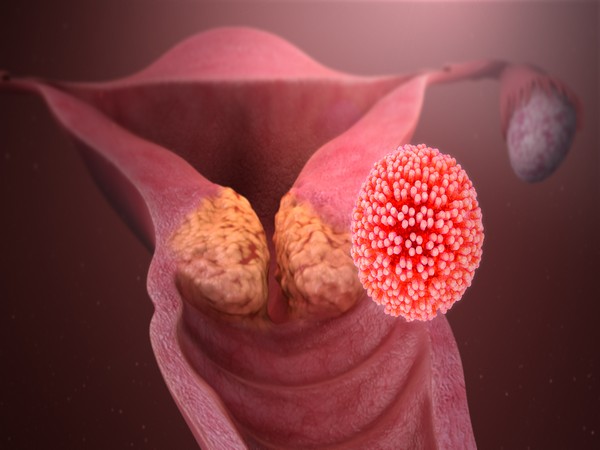

Washington D.C. [USA], 31 Jan (ANI): Two recently published studies have predicted that cervical cancer could cease to be a public health risk within the span of this century, provided that women receive meticulous HPV vaccination, screening, and treatment.
The researchers are even more optimistic about North America, stating that the disease could be almost completely eliminated by 2040.
This is the conclusion of two studies published in The Lancet by an international consortium of researchers co-directed by Professor Marc Brisson from Universite Laval's Faculty of Medicine and the CHU de Quebec-Universite Laval Research Centre.
The study used the human papillomavirus (HPV) vaccination and cervical screening targets defined in the WHO draft strategy of cervical cancer elimination.
The plan calls for 90 per cent of girls to be vaccinated against HPV by 2030. The plan also calls for 70 per cent of women to be screened for cervical cancer once or twice in their lifetime, and for 90 per cent of women with precancerous lesions or cervical cancer to receive appropriate treatment.
The researchers' analyses show that with vaccination alone, the cervical cancer cases will drop by 89 per cent within a century in the 78 countries worst affected by the disease, with 60 million cases of cancer averted as a result.
By adding the two screening tests and the treatment of precancerous cervical lesions, cervical cancer cases will drop by 97 per cent and 72 million cervical cancer cases will be averted over the next century.
Furthermore, with scale-up of appropriate cancer treatment, 62 million cervical cancer deaths will be averted.
"For the first time, we've estimated how many cases of cervical cancer could be averted if WHO's strategy is rolled out and when elimination might occur, says Marc Brisson.
Our results suggest that to eliminate cervical cancer it will be necessary to achieve both high vaccination coverage and high uptake of screening and treatment, especially in countries with the highest burden of the disease."
The results were used to develop WHO's cervical cancer elimination strategy which will be presented for adoption at the World Health Assembly in May 2020.
"If the strategy is adopted and applied by member states, cervical cancer could be eliminated in high-income countries by 2040 and across the globe within the next century, which would be a phenomenal victory for women's health," says Professor Brisson.
"However, this can only be achieved with considerable international financial and political commitment, in order to scale up prevention and treatment". (ANI)
This century might witness elimination of cervical cancer, suggest studies
ANI | Updated: Jan 31, 2020 09:28 IST


