 हिंदी खबर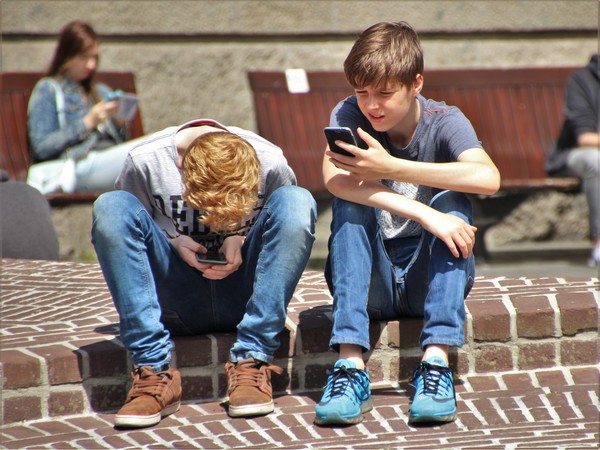

Washington [US], April 7 (ANI): Because of the popularity of smartphones and tablets, as well as the growth of television channels, computer games, and educational applications, children and teenagers are spending more amount of time gazing at screens, sometimes with poor posture, which can lead to back pain and other issues.
A study by Brazilian researchers, funded by FAPESP and reported in an article published in the scientific journal Healthcare, identified several risk factors for spinal health, such as looking at screens for more than three hours a day, proximity of the eyes to the screen, and sitting or lying on the stomach.
The study focused on thoracic spine pain (TSP). The thoracic spine is located at the back of the chest (the thorax), mostly between the shoulder blades, extending from the bottom of the neck to the start of the lumbar spine. The data analyzed came from surveys of 14- to 18-year-old male and female students in the first and second years of high school in Bauru, a medium-sized city in Sao Paulo state.
A baseline questionnaire was completed in March-June 2017 by 1,628 participants, of whom 1,393 completed a follow-up questionnaire in 2018. The analysis showed a one-year prevalence of 38.4% (the proportion reporting TSP in both the baseline and follow-up surveys) and a one-year incidence of 10.1% (new TSP reported only in the follow-up survey). More girls than boys reported TSP.
Risk factors
TSP is common in different age groups of the general population worldwide, with prevalence ranging from 15%-35% in adults and 13%-35% in children and adolescents. Explosive growth in the use of electronic devices during the COVID-19 pandemic clearly made the problem worse. The risk factors associated with TSP are physical, physiological, psychological and behavioral, according to several investigations. There is also strong evidence of the effects of physical activity, sedentary habits and mental disorders on spinal health. All these factors are considered critical by the World Health Organization (WHO) in its latest global review of evidence and guidelines.
"The study can be used to inform health education programs for school students, teachers, staff and parents," said Alberto de Vitta, first author of the article. He has a PhD in education from the State University of Campinas (UNICAMP) and completed a postdoctoral fellowship in public health at Sao Paulo State University (UNESP) in Botucatu.
"This is in line with some of the objectives of the National Curriculum Parameters [PCN, Brazilian government guidelines for secondary schools], according to which schools are responsible for health education, including identification of risks to individual and collective health and interventions to combat them, as well as promotion of self-care habits with regard to the body's possibilities and limits," said Vitta, who is currently teaching and researching at Eduvale College as a faculty member in its Department of Physical Therapy in Avare, Sao Paulo state, and the University of Sapucai Valley's Graduate Program in Education, Knowledge and Society in Pouso Alegre, Minas Gerais state.
Information on risk factors for TSP in high school students is important because children and adolescents with back pain are more inactive, achieve less academically and have more psychosocial problems, according to the article. In addition, fewer studies have been conducted on TSP than on lower back and neck pain. A systematic review of the literature on TSP found only two prospective studies regarding prognostic factors. (ANI)




