

ADD ANI AS A TRUSTED SOURCE
googleads
ANI Logo
Menu
Health

TB bacteria use carbon monoxide to survive in human tissue

Washington D.C. [USA], August 3 (ANI): Mycobacteria, a bacterial group that causes killer diseases such as tuberculosis (TB), leprosy, and Buruli ulcer depend on carbon monoxide to survive when other nutrients are not available, suggests a new study.

ANI Aug 03, 2019 23:29 IST googleads

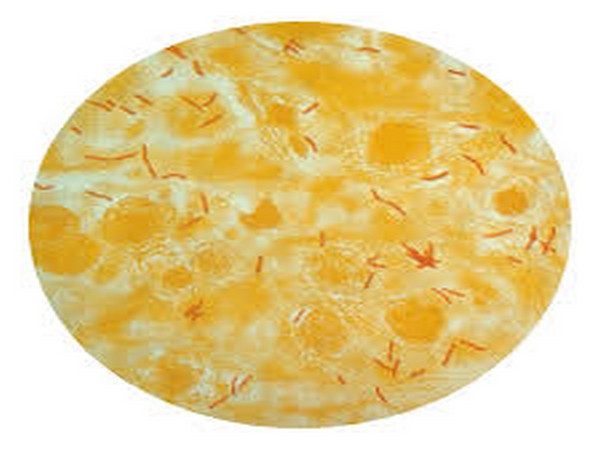
Representative image

Washington D.C. [USA], August 3 (ANI): Mycobacteria, a bacterial group that causes killer diseases such as tuberculosis (TB), leprosy, and Buruli ulcer depend on carbon monoxide to survive when other nutrients are not available, suggests a new study.
The study was published in 'ISME Journal'.
"When microbial cells are starved of their preferred energy sources, one way they subsist is by scavenging gases such as carbon monoxide," said Paul Cordero, the co-lead author of the study.
"They breakdown this gas into its fundamental components that provide the cells just enough energy to persist," Cordero added.
The researchers showed that an enzyme called carbon monoxide dehydrogenase is what allows mycobacteria to obtain energy from this gas. While the energy gained is not enough to allow for growth, the researchers found that carbon monoxide consumption allowed mycobacteria to survive for longer periods of time.
The group's findings suggested that Mycobacterium tuberculosis might be able to survive inside the human host by using carbon monoxide.
"It has been known for years that Mycobacterium tuberculosis can use carbon monoxide, but nobody knew why," said fellow study co-first author, Katie Bayly.
"Based on these findings, we predict that it uses this gas to its advantage to persist inside human lungs," she said.
"Our immune cells actually make small amounts of carbon monoxide, which the bacterium may be able to use as an energy supply while dormant."
Dormancy allows Mycobacterium tuberculosis to stay alive inside patients for years. This dormant infection usually has no symptoms, but can advance into full-blown TB, for example when people become immuno-compromised.
This new discovery on the survival mechanism of mycobacteria could pave the way for new strategies to better fight communicable diseases such as tuberculosis. (ANI)

Get the App

What to Read Next

Health

Scientists find clue to human brain evolution in finger length

Scientists find clue to human brain evolution in finger length

Human evolution has long been tied to growing brain size, and new research suggests prenatal hormones may have played a surprising role. By studying the relative lengths of the index and ring fingers, a marker of prenatal exposure to oestrogen and testosterone, researchers found that higher prenatal oestrogen exposure was associated with larger head size in newborn boys.

Read More
Health

Blocking a single protein forces cancer cells to self-destruct

Blocking a single protein forces cancer cells to self-destruct

Researchers uncovered a powerful weakness in lung cancer by shutting down a protein that helps tumours survive stress.

Read More
Health

Scientists find E. Coli spreads as fast as swine flu: Study

Scientists find E. Coli spreads as fast as swine flu: Study

Researchers have, for the first time, estimated how quickly E. coli bacteria can spread between people and one strain moves as fast as swine flu.

Read More
Health

Single protein rewires leukemia cells to fuel their growth: Study

Single protein rewires leukemia cells to fuel their growth: Study

Researchers at the UCLA Health Jonsson Comprehensive Cancer Centre have identified a single protein, IGF2BP3, that links these two processes together in leukaemia cells. The protein alters how cells break down sugar, favouring a fast but inefficient energy pathway, while also modifying RNA that helps produce the proteins leukaemia cells need to survive and multiply.

Read More
Health

Scientists uncover key protein in cellular fat storage: Study

Scientists uncover key protein in cellular fat storage: Study

Research conducted at the University of New South Wales (UNSW) has shed light on how cells in the body manage and store fat, potentially offering new insights into human health.

Read More
Health

Here is how AI can help to understand gut bacteria

Here is how AI can help to understand gut bacteria

Gut bacteria are considered to be a key factor in many health-related issues. However, the number and variety of them are vast, as are the ways in which they interact with the body's chemistry and each other.

Read More
Health

New research confirms that neurons form in the adult brain: Study

New research confirms that neurons form in the adult brain: Study

Researchers from Sweden have discovered that the human brain continues to grow new cells in the memory region--called the hippocampus--even into old age.

Read More
Health

Researchers creates new robotic “skin”

Researchers creates new robotic “skin”

Researchers have created a revolutionary robotic skin that brings machines closer to human-like touch.

Read More
Health

Healing ozone hole helps Southern Ocean take up carbon

Healing ozone hole helps Southern Ocean take up carbon

A new study suggests that the ozone hole's negative effects on the Southern Ocean's carbon uptake are reversible, but only if greenhouse gas emissions rapidly decrease.

Read More
Health

Antibiotics from human use are contaminating rivers: Study

Antibiotics from human use are contaminating rivers: Study

Millions of kilometers of rivers around the world are carrying antibiotic pollution at levels high enough to promote drug resistance and harm aquatic life, a new study warns.

Read More
Home About Us Our Products Advertise Contact Us Terms & Condition Privacy Policy

Copyright © aninews.in | All Rights Reserved.




