

ADD ANI AS A TRUSTED SOURCE
googleads
ANI Logo
Menu
Health

Study shows individualized eating program helps dieters lose weight

Washington [US], July 16 (ANI): iDip, an individualized diet program, uses a unique visual tool that helps dieters choose foods that limit their daily calories while consuming adequate amounts of protein and fibre. Now in its third clinical trial, the program shows promise in helping people lose weight and keep it off.

ANI Jul 16, 2022 16:36 IST googleads

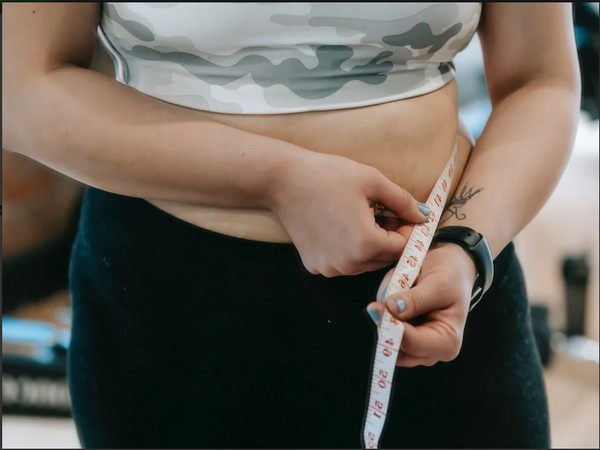
Representative Image

Washington [US], July 16 (ANI): iDip, an individualized diet program, uses a unique visual tool that helps dieters choose foods that limit their daily calories while consuming adequate amounts of protein and fibre. Now in its third clinical trial, the program shows promise in helping people lose weight and keep it off.
The Individualized Diet Improvement Program is a self-guided approach that involves easy-to-use tools, according to the nutritionists at the University of Illinois Urbana-Champaign who created iDip.
"Our program does not provide or offer a strict diet plan or recipes for participants to follow," said graduate student Mindy H. Lee, a co-author of the study. "We're not excluding food groups as low-carbohydrate or low-fat plans do. The primary goal is to empower dieters to make informed choices so they can create their own sustainable weight-management program."
Diet flexibility is key to making weight loss and maintenance sustainable, said study co-author Manabu T. Nakamura, a professor of nutrition at the university.
"The problem with currently available commercial weight-loss programs and products is that the magnitude of dieters' weight loss is not great," he said. "The more serious problem is that people can't maintain it.
"If they follow the program or consume only the foods they're told to for four or six months, they lose a certain amount of weight, but when they quit following the program or buying the products the weight comes right back. And that's very discouraging for them."
A visual tool developed by the researchers plots dieters' protein and fiber intake, helping them choose foods that reduce their overall calories without reducing their protein and fiber.
Based on the dietary guidelines issued by the Institutes of Medicine, the iDip visual tool plots foods' protein and fiber densities per calorie along with a target range for meals. The tool helps users create meals with about 80 grams of protein and 20 grams of fiber daily while limiting their intake to less than 1,500 calories per day.
Ranging in age from 24-59, all of the participants in the initial clinical trial had a body mass index greater than 28, placing them in the overweight or obese categories. According to participants' self-reports, they had obesity-related health conditions such as high blood pressure and had tried two or more commercial diet programs or weight-loss products in the past.
Participants weighed themselves daily at home using a wifi-enabled scale, and the researchers provided each person with a chart every week showing their weight-loss progress, intended rate of loss and a six-month goal weight.
The daily weighing and weekly feedback charts allowed participants to monitor their progress without counting calories or completing a daily food journal, which can be tedious, time consuming and inaccurate, Nakamura said.
"In the entirety of human history, no culture counted calories," Nakamura said. "And we know it isn't sustainable over the long term. But weighing daily and recording the trend is a very important tool. It's easy to sustain over one's lifetime and is a good habit for anyone who wants to lose weight or maintain their weight."
During the 12-month program, participants attended 22 educational sessions led by registered dietitians. These included 19 group lectures that offered nutrition information and explained how to apply this knowledge to grocery shopping and cooking. The lectures also focused on the benefits of physical activity and how to navigate weight-loss plateaus and maintenance.
Additionally, each participant received three individual coaching and advising sessions.
According to the study, 12 of the 14 participants finished the program. Half achieved the researchers' goal of losing at least 5% of their body weight and maintained it during the six-month follow-up phase, Lee said.
Although the number of participants was small, the researchers said it demonstrated the program's feasibility.
A third clinical trial of iDip currently is underway with 30 participants, and the results are even more promising. At the conclusion of the six-month weight-loss phase, participants have lost about 6.5% of their body weight, Lee said. (ANI)


Get the App

What to Read Next

Health

The truth about ‘Eating for Two’ explained by doctors

The truth about ‘Eating for Two’ explained by doctors

Health experts warn that interpreting the advice literally can lead to excessive calorie intake, unhealthy weight gain and a higher risk of Gestational Diabetes Mellitus (GDM), a condition that affects blood sugar levels during pregnancy.

Read More
Health

High-fat keto diet may boost exercise benefits

High-fat keto diet may boost exercise benefits

A new study suggests that eating more fat rather than less could help the body gain greater benefits from exercise when blood sugar levels are high, offering an unexpected perspective on how diet and physical activity work together to support metabolic health.

Read More
Health

Swedish study reveals when fitness and strength begin to fade

Swedish study reveals when fitness and strength begin to fade

A long-running Swedish study has followed adults for nearly five decades, uncovering when physical decline truly begins. Fitness and strength start slipping around age 35, then worsen gradually with age.

Read More
Health

Memory loss can suddenly speed up with age: Study

Memory loss can suddenly speed up with age: Study

A massive international brain study has revealed that memory decline with age isn't driven by a single brain region or gene, but by widespread structural changes across the brain that build up over time.

Read More
Health

Eating more vitamin C can physically change your skin

Eating more vitamin C can physically change your skin

Scientists discovered that vitamin C from food travels through the bloodstream into every layer of the skin, boosting collagen and skin renewal.

Read More
Health

New genetic tool and chromosome changes linked to pregnancy loss

New genetic tool and chromosome changes linked to pregnancy loss

Pregnancy loss affects up to 25 per cent of all pregnancies, with most miscarriages occurring in the first trimester and roughly half caused by genetic or chromosomal abnormalities. But when pregnancy loss occurs three or more times, identifying the underlying cause becomes significantly more challenging, and often remains unknown.

Read More
Health

This high-sugar fruit may actually lower diabetes risk: Study

This high-sugar fruit may actually lower diabetes risk: Study

A George Mason University study found that daily mango eaters showed better blood sugar control and less body fat than those eating a lower-sugar snack.

Read More
Health

Scientists find why ultra-processed diets make you gain fat

Scientists find why ultra-processed diets make you gain fat

An international team of scientists has now discovered that people gain more weight on an ultra-processed diet compared to a minimally processed diet, even when they eat the same number of calories.

Read More
Health

Scientists find simple tweaks that cut diabetes risk by 31%

Scientists find simple tweaks that cut diabetes risk by 31%

A Mediterranean-style diet, in combination with reduced caloric intake, moderate physical activity, and professional support for weight loss, may cut the risk of type 2 diabetes (T2D) by 31%, according to a new study co-authored by researchers at Harvard T.H. Chan School of Public Health.

Read More
Health

Lilly Partners with API to launch ‘Obesity Gurukul’

Lilly Partners with API to launch ‘Obesity Gurukul’

Eli Lilly and Company (India), in collaboration with the Association of Physicians of India (API), on Friday announced the launch of 'API - Obesity Gurukul', a flagship Continuing Medical Education (CME) program aimed at enhancing physicians' clinical capabilities to address obesity, which is rapidly emerging as one of India's most pressing public health challenges.

Read More
Home About Us Our Products Advertise Contact Us Terms & Condition Privacy Policy

Copyright © aninews.in | All Rights Reserved.


