

ADD ANI AS A TRUSTED SOURCE
googleads
ANI Logo
Menu
Health

Study sheds light on rare genetic variants that increase risk for lung cancer

Washington [US], March 19 (ANI): Lung cancer is the leading cause of cancer death. While the risk for this disease can be influenced by environmental and lifestyle factors like smoking, studies estimate that 18 per cent of lung cancer cases are due to inherited genetic variants. New research led by Baylor College of Medicine investigates how genetic variants contribute to increased risk of lung cancer.

ANI Mar 19, 2021 09:05 IST googleads

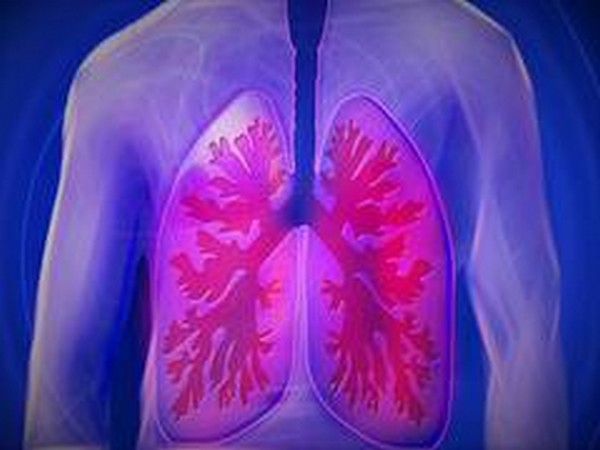
Representative Image

Washington [US], March 19 (ANI): Lung cancer is the leading cause of cancer death. While the risk for this disease can be influenced by environmental and lifestyle factors like smoking, studies estimate that 18 per cent of lung cancer cases are due to inherited genetic variants. New research led by Baylor College of Medicine investigates how genetic variants contribute to increased risk of lung cancer.
The researchers performed whole-exome sequencing on germline (inherited) DNA from eight large-scale datasets, including 1,045 patients with a family history of lung cancer or early-onset cancer. Those groups are more likely to harbour genetic risk variants. The analysis also included 885 control cases.
"We were looking for variants that have a relatively high impact on risk but occur at relatively low frequency," said Dr. Chris Amos, the corresponding author of the study, professor of medicine - epidemiology and population sciences and director of the Institute for Clinical and Translational Research (ICTR) at Baylor.
"If a variant occurs at low frequency, you have to look at many different large data sources to validate the variant. These results can be replicated in many different European populations."
The researchers identified 25 new rare pathogenic variants associated with lung cancer susceptibility and validated five of those variants. Of those five, two variants involved genes with known connections to lung cancer risk, ATM and MPZL2.
Three variants involved novel lung cancer susceptibility genes, POMC, STAU2 and MLNR. According to the co-first author of the study, Dr. Yanhong Liu, exome sequencing allowed the researchers to identify more variants that impact proteins and cell function.
"Mutations of DNA where sections are either inserted or deleted have been understudied compared to single nucleotide variants, but they are also very important because they can result in truncated proteins," said Liu, assistant professor of medicine - epidemiology and population sciences and member of the Dan L Duncan Comprehensive Cancer Center at Baylor.
"Of the 25 candidate variants we identified, two-thirds of them are insertions or deletions."
In order to further understand the effect of these candidate variants on cellular functions, the Baylor researchers applied endogenous DNA damage assays, which test for replications of certain types of mutations in DNA. They hypothesized that lung cancer risk genes lead to an increased level of endogenous DNA damage in cells, leading to genomic instability and ultimately causing cancer.
"Many studies have looked at lung cancer risk genes, but the function of those genes has not been well understood. In our study, we found that dysregulation or mutations in these candidate genes showed increased DNA damage, suggesting that their potential cancer-causing role might be due to genome instability at the DNA level," said Dr. Jun Xia, co-first author of the study and postdoctoral associate in the Department of Molecular and Human Genetics and ICTR at Baylor.
The analysis showed that POMC, MLNR and ATM variants led to increased levels of DNA damage. ATM is known to be a critical first responder to DNA damage, and several ATM variants are linked to increased susceptibility for multiple cancers. According to Amos, understanding which variants cause increased DNA damage could be key to unlocking treatments for these cancers.
"We know from breast cancer that PARP inhibitors, drugs that prevent DNA repair, work in people with inherited BRCA1 and BRCA2 mutations because those cells already have some DNA damage due to the inherited mutation. If you disable PARP, the cancer cells can't repair DNA damage and won't survive," said Amos, member of the Dan L Duncan Comprehensive Cancer Center at Baylor and CPRIT Scholar.
"It's possible that people with inherited ATM mutations causing them to develop lung cancer may respond to those PARP inhibitors as well, and that is something that needs to be studied further." (ANI)


Get the App

What to Read Next

Health

The truth about ‘Eating for Two’ explained by doctors

The truth about ‘Eating for Two’ explained by doctors

Health experts warn that interpreting the advice literally can lead to excessive calorie intake, unhealthy weight gain and a higher risk of Gestational Diabetes Mellitus (GDM), a condition that affects blood sugar levels during pregnancy.

Read More
Health

High-fat keto diet may boost exercise benefits

High-fat keto diet may boost exercise benefits

A new study suggests that eating more fat rather than less could help the body gain greater benefits from exercise when blood sugar levels are high, offering an unexpected perspective on how diet and physical activity work together to support metabolic health.

Read More
Health

Pre-workout supplements may cut sleep in half for young users

Pre-workout supplements may cut sleep in half for young users

A popular fitness trend among young people may be quietly undermining their sleep. A new study led by researchers at the University of Toronto has found that teenagers and young adults who use pre-workout supplements are significantly more likely to experience extremely short sleep durations.

Read More
Health

The more you fear aging, the faster your body may age

The more you fear aging, the faster your body may age

Worrying about getting older especially fearing future health problems may actually speed up aging at the cellular level, according to new research from NYU.

Read More
Health

Scientists discover reason high altitude protects against diabete

Scientists discover reason high altitude protects against diabete

Living at high altitude appears to protect against diabetes, and scientists have finally discovered the reason. When oxygen levels drop, red blood cells switch into a new metabolic mode and absorb large amounts of glucose from the blood.

Read More
Health

Scientists reveal how exercise protects brain from Alzheimer's

Scientists reveal how exercise protects brain from Alzheimer's

Exercise may sharpen the mind by repairing the brain's protective shield. Researchers found that physical activity prompts the liver to release an enzyme that removes a harmful protein, causing the blood-brain barrier to become leaky with age.

Read More
Health

Scientists find clue to human brain evolution in finger length

Scientists find clue to human brain evolution in finger length

Human evolution has long been tied to growing brain size, and new research suggests prenatal hormones may have played a surprising role. By studying the relative lengths of the index and ring fingers, a marker of prenatal exposure to oestrogen and testosterone, researchers found that higher prenatal oestrogen exposure was associated with larger head size in newborn boys.

Read More
Health

MRI scans show exercise can make the brain look younger

MRI scans show exercise can make the brain look younger

New research suggests that consistent aerobic exercise can help keep your brain biologically younger. Adults who exercised regularly for a year showed brains that appeared nearly a year younger than those who didn't change their habits.

Read More
Health

Scientists solve a major roadblock in cancer cell therapy: Study 

Scientists solve a major roadblock in cancer cell therapy: Study 

Researchers have found a reliable way to grow helper T cells from stem cells, solving a major challenge in immune-based cancer therapy. Helper T cells act as the immune system's coordinators, helping other immune cells fight longer and harder.

Read More
Health

Swedish study reveals when fitness and strength begin to fade

Swedish study reveals when fitness and strength begin to fade

A long-running Swedish study has followed adults for nearly five decades, uncovering when physical decline truly begins. Fitness and strength start slipping around age 35, then worsen gradually with age.

Read More
Home About Us Our Products Advertise Contact Us Terms & Condition Privacy Policy

Copyright © aninews.in | All Rights Reserved.


