

ADD ANI AS A TRUSTED SOURCE
googleads
ANI Logo
Menu
Health

Study sheds light on origins of Omicron virus

First discovered a year ago in South Africa, the SARS-CoV-2 variant later dubbed "Omicron" spread across the globe at incredible speed. It is still unclear exactly how, when and where this virus originated. Now, a study published in the journal Science by researchers from Charite - Universitatsmedizin Berlin and a network of African institutions shows that Omicron's predecessors existed on the African continent long before cases were first identified, suggesting that Omicron emerged gradually over several months in different countries across Africa.

ANI Dec 04, 2022 14:32 IST googleads

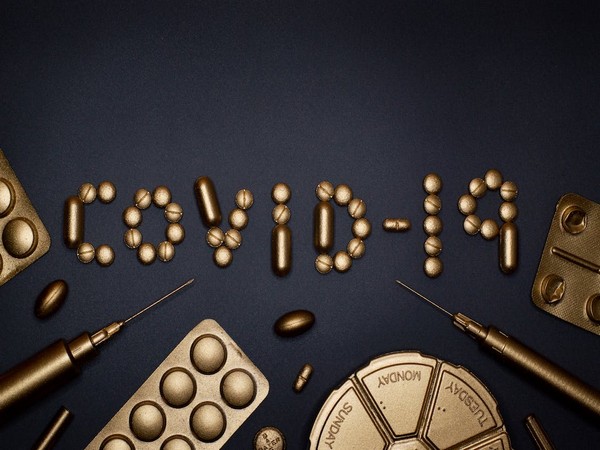
Representative Image

Berlin [Germany], December 4 (ANI): The SARS-CoV-2 subtype, later termed "Omicron," was discovered a year ago in South Africa and spread rapidly over the world. It is still unknown how, when, or where this virus developed.
Researchers from Charite - Universitatsmedizin Berlin and a network of African institutions published a study in the journal Science* that shows Omicron's predecessors existed on the African continent long before cases were first identified, implying that Omicron emerged gradually over several months in different countries across Africa.
The coronavirus has been evolving since the beginning of the pandemic. The biggest leap seen in the evolution of SARS-CoV-2 to date was observed by researchers a year ago when a variant was discovered that differed from the genome of the original virus by more than 50 mutations.
First detected in a patient in South Africa in mid-November 2021, the variant later named Omicron BA.1 spread to 87 countries around the world within just a few weeks. By the end of December, it had replaced the previously dominant Delta variant worldwide.
Since then, speculations about the origin of this highly transmissible variant have centred on two main theories: either the coronavirus jumped from a human to an animal, where it evolved before infecting a human again as Omicron or the virus survived in a person with a compromised immune system for a longer period of time, and mutations occurred there.
A fresh examination of COVID-19 samples taken in Africa prior to the first identification of Omicron calls both hypotheses into question.
An international study team led by Prof. Jan Felix Drexler, a scientist from Charite's Institute of Virology and the German Center for Infection Research, conducted the analysis (DZIF).
Stellenbosch University in South Africa and the Laboratory of Viral Hemorrhagic Fever (LFHB) in Benin were also important collaborators in the European-African network. The researchers began by designing a unique PCR test to detect the Omicron variation BA.1. They then evaluated over 13,000 COVID-19 respiratory samples collected in 22 African nations between mid-2021 and early 2022.
In doing so, the research team found viruses with Omicron-specific mutations in 25 people from six different countries who contracted COVID-19 in August and September 2021 - two months before the variant was first detected in South Africa.
To learn more about Omicron's origins, the researchers also decoded, or "sequenced," the viral genome of some 670 samples. Such sequencing makes it possible to detect new mutations and identify novel viral lineages.
The team discovered several viruses that showed varying degrees of similarity to Omicron, but they were not identical. "Our data show that Omicron had different ancestors that interacted with each other and circulated in Africa, sometimes concurrently, for months," explains Prof. Drexler.
"This suggests that the BA.1 Omicron variant evolved gradually, during which time the virus increasingly adapted to existing human immunity." In addition, the PCR data led the researchers to conclude that although Omicron did not originate solely in South Africa, it first dominated infection rates there before spreading from south to north across the African continent within only a few weeks.
"This means Omicron's sudden rise cannot be attributed to a jump from the animal kingdom or the emergence in a single immunocompromised person, although these two scenarios may have also played a role in the evolution of the virus," says Prof. Drexler.
"The fact that Omicron caught us by surprise is instead due to the diagnostic blind spot that exists in large parts of Africa, where presumably only a small fraction of SARS-CoV-2 infections are even recorded. Omicron's gradual evolution was therefore simply overlooked. So it is important that we now significantly strengthen diagnostic surveillance systems on the African continent and in comparable regions of the Global South, while also facilitating global data sharing. Only good data can prevent policymakers from implementing potentially effective containment measures, such as travel restrictions, at the wrong time, which can end up causing more economic and social harm than good." (ANI)


Get the App

What to Read Next

Health

The truth about ‘Eating for Two’ explained by doctors

The truth about ‘Eating for Two’ explained by doctors

Health experts warn that interpreting the advice literally can lead to excessive calorie intake, unhealthy weight gain and a higher risk of Gestational Diabetes Mellitus (GDM), a condition that affects blood sugar levels during pregnancy.

Read More
Health

High-fat keto diet may boost exercise benefits

High-fat keto diet may boost exercise benefits

A new study suggests that eating more fat rather than less could help the body gain greater benefits from exercise when blood sugar levels are high, offering an unexpected perspective on how diet and physical activity work together to support metabolic health.

Read More
Health

Pre-workout supplements may cut sleep in half for young users

Pre-workout supplements may cut sleep in half for young users

A popular fitness trend among young people may be quietly undermining their sleep. A new study led by researchers at the University of Toronto has found that teenagers and young adults who use pre-workout supplements are significantly more likely to experience extremely short sleep durations.

Read More
Health

The more you fear aging, the faster your body may age

The more you fear aging, the faster your body may age

Worrying about getting older especially fearing future health problems may actually speed up aging at the cellular level, according to new research from NYU.

Read More
Health

Scientists discover reason high altitude protects against diabete

Scientists discover reason high altitude protects against diabete

Living at high altitude appears to protect against diabetes, and scientists have finally discovered the reason. When oxygen levels drop, red blood cells switch into a new metabolic mode and absorb large amounts of glucose from the blood.

Read More
Health

Scientists find clue to human brain evolution in finger length

Scientists find clue to human brain evolution in finger length

Human evolution has long been tied to growing brain size, and new research suggests prenatal hormones may have played a surprising role. By studying the relative lengths of the index and ring fingers, a marker of prenatal exposure to oestrogen and testosterone, researchers found that higher prenatal oestrogen exposure was associated with larger head size in newborn boys.

Read More
Health

MRI scans show exercise can make the brain look younger

MRI scans show exercise can make the brain look younger

New research suggests that consistent aerobic exercise can help keep your brain biologically younger. Adults who exercised regularly for a year showed brains that appeared nearly a year younger than those who didn't change their habits.

Read More
Health

Scientists find hidden synapse hotspots in the teen brain: Study

Scientists find hidden synapse hotspots in the teen brain: Study

The scientists have discovered that the adolescent brain does more than prune old connections. During the teen years, it actively builds dense new clusters of synapses in specific parts of neurons.

Read More
Health

Injection turns sleeping tumour immune cells into cancer fighters

Injection turns sleeping tumour immune cells into cancer fighters

The Korea Advanced Institute of Science and Technology (KAIST) researchers have developed a way to reprogram immune cells already inside tumours into cancer-killing machines.

Read More
Health

High-fat diets give liver cancer a dangerous head start: Study

High-fat diets give liver cancer a dangerous head start: Study

A high-fat diet does more than overload the liver with fat. New research from MIT shows that prolonged exposure to fatty foods can push liver cells into a survival mode that quietly raises the risk of cancer.

Read More
Home About Us Our Products Advertise Contact Us Terms & Condition Privacy Policy

Copyright © aninews.in | All Rights Reserved.
