

ADD ANI AS A TRUSTED SOURCE
googleads
ANI Logo
Menu
Health

Study: Shape of coronavirus affects its transmission

Okinawa [Japan], August 31 (ANI): Images of the coronavirus, SARS-CoV-2, have been imprinted in our brains since the commencement of the COVID-19 pandemic. However, the way we commonly visualise the virus, as a spherical with spikes, is not entirely true. Microscope images of infected tissues show that coronavirus particles are ellipsoidal, with a wide range of squashed and elongated morphologies.

ANI Aug 31, 2022 23:01 IST googleads

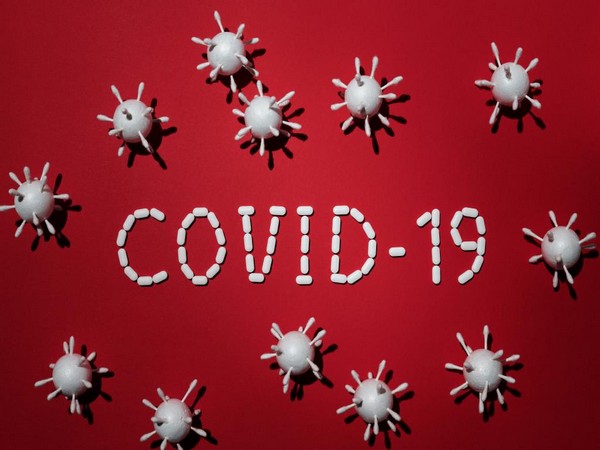
Representative Image

Okinawa [Japan], August 31 (ANI): Images of the coronavirus, SARS-CoV-2, have been imprinted in our brains since the commencement of the COVID-19 pandemic. However, the way we commonly visualise the virus, as a spherical with spikes, is not entirely true. Microscope images of infected tissues show that coronavirus particles are ellipsoidal, with a wide range of squashed and elongated morphologies.
A global study team led by experts from Queen's University in Canada and the Okinawa Institute of Science and Technology (OIST) in Japan has now analysed how different elliptical shapes alter the way viral particles rotate within fluids, influencing how easily the virus can be transferred. The research was just published in the journal Physics of Fluids.
"When coronavirus particles are breathed, they move around within the passages in the nose and lungs," explained Professor Eliot Fried, head of OIST's Mechanics and Materials Unit. "We're interested in determining how mobile they are in these environments."
The scientists modelled a specific form of movement known as rotational diffusivity, which controls the pace at which particles rotate as they move through the fluid (in the case of the coronavirus, droplets of saliva). Smoother and more hydrodynamic particles experience less drag resistance from the fluid and rotate more quickly. This rotational speed impacts how successfully coronavirus particles bind to and infect cells.
"If the particles rotate too quickly, they may not spend enough time interacting with the cell to infect it, and if they rotate too slowly, they may not be able to engage in the required way," Prof. Fried explained.
The scientists modelled both prolate and oblate ellipsoids of revolution in their study. These shapes differ from spheres (which have three axes of equal length) in that prolate shapes have one longer axis and oblate shapes have one shorter axis. When taken to their logical conclusion, prolate shapes extend into rod-like shapes, whilst oblate shapes squash into coin-like shapes. The distinctions between coronavirus particles, on the other hand, are more subtle.
By adding spike proteins to the surface of the ellipsoids, the scientists made the model the most realistic yet. Previous studies from Queen's University and OIST demonstrated that the presence of triangular-shaped spike proteins slows the rotation of coronavirus particles, potentially enhancing their capacity to infect cells.
The scientists simplified their model of the spike proteins, with each spike protein represented by a single sphere on the surface of the ellipsoids.
"We then figured out the arrangement of the spikes on the surface of each ellipsoidal form by assuming they all have the same charge," Dr Vikash Chaurasia, a postdoctoral researcher in the OIST Mechanics and Materials Unit, noted. "Identical charge spikes reject each other and prefer to remain as far apart as feasible." As a result, they are equally distributed around the particle, minimising this repulsion."
In their model, the researchers found that the more a particle differs from a spherical shape, the slower it rotates. This could imply that the particles are more capable of aligning and attaching to cells.
The model is still rudimentary, the researchers admit, but it brings us one step closer to understanding the coronavirus's transport features and could help pinpoint one of the components critical to its infective success. (ANI)


Get the App

What to Read Next

Health

The truth about ‘Eating for Two’ explained by doctors

The truth about ‘Eating for Two’ explained by doctors

Health experts warn that interpreting the advice literally can lead to excessive calorie intake, unhealthy weight gain and a higher risk of Gestational Diabetes Mellitus (GDM), a condition that affects blood sugar levels during pregnancy.

Read More
Health

High-fat keto diet may boost exercise benefits

High-fat keto diet may boost exercise benefits

A new study suggests that eating more fat rather than less could help the body gain greater benefits from exercise when blood sugar levels are high, offering an unexpected perspective on how diet and physical activity work together to support metabolic health.

Read More
Health

Pre-workout supplements may cut sleep in half for young users

Pre-workout supplements may cut sleep in half for young users

A popular fitness trend among young people may be quietly undermining their sleep. A new study led by researchers at the University of Toronto has found that teenagers and young adults who use pre-workout supplements are significantly more likely to experience extremely short sleep durations.

Read More
Health

The more you fear aging, the faster your body may age

The more you fear aging, the faster your body may age

Worrying about getting older especially fearing future health problems may actually speed up aging at the cellular level, according to new research from NYU.

Read More
Health

Scientists discover reason high altitude protects against diabete

Scientists discover reason high altitude protects against diabete

Living at high altitude appears to protect against diabetes, and scientists have finally discovered the reason. When oxygen levels drop, red blood cells switch into a new metabolic mode and absorb large amounts of glucose from the blood.

Read More
Health

Scientists reveal how exercise protects brain from Alzheimer's

Scientists reveal how exercise protects brain from Alzheimer's

Exercise may sharpen the mind by repairing the brain's protective shield. Researchers found that physical activity prompts the liver to release an enzyme that removes a harmful protein, causing the blood-brain barrier to become leaky with age.

Read More
Health

Scientists find clue to human brain evolution in finger length

Scientists find clue to human brain evolution in finger length

Human evolution has long been tied to growing brain size, and new research suggests prenatal hormones may have played a surprising role. By studying the relative lengths of the index and ring fingers, a marker of prenatal exposure to oestrogen and testosterone, researchers found that higher prenatal oestrogen exposure was associated with larger head size in newborn boys.

Read More
Health

MRI scans show exercise can make the brain look younger

MRI scans show exercise can make the brain look younger

New research suggests that consistent aerobic exercise can help keep your brain biologically younger. Adults who exercised regularly for a year showed brains that appeared nearly a year younger than those who didn't change their habits.

Read More
Health

Scientists solve a major roadblock in cancer cell therapy: Study 

Scientists solve a major roadblock in cancer cell therapy: Study 

Researchers have found a reliable way to grow helper T cells from stem cells, solving a major challenge in immune-based cancer therapy. Helper T cells act as the immune system's coordinators, helping other immune cells fight longer and harder.

Read More
Health

Swedish study reveals when fitness and strength begin to fade

Swedish study reveals when fitness and strength begin to fade

A long-running Swedish study has followed adults for nearly five decades, uncovering when physical decline truly begins. Fitness and strength start slipping around age 35, then worsen gradually with age.

Read More
Home About Us Our Products Advertise Contact Us Terms & Condition Privacy Policy

Copyright © aninews.in | All Rights Reserved.


