Study of nose, throat reveals why people with COVID-19 may lose sense of smell
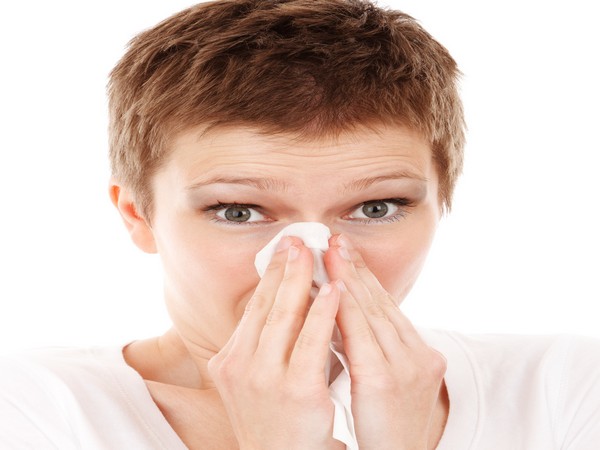
Washington D.C. [USA], August 19 (ANI): Researchers studying tissue removed from patients' noses during surgery believe they may have discovered the reason why so many people with COVID-19 lose their sense of smell, even when they have no other symptoms.
ANI
Aug 19, 2020 08:11 IST

Washington D.C. [USA], August 19 (ANI): Researchers studying tissue removed from patients' noses during surgery believe they may have discovered the reason why so many people with COVID-19 lose their sense of smell, even when they have no other symptoms.
In their experiments, they found extremely high levels of angiotensin-converting enzyme II (ACE-2) only in the area of the nose responsible for smelling. This Enzyme is thought to be the 'entry point' that allows coronavirus to get into the cells of the body and cause an infection.
The researchers say their findings, published in the European Respiratory Journal, offer clues as to why COVID-19 is so infectious and suggest that targeting this part of the body could potentially offer more effective treatments.
The study was by Professor Andrew P. Lane, director of the division of rhinology and skull base surgery, and Dr Mengfei Chen, research associate, and colleagues from Johns Hopkins University School of Medicine, Baltimore, USA.
Professor Lane said: "I specialise in nasal and sinus problems, so the loss of the sense of smell in COVID-19 is of particular clinical interest to me. While other respiratory viruses generally cause loss of the sense of smell through the obstruction of airflow due to swelling of the nasal passages, this virus sometimes causes loss of smell in the absence of other nasal symptoms."
The team used tissue samples from the back of the nose of 23 patients, removed during endoscopic surgical procedures for conditions such as tumours or chronic rhinosinusitis, an inflammatory disease of the nose and sinus. They also studied biopsies from the trachea (windpipe) of seven patients. None of the patients had been diagnosed with coronavirus.
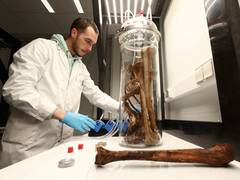
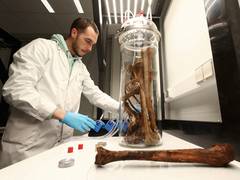
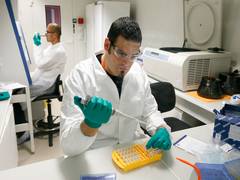
In the lab, the researchers used fluorescent dyes on the tissue samples to detect and visualise the presence of ACE2 under a microscope and compare levels of ACE2 in different cell types and parts of the nose and upper airway.
They found by far the most ACE2 on the lining cells of the olfactory epithelium, the area at the back of the nose where the body detects smells. The levels of ACE2 in these cells was between 200 and 700 times higher than other tissue in the nose and trachea, and they found similarly high levels in all the samples of the olfactory epithelium, regardless of whether the patient had been treated for chronic rhinosinusitis or another condition. ACE2 was not detected on olfactory neurons, the nerve cells that pass information about the smell to the brain.
Dr Chen said: "This technique allowed us to see that the levels of ACE2 - the COVID-19 'entry point' protein were highest in the part of the nose that enables us to smell. These results suggest that this area of the nose could be where the coronavirus is gaining entry to the body.
"The olfactory epithelium is quite an easy part of the body for a virus to reach, it's not buried away deep in our body, and the very high levels of ACE2 that we found there might explain why it's so easy to catch COVID-19."
Professor Lane added: "We are now doing more experiments in the lab to see whether the virus is indeed using these cells to access and infect the body. If that's the case, we may be able to tackle the infection with antiviral therapies delivered directly through the nose."
Tobias Welte, who was not involved in the research, is the European Respiratory Society Past President, Professor of Pulmonary Medicine, and Director of the Department of Pulmonary and Infectious Diseases at Hannover University School of Medicine, Germany. He said: "We know that many common respiratory infections, such as coughs and colds, can make us temporarily lose our sense of smell alongside a blocked nose or a sore throat. Previous research has shown that COVID-19 is unusual in that being unable to smell can be the only symptom. This is a clever study that examines why that might be the case.
"It suggests that the part of our nose responsible for smell could also be the place where the coronavirus gains a foothold in the body. This finding will need to be confirmed, but it offers possible new avenues for treating the infection."
Other researchers who participated in this study include Wenjuan Shen, Nicholas R. Rowan Heather Kulaga, Alexander Hillel, and Murugappan Ramanathan Jr. (ANI)
Tags:
Get the App