

ADD ANI AS A TRUSTED SOURCE
googleads
ANI Logo
Menu
Health

Study: Malaria spike linked to amphibian die-off

Washington [US], September 22 (ANI): A new study links an amphibian die-off in Costa Rica and Panama with a spike in malaria cases. The study demonstrates the importance of biodiversity to human health.

ANI Sep 22, 2022 05:29 IST googleads

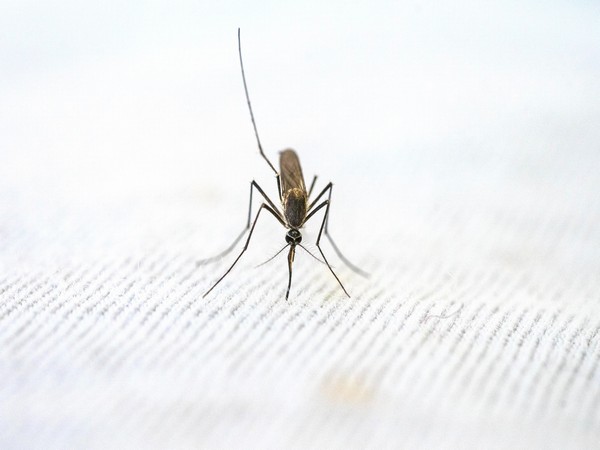
Representative Image

Washington [US], September 22 (ANI): A new study links an amphibian die-off in Costa Rica and Panama with a spike in malaria cases. The study demonstrates the importance of biodiversity to human health.
The study, published in the journal Environmental Research Letters, links an amphibian die-off in Costa Rica and Panama with a spike in malaria cases in the region. At the spike's peak, up to 1 person per 1,000 annually contracted malaria that normally would not have had the amphibian die-off not occurred, the study found.
"Stable ecosystems underpin all sorts of aspects of human wellbeing, including regulating processes important for disease prevention and health," said lead author Michael Springborn, a professor in the UC Davis Department of Environmental Sciences and Policy. "If we allow massive ecosystem disruptions to happen, it can substantially impact human health in ways that are difficult to predict ahead of time and hard to control once they're underway."
From the early 1980s to the mid-1990s, a deadly fungal pathogen called Batrachochytrium dendrobatidis, or "Bd," travelled across Costa Rica, devastating amphibian populations. This amphibian chytrid fungus continued its path eastward across Panama through the 2000s. Globally, the pathogen led to the extinction of at least 90 amphibian species, and to the decline of at least 500 additional species.
Shortly after the mass die-off of amphibians in Costa Rica and Panama, both countries experienced a spike in malaria cases.
Some frogs, salamanders and other amphibians eat hundreds of mosquito eggs each day. Mosquitoes are a vector for malaria. Scientists wondered, could the crash in amphibians have influenced the rise in malaria cases?
To find out, the researchers combined their knowledge of amphibian ecology, newly digitized public health record data, and data analysis methods developed by economists to leverage this natural experiment.
"We've known for a while that complex interactions exist between ecosystems and human health, but measuring these interactions is still incredibly hard," said co-author Joakim Weill, a Ph.D. candidate at UC Davis when the study was conducted. "We got there by merging tools and data that don't usually go together. I didn't know what herpetologists studied before collaborating with one!"
The results show a clear connection between the time and location of the spread of the fungal pathogen and the time and location of increases in malaria cases. The scientists note that while they cannot fully rule out another confounding factor, they found no evidence of other variables that could both drive malaria and follow the same pattern of die-offs.
Tree cover loss was also associated with an increase in malaria cases, but not nearly to the same extent as the loss of amphibians. Typical levels of tree canopy loss increase annual malaria cases by up to 0.12 cases per 1,000 people, compared to 1 in 1,000 for the amphibian die-off.
Trade threats
Researchers were motivated to conduct the study by concerns about the future spread of similar diseases through international wildlife trade. For instance, Batrachochytrieum salamandrivorans, or "Bsal," similarly threatens to invade ecosystems through global trade markets.
Springborn said measures that could help prevent the spread of pathogens to wildlife include updating trade regulations to better target species that host such diseases as our knowledge of threats evolve.
"The costs of putting those protective measures in place are immediate and evident, but the long-term benefits of avoiding ecosystem disruptions like this one are harder to assess but potentially massive, as this paper shows," Springborn said. (ANI)


Get the App

What to Read Next

Health

The truth about ‘Eating for Two’ explained by doctors

The truth about ‘Eating for Two’ explained by doctors

Health experts warn that interpreting the advice literally can lead to excessive calorie intake, unhealthy weight gain and a higher risk of Gestational Diabetes Mellitus (GDM), a condition that affects blood sugar levels during pregnancy.

Read More
Health

High-fat keto diet may boost exercise benefits

High-fat keto diet may boost exercise benefits

A new study suggests that eating more fat rather than less could help the body gain greater benefits from exercise when blood sugar levels are high, offering an unexpected perspective on how diet and physical activity work together to support metabolic health.

Read More
Health

Pre-workout supplements may cut sleep in half for young users

Pre-workout supplements may cut sleep in half for young users

A popular fitness trend among young people may be quietly undermining their sleep. A new study led by researchers at the University of Toronto has found that teenagers and young adults who use pre-workout supplements are significantly more likely to experience extremely short sleep durations.

Read More
Health

The more you fear aging, the faster your body may age

The more you fear aging, the faster your body may age

Worrying about getting older especially fearing future health problems may actually speed up aging at the cellular level, according to new research from NYU.

Read More
Health

Scientists discover reason high altitude protects against diabete

Scientists discover reason high altitude protects against diabete

Living at high altitude appears to protect against diabetes, and scientists have finally discovered the reason. When oxygen levels drop, red blood cells switch into a new metabolic mode and absorb large amounts of glucose from the blood.

Read More
Health

Scientists reveal how exercise protects brain from Alzheimer's

Scientists reveal how exercise protects brain from Alzheimer's

Exercise may sharpen the mind by repairing the brain's protective shield. Researchers found that physical activity prompts the liver to release an enzyme that removes a harmful protein, causing the blood-brain barrier to become leaky with age.

Read More
Health

Scientists find clue to human brain evolution in finger length

Scientists find clue to human brain evolution in finger length

Human evolution has long been tied to growing brain size, and new research suggests prenatal hormones may have played a surprising role. By studying the relative lengths of the index and ring fingers, a marker of prenatal exposure to oestrogen and testosterone, researchers found that higher prenatal oestrogen exposure was associated with larger head size in newborn boys.

Read More
Health

MRI scans show exercise can make the brain look younger

MRI scans show exercise can make the brain look younger

New research suggests that consistent aerobic exercise can help keep your brain biologically younger. Adults who exercised regularly for a year showed brains that appeared nearly a year younger than those who didn't change their habits.

Read More
Health

Scientists solve a major roadblock in cancer cell therapy: Study 

Scientists solve a major roadblock in cancer cell therapy: Study 

Researchers have found a reliable way to grow helper T cells from stem cells, solving a major challenge in immune-based cancer therapy. Helper T cells act as the immune system's coordinators, helping other immune cells fight longer and harder.

Read More
Health

Swedish study reveals when fitness and strength begin to fade

Swedish study reveals when fitness and strength begin to fade

A long-running Swedish study has followed adults for nearly five decades, uncovering when physical decline truly begins. Fitness and strength start slipping around age 35, then worsen gradually with age.

Read More
Home About Us Our Products Advertise Contact Us Terms & Condition Privacy Policy

Copyright © aninews.in | All Rights Reserved.


