

ADD ANI AS A TRUSTED SOURCE
googleads
ANI Logo
Menu
Health

Study links salt-rich diet to weaker immune system

Washington D.C. [USA], Mar 30 (ANI): Opting for a high-salt diet can not only be problematic for one's blood pressure, but also for the immune system, suggests a recent study.

ANI Mar 30, 2020 11:36 IST googleads

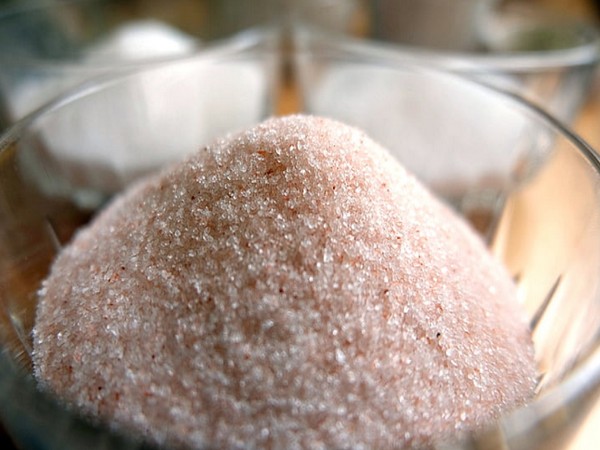
Representative Image

Washington D.C. [USA], Mar 30 (ANI): Opting for a high-salt diet can not only be problematic for one's blood pressure, but also for the immune system, suggests a recent study.
The study was conducted under the leadership of the University Hospital Bonn, and the results were published in the journal Science Translational Medicine
The research was conducted on mice that were fed a high-salt diet. Later, they were found to suffer from much more severe bacterial infections.
Human volunteers who consumed an additional six grams of salt per day also showed pronounced immune deficiencies.
The World Health Organization (WHO) has recommended a maximum amount of five grams of salt a day.
It corresponds approximately to one level teaspoon. In reality, however, many Germans exceed this limit considerably. Figures from the Robert Koch Institute suggest that on average men consume ten, and women more than eight grams a day.
This means that we reach for the salt shaker much more than is good for us. After all, sodium chloride, which is its chemical name, raises blood pressure and thereby increases the risk of heart attack or stroke.
"We have now been able to prove for the first time that excessive salt intake also significantly weakens an important arm of the immune system," said Prof. Dr. Christian Kurts from the Institute of Experimental Immunology at the University of Bonn.
This finding is unexpected, as some studies point in the opposite direction. For example, infections with certain skin parasites in laboratory animals heal significantly faster if these consume a high-salt diet.
The study also sheds light on the fact that the skin serves as a salt reservoir.
"Our results show that this generalization is not accurate," emphasized Katarzyna Jobin, lead author of the study.
The body keeps the salt concentration in the blood and in the various organs largely constant. Otherwise important biological processes would be impaired. The only major exception is the skin which functions as a salt reservoir of the body. This is why the additional intake of sodium chloride works so well for some skin diseases.
However, other parts of the body are not exposed to the additional salt consumed with food. Instead, it is filtered out by the kidneys and excreted in the urine.
Sodium chloride also appears to have a negative effect on the human immune system.
"We examined volunteers who consumed six grams of salt in addition to their daily intake," said Prof. Kurts.
This is roughly the amount contained in two fast-food meals, i.e. two burgers and two portions of French fries.
After one week, from the results, it showed that the immune cells coped much worse with bacteria after the test subjects had started to eat a high-salt diet.
In human volunteers, excessive salt intake also resulted in increased glucocorticoid levels. (ANI)


Get the App

What to Read Next

Health

High-fat keto diet may boost exercise benefits

High-fat keto diet may boost exercise benefits

A new study suggests that eating more fat rather than less could help the body gain greater benefits from exercise when blood sugar levels are high, offering an unexpected perspective on how diet and physical activity work together to support metabolic health.

Read More
Health

Scientists discover reason high altitude protects against diabete

Scientists discover reason high altitude protects against diabete

Living at high altitude appears to protect against diabetes, and scientists have finally discovered the reason. When oxygen levels drop, red blood cells switch into a new metabolic mode and absorb large amounts of glucose from the blood.

Read More
Health

Scientists solve a major roadblock in cancer cell therapy: Study 

Scientists solve a major roadblock in cancer cell therapy: Study 

Researchers have found a reliable way to grow helper T cells from stem cells, solving a major challenge in immune-based cancer therapy. Helper T cells act as the immune system's coordinators, helping other immune cells fight longer and harder.

Read More
Health

Injection turns sleeping tumour immune cells into cancer fighters

Injection turns sleeping tumour immune cells into cancer fighters

The Korea Advanced Institute of Science and Technology (KAIST) researchers have developed a way to reprogram immune cells already inside tumours into cancer-killing machines.

Read More
Health

High-fat diets give liver cancer a dangerous head start: Study

High-fat diets give liver cancer a dangerous head start: Study

A high-fat diet does more than overload the liver with fat. New research from MIT shows that prolonged exposure to fatty foods can push liver cells into a survival mode that quietly raises the risk of cancer.

Read More
Health

This gut molecule shows remarkable anti-diabetes power: Study

This gut molecule shows remarkable anti-diabetes power: Study

Researchers revealed that the microbial metabolite TMA can directly block the immune protein IRAK4, reducing inflammation and improving insulin sensitivity.

Read More
Health

Iimmune cells use surprising trick to heal muscle faster: Study

Iimmune cells use surprising trick to heal muscle faster: Study

A research team has found that specific immune cells can connect with muscle fibres in a lightning-fast, neuron-like way to promote healing.

Read More
Health

'Solar System is racing through space 3x faster than thought'

'Solar System is racing through space 3x faster than thought'

New measurements of radio galaxies reveal that the solar system is racing through the universe at over three times the speed predicted by standard cosmology.

Read More
Health

Researchers use AI to create first 100-billion-star Milky Way

Researchers use AI to create first 100-billion-star Milky Way

Researchers combined deep learning with high-resolution physics to create the first Milky Way model that tracks over 100 billion stars individually.

Read More
Health

Scientists find E. Coli spreads as fast as swine flu: Study

Scientists find E. Coli spreads as fast as swine flu: Study

Researchers have, for the first time, estimated how quickly E. coli bacteria can spread between people and one strain moves as fast as swine flu.

Read More
Home About Us Our Products Advertise Contact Us Terms & Condition Privacy Policy

Copyright © aninews.in | All Rights Reserved.


