

ADD ANI AS A TRUSTED SOURCE
googleads
ANI Logo
Menu
Health

Study investigates how social status influences stress response

Does a person's social position influence their degree of stress? Tulane University researchers investigated this topic and discovered that social rank, particularly in females, did alter stress response.

ANI Mar 31, 2023 22:00 IST googleads

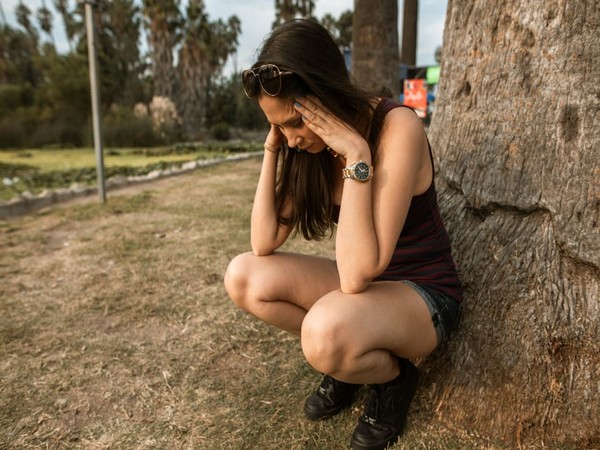
Representative Image

Washington [US], March 31 (ANI): Does a person's social position influence their degree of stress? Tulane University researchers investigated this topic and discovered that social rank, particularly in females, did alter stress response.
In a study published in Current Biology, Tulane psychology professor Jonathan Fadok, PhD, and postdoctoral researcher Lydia Smith-Osborne looked at two forms of psychosocial stress -- social isolation and social instability -- and how they manifest themselves based on social rank.
They conducted their research on adult female mice, putting them in pairs and allowing them to form a stable social relationship over several days. In each pair, one of the mice had high, or dominant social status, while the other was considered the subordinate with relatively low social status. After establishing a baseline, they monitored changes in behavior, stress hormones and neuronal activation in response to chronic social stress.
"We analyzed how these different forms of stress impact behavior and the stress hormone corticosterone (an analogue of the human hormone, cortisol) in individuals based on their social rank," said Fadok, an assistant professor in the Tulane Department of Psychology and the Tulane Brain Institute. "We also looked throughout the brain to identify brain areas that are activated in response to psychosocial stress."
"We found that not only does rank inform how an individual responds to chronic psychosocial stress, but that the type of stress also matters," said Smith-Osborne, a DVM/PhD and the first author on the study.
She discovered that mice with lower social status were more susceptible to social instability, which is akin to ever-changing or inconsistent social groups. Those with higher rank were more susceptible to social isolation, or loneliness.
There were also differences in the parts of the brain that became activated by social encounters, based upon the social status of the animal responding to it and whether they had experienced psychosocial stress.
"Some areas of a dominant animal's brain would react differently to social isolation than to social uncertainty, for example," Smith-Osborne said. "And this was also true for subordinates. Rank gave the animals a unique neurobiological 'fingerprint' for how they responded to chronic stress."
Do the researchers think the results can translate to people? Perhaps, Fadok said.
"Overall, these findings may have implications for understanding the impact that social status and social networks have on the prevalence of stress-related mental illnesses such as generalized anxiety disorder and major depression," he said. "However, future studies that use more complex social situations are needed before these results can translate to humans." (ANI)


Get the App

What to Read Next

Health

High-fat keto diet may boost exercise benefits

High-fat keto diet may boost exercise benefits

A new study suggests that eating more fat rather than less could help the body gain greater benefits from exercise when blood sugar levels are high, offering an unexpected perspective on how diet and physical activity work together to support metabolic health.

Read More
Health

Pre-workout supplements may cut sleep in half for young users

Pre-workout supplements may cut sleep in half for young users

A popular fitness trend among young people may be quietly undermining their sleep. A new study led by researchers at the University of Toronto has found that teenagers and young adults who use pre-workout supplements are significantly more likely to experience extremely short sleep durations.

Read More
Health

The more you fear aging, the faster your body may age

The more you fear aging, the faster your body may age

Worrying about getting older especially fearing future health problems may actually speed up aging at the cellular level, according to new research from NYU.

Read More
Health

Scientists discover reason high altitude protects against diabete

Scientists discover reason high altitude protects against diabete

Living at high altitude appears to protect against diabetes, and scientists have finally discovered the reason. When oxygen levels drop, red blood cells switch into a new metabolic mode and absorb large amounts of glucose from the blood.

Read More
Health

Scientists reveal how exercise protects brain from Alzheimer's

Scientists reveal how exercise protects brain from Alzheimer's

Exercise may sharpen the mind by repairing the brain's protective shield. Researchers found that physical activity prompts the liver to release an enzyme that removes a harmful protein, causing the blood-brain barrier to become leaky with age.

Read More
Health

Scientists find clue to human brain evolution in finger length

Scientists find clue to human brain evolution in finger length

Human evolution has long been tied to growing brain size, and new research suggests prenatal hormones may have played a surprising role. By studying the relative lengths of the index and ring fingers, a marker of prenatal exposure to oestrogen and testosterone, researchers found that higher prenatal oestrogen exposure was associated with larger head size in newborn boys.

Read More
Health

MRI scans show exercise can make the brain look younger

MRI scans show exercise can make the brain look younger

New research suggests that consistent aerobic exercise can help keep your brain biologically younger. Adults who exercised regularly for a year showed brains that appeared nearly a year younger than those who didn't change their habits.

Read More
Health

Scientists solve a major roadblock in cancer cell therapy: Study 

Scientists solve a major roadblock in cancer cell therapy: Study 

Researchers have found a reliable way to grow helper T cells from stem cells, solving a major challenge in immune-based cancer therapy. Helper T cells act as the immune system's coordinators, helping other immune cells fight longer and harder.

Read More
Health

Swedish study reveals when fitness and strength begin to fade

Swedish study reveals when fitness and strength begin to fade

A long-running Swedish study has followed adults for nearly five decades, uncovering when physical decline truly begins. Fitness and strength start slipping around age 35, then worsen gradually with age.

Read More
Health

Scientists find hidden synapse hotspots in the teen brain: Study

Scientists find hidden synapse hotspots in the teen brain: Study

The scientists have discovered that the adolescent brain does more than prune old connections. During the teen years, it actively builds dense new clusters of synapses in specific parts of neurons.

Read More
Home About Us Our Products Advertise Contact Us Terms & Condition Privacy Policy

Copyright © aninews.in | All Rights Reserved.
