

ADD ANI AS A TRUSTED SOURCE
googleads
ANI Logo
Menu
Health

Study finds treatment for blindness causing syndrome

Washington D.C. [USA], Oct 26 (ANI): Researchers have found a promising way to develop gene and cell therapies, capable of treating blindness-causing syndrome.

ANI Oct 26, 2019 21:30 IST googleads

Representative image

Washington D.C. [USA], Oct 26 (ANI): Researchers have found a promising way to develop gene and cell therapies, capable of treating blindness-causing syndrome.
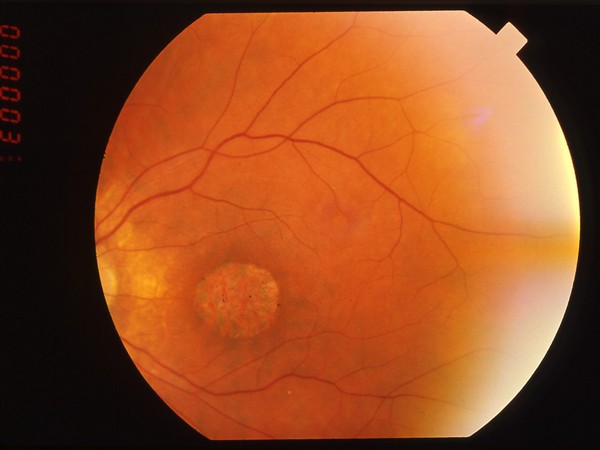
A genetic mutation that leads to a rare, but devastating blindness-causing syndrome has been discovered in monkeys for the first time. The finding offers a promising way to develop gene and cell therapies that could treat the condition in people.
Three species of monkeys (rhesus macaques) with a mutated gene that's associated with Bardet-Biedl Syndrome have been discovered, according to a study published in the journal -- Experimental Eye Research.
It is the first known naturally occurring nonhuman primate model of the syndrome, which is also called BBS.
BBS leads to vision loss, kidney disfunction, extra fingers or toes, and other symptoms. It occurs in 1 of 140,000 to 160,000 North American births.
"There is no cure for Bardet-Biedel Syndrome today, but having a naturally occurring animal model for the condition could help us find one in the future," said the paper's corresponding author, Martha Neuringer, Ph.D., a professor of neuroscience at the Oregon National Primate Research Center at Oregon Health & Science University,
He is also a research associate professor of ophthalmology in the OHSU School of Medicine and OHSU Casey Eye Institute.
The discovery is timely, as gene therapy is already becoming a reality for some with retinal diseases.
In the 1990s, researchers discovered dogs that had a gene mutation linked to a congenital blindness-causing condition called Leber's congenital amaurosis.
That animal model played a key role in helping researchers develop what became the first FDA-approved gene therapy for an inherited disease in December 2018. Neuringer's group also hopes to develop a similar therapy for BBS.
After Neuringer and colleagues discovered two related monkeys without cells that are key to vision, OHSU nonhuman primate genetics experts Betsy Ferguson, Ph.D., and Samuel Peterson, Ph.D., examined the animals' genomes. They quickly found both monkeys had a mutation of the BBS7 gene, one of at least 14 genes associated with BBS.
Because Ferguson leads an effort to genetically sequence 2,000 rhesus macaques at the nonhuman primate research centre, they were also able to search the genomes of numerous other monkeys there.
As a result, the team found a third monkey with the same mutation. The third rhesus macaque already had serious vision loss when it was identified in 2018 at age three and a half, although it adapted so well among its social group that the vision loss wasn't obvious.
Neuringer's team is observing the third monkey over time to better understand how the disease progresses in rhesus macaques. (ANI)

Get the App

What to Read Next

Health

Scientists reveal how exercise protects brain from Alzheimer's

Scientists reveal how exercise protects brain from Alzheimer's

Exercise may sharpen the mind by repairing the brain's protective shield. Researchers found that physical activity prompts the liver to release an enzyme that removes a harmful protein, causing the blood-brain barrier to become leaky with age.

Read More
Health

Injection turns sleeping tumour immune cells into cancer fighters

Injection turns sleeping tumour immune cells into cancer fighters

The Korea Advanced Institute of Science and Technology (KAIST) researchers have developed a way to reprogram immune cells already inside tumours into cancer-killing machines.

Read More
Health

Scientists found a way to help ageing guts heal themselves

Scientists found a way to help ageing guts heal themselves

Researchers have discovered a way to help aging intestines heal themselves using CAR T-cell therapy. By targeting senescent cells that build up over time, the treatment boosted gut regeneration, reduced inflammation, and improved nutrient absorption in mice.

Read More
Health

Stem cell therapy helps AMD patients see again

Stem cell therapy helps AMD patients see again

A first-of-its-kind trial is testing adult stem cell transplants for advanced dry macular degeneration. Early results show the treatment is safe and can significantly improve vision, even in severely affected patients.

Read More
Health

Scientists turn body fat into bone to heal spinal fractures

Scientists turn body fat into bone to heal spinal fractures

Researchers at Osaka Metropolitan University have developed a promising new method for repairing spinal fractures using stem cells extracted from adipose tissue, also known as body fat.

Read More
Health

Cambridge scientists create gel that could end arthritis pain

Cambridge scientists create gel that could end arthritis pain

Cambridge scientists have created a breakthrough material that can sense tiny chemical changes in the body, such as the increased acidity during an arthritis flare-up, and release drugs exactly when and where they're needed.

Read More
Health

Mosquito killing pill, Ivermectin drops malaria by 26%: Study 

Mosquito killing pill, Ivermectin drops malaria by 26%: Study 

A groundbreaking study has revealed that the mass administration of ivermectin--a drug once known for treating river blindness and scabies--can significantly reduce malaria transmission when used in conjunction with bed nets.

Read More
Health

Evolutionary modeling to understand drug resistance

Evolutionary modeling to understand drug resistance

Researchers are working to improve the way we use evolutionary modeling to understand drug resistance. The study uses a "fitness seascape" evolutionary model to predict whether an infection will develop antibiotic resistance. It found that inconsistent timing and missing early doses can lead to treatment failure.

Read More
Health

High-fat diet sets off metabolic dysfunction in cells

High-fat diet sets off metabolic dysfunction in cells

Researchers find high-fat diets set off metabolic dysfunction in cells, leading to weight gain, but these effects can be reversed by treatment with an antioxidant.

Read More
Health

Experimental painkiller could outsmart opioids: Study 

Experimental painkiller could outsmart opioids: Study 

A study shows a non-opioid pain reliever blocks pain at its source -- calming specific nerve signals that send pain messages to the brain. In mice, the compound SBI-810 eased pain from surgery, bone fractures, and nerve injury without causing sedation or constipation.

Read More
Home About Us Our Products Advertise Contact Us Terms & Condition Privacy Policy

Copyright © aninews.in | All Rights Reserved.




