

ADD ANI AS A TRUSTED SOURCE
googleads
ANI Logo
Menu
Health

Study finds poor sleep linked to negative impact on health

Exeter [UK], November 23, (ANI): According to new research, people who are over 50 and suffer from poor sleep can also suffer from the negative perceptions of ageing that can affect their physical, mental and cognitive health.

ANI Nov 23, 2021 11:47 IST googleads

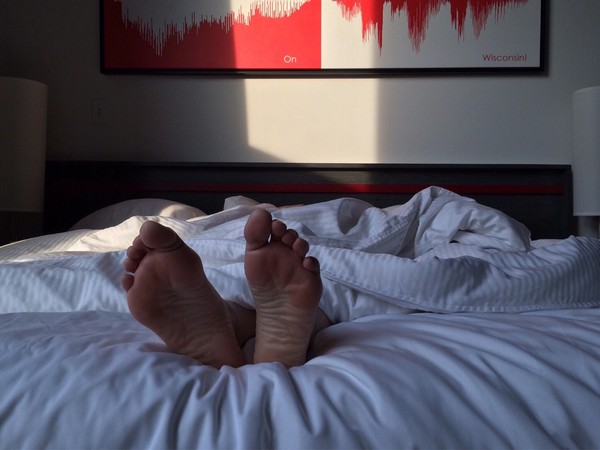
Representative image

Exeter [UK], November 23, (ANI): According to new research, people who are over 50 and suffer from poor sleep can also suffer from the negative perceptions of ageing that can affect their physical, mental and cognitive health.
This study has been published in the 'Behavioral Sleep Medicine Journal'.
The study led by the University of Exeter found that people who rated their sleep the worst also felt older, and perceived their own physical and mental ageing more negatively.
Lead author Serena Sabatini, of the University of Exeter, said, "As we age, we all experience both positive and negative changes in many areas of our lives. However, some people perceive more negative changes than others. As we know that having a negative perception of ageing can be detrimental to future physical health, mental health, and cognitive health, an open question in ageing research is to understand what makes people more negative about ageing. Our research suggests that poor sleepers feel older, and have a more negative perception of their ageing. We need to study this further - one explanation could be that a more negative outlook influences both. However, it could be a sign that addressing sleep difficulties could promote a better perception of ageing, which could have other health benefits."
Researchers surveyed 4,482 people aged 50 and over who are part of the PROTECT study. Run by the University of Exeter and the Institute of Psychiatry, Psychology & Neuroscience (IoPPN) at King's College London, and funded by the National Institute for Health Research (NIHR) Maudsley Biomedical Research Centre, PROTECT is an innovative online study in which participants took regular cognitive tests and completed lifestyle questionnaires. The study aimed to understand what helps people stay cognitively healthy in later life.
The research team noticed that many PROTECT participants were commenting on their relationship with sleep as part of standard questionnaires within the study.
Comments included, "How I feel fluctuates widely depending on my sleep. I feel great if I get six hours so about half the time I feel younger and half the time I feel older!"
Another comment read, "I have chronic pain problems and get very little sleep which impacts my life quite a lot."
As a result of such comments, the team decided to conduct a questionnaire looking specifically at sleep. In the research, participants were asked whether they had experienced a list of negative age-related changes, such as poorer memory, less energy, increased dependence on the help of others, decreased motivation, and having to limit their activities. They also rated their quality of sleep. The participants completed both questionnaires twice, one year apart.
Professor Clive Ballard, of the University of Exeter, said, "This research is an important part of the growing body of evidence about the crucial role of sleep in healthy ageing. We now need more people to sign up to PROTECT, to help us understand this further. We've got some exciting trials ahead on how to optimise sleep in some particularly vulnerable groups, such as people with dementia in care homes." (ANI)


Get the App

What to Read Next

Health

The truth about ‘Eating for Two’ explained by doctors

The truth about ‘Eating for Two’ explained by doctors

Health experts warn that interpreting the advice literally can lead to excessive calorie intake, unhealthy weight gain and a higher risk of Gestational Diabetes Mellitus (GDM), a condition that affects blood sugar levels during pregnancy.

Read More
Health

High-fat keto diet may boost exercise benefits

High-fat keto diet may boost exercise benefits

A new study suggests that eating more fat rather than less could help the body gain greater benefits from exercise when blood sugar levels are high, offering an unexpected perspective on how diet and physical activity work together to support metabolic health.

Read More
Health

Pre-workout supplements may cut sleep in half for young users

Pre-workout supplements may cut sleep in half for young users

A popular fitness trend among young people may be quietly undermining their sleep. A new study led by researchers at the University of Toronto has found that teenagers and young adults who use pre-workout supplements are significantly more likely to experience extremely short sleep durations.

Read More
Health

The more you fear aging, the faster your body may age

The more you fear aging, the faster your body may age

Worrying about getting older especially fearing future health problems may actually speed up aging at the cellular level, according to new research from NYU.

Read More
Health

Scientists discover reason high altitude protects against diabete

Scientists discover reason high altitude protects against diabete

Living at high altitude appears to protect against diabetes, and scientists have finally discovered the reason. When oxygen levels drop, red blood cells switch into a new metabolic mode and absorb large amounts of glucose from the blood.

Read More
Health

Scientists reveal how exercise protects brain from Alzheimer's

Scientists reveal how exercise protects brain from Alzheimer's

Exercise may sharpen the mind by repairing the brain's protective shield. Researchers found that physical activity prompts the liver to release an enzyme that removes a harmful protein, causing the blood-brain barrier to become leaky with age.

Read More
Health

Scientists find clue to human brain evolution in finger length

Scientists find clue to human brain evolution in finger length

Human evolution has long been tied to growing brain size, and new research suggests prenatal hormones may have played a surprising role. By studying the relative lengths of the index and ring fingers, a marker of prenatal exposure to oestrogen and testosterone, researchers found that higher prenatal oestrogen exposure was associated with larger head size in newborn boys.

Read More
Health

MRI scans show exercise can make the brain look younger

MRI scans show exercise can make the brain look younger

New research suggests that consistent aerobic exercise can help keep your brain biologically younger. Adults who exercised regularly for a year showed brains that appeared nearly a year younger than those who didn't change their habits.

Read More
Health

Scientists solve a major roadblock in cancer cell therapy: Study 

Scientists solve a major roadblock in cancer cell therapy: Study 

Researchers have found a reliable way to grow helper T cells from stem cells, solving a major challenge in immune-based cancer therapy. Helper T cells act as the immune system's coordinators, helping other immune cells fight longer and harder.

Read More
Health

Swedish study reveals when fitness and strength begin to fade

Swedish study reveals when fitness and strength begin to fade

A long-running Swedish study has followed adults for nearly five decades, uncovering when physical decline truly begins. Fitness and strength start slipping around age 35, then worsen gradually with age.

Read More
Home About Us Our Products Advertise Contact Us Terms & Condition Privacy Policy

Copyright © aninews.in | All Rights Reserved.


