Study finds living near oil, gas wells increases air pollution exposure
Washington [US], October 17 (ANI): Stanford researchers have observed higher levels of air pollutants within 2.5 miles of oil and gas wells, likely worsening negative health outcomes for residents.
ANI
Oct 17, 2021 15:33 IST

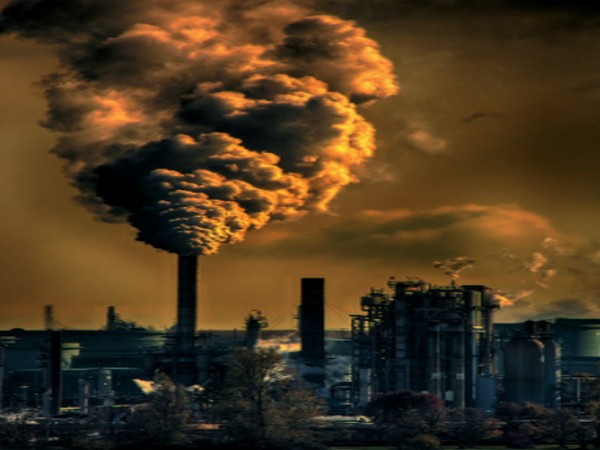
Washington [US], October 17 (ANI): Stanford researchers have observed higher levels of air pollutants within 2.5 miles of oil and gas wells, likely worsening negative health outcomes for residents.
The findings of the study were published in the journal 'Science of The Total Environment'.
The scientists analysed local air quality measurements in combination with atmospheric data and found that oil and gas wells are emitting toxic particulate matter (PM2.5), carbon monoxide, nitrous oxide, ozone and volatile organic compounds (VOCs). The findings will help researchers determine how proximity to oil and gas wells may increase the risk of adverse health outcomes, including preterm birth, asthma and heart disease.
"In California, Black and Latinx communities face some of the highest pollutions from oil and gas wells. If we care about environmental justice and making sure every kid has a chance to be healthy, we should care about this. What's novel about our study is that we've done this at a population, state-wide scale using the same methods as public health studies," said lead author David Gonzalez, who conducted research for the study while a PhD student in Stanford's Emmett Interdisciplinary Program in Environment and Resources (E-IPER).
The findings align with other smaller-scale studies that have measured emissions from a handful of wells. At least two million Californians live within one mile of an active oil or gas well.
"It's really hard to show air quality impacts of an activity like oil and gas production at a population scale, but that's the scale we need to be able to infer health impacts," said senior study author Marshall Burke, an associate professor of Earth system science at Stanford's School of Earth, Energy and Environmental Sciences (Stanford Earth).
"While it's not necessarily surprising that drilling and operating oil and gas wells emit air pollutants, knowing the magnitude of the effect improves our broader understanding of who is exposed to what and how to intervene to improve health outcomes," added Burke.
The research has revealed that when a new well is being drilled or reaches 100 barrels of production per day, the deadly particle pollution known as PM2.5 increases by two micrograms per cubic meter about a mile away from the site.
A recent study published in 'Science Advances' found that long-term exposure to one additional microgram per meter cubed of PM2.5 increases the risk of death from COVID-19 by 11 per cent.
"We started in 2006 because that's when local agencies started reporting PM2.5 concentrations. We're very concerned about the particulate matter because it's a leading global killer," said Gonzalez, who is now a postdoctoral researcher at the University of California, Berkeley.
The team evaluated about 38,000 wells that were being drilled and 90,000 wells in production between 2006 and 2019. They developed an econometric model incorporating over a million daily observations from 314 air monitors in combination with global wind direction information from the National Oceanic and Atmospheric Administration (NOAA) to determine if the pollutants were coming from the wells.
Other factors that could be contributing to elevated emissions were controlled for -- such as wildfire smoke or industrial activities -- and monitors located far from drilling sites were used to identify those factors unrelated to wells. They also analysed locations with air quality data from both before and after a well was drilled.
"Sometimes the wind is blowing from the well, sometimes it's not, and we found significantly higher pollution on days when the wind is blowing from the wells. As a control, we assumed wells that are downwind of the air monitor shouldn't contribute any pollution -- and that is indeed what we saw," Gonzalez said.
The research also revealed that ozone -- a powerful oxidant that can cause wheezing, shortness of breath and aggravated lung disease -- was present up to 2.5 miles from wells. Children are at the greatest risk from exposure to ozone because their lungs are still developing, according to the Environmental Protection Agency (EPA).
The new study contributes to a growing body of evidence about the dangers of living near oil and gas wells that may help guide ongoing policymaking around residential setbacks from drilling sites. For example, LA County recently voted to phase out oil and gas drilling, citing issues of climate change, environmental impacts and equity, and other California cities are in discussion about neighbourhood drilling regulations.
"Many of California's oil fields have been operating for decades. People that live near them have been chronically exposed to higher levels of pollution -- and a lot of these wells are located in neighbourhoods that are already burdened by pollution," Gonzalez said.
"Our study adds to the evidence that public health policies are needed to reduce residents' exposure to air pollution from wells," Gonzalez added.
Although data for the research is from California, the co-authors say the findings are likely applicable to other regions with oil and gas operations.
"We've had earlier papers suggesting that proximity to oil and gas production worsens health outcomes, and the likely channel was through air pollutants, but we previously didn't have a good way to demonstrate that was the case," Burke said.
"This new work is helping confirm that air pollution was the missing link between this type of energy production and the bad outcome that we cared about," Burke concluded. (ANI)
Get the App