

ADD ANI AS A TRUSTED SOURCE
googleads
ANI Logo
Menu
Health

Study finds impact of social disadvantages on fetal brain development

Washington [US], October 12 (ANI): Published in the journal 'Proceedings of the National Academy of Sciences' (PNAS), a new study found links between social disadvantages and fetal brain development.

ANI Oct 12, 2022 04:47 IST googleads

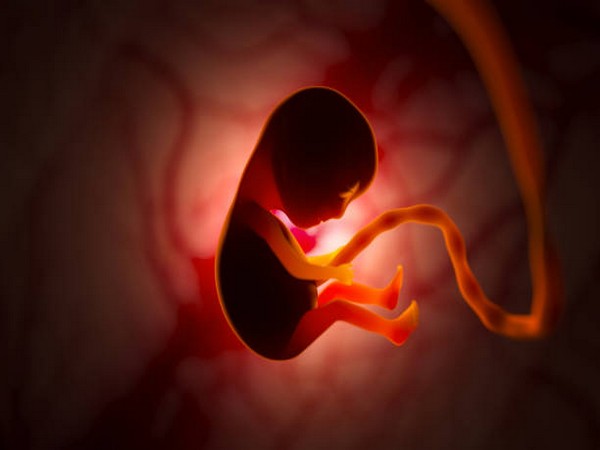
Representative image

Washington [US], October 12 (ANI): Published in the journal 'Proceedings of the National Academy of Sciences' (PNAS), a new study found links between social disadvantages and fetal brain development.
Researchers examined 289 healthy newborns from socially diverse families in the United States using diffusion MRI scans shortly after birth. The analysis revealed that prenatal exposure to measures of social disadvantage was associated with altered microstructure of white matter in frontolimbic pathways of the brain that are important for socioemotional development.
Early life adversity (social disadvantage and psychosocial stressors) is associated with altered microstructure in fronto-limbic pathways important for socioemotional development.
Understanding when these associations begin to emerge may inform the timing and design of preventative interventions. In this longitudinal study, 399 mothers were oversampled for low income and completed social background measures during pregnancy.
Measures were analyzed with structural equation analysis resulting in two latent factors: social disadvantage (education, insurance status, income-to-needs ratio [INR], neighborhood deprivation, and nutrition) and psychosocial stress (depression, stress, life events, and racial discrimination). At birth, 289 healthy term-born neonates underwent a diffusion MRI (dMRI) scan.
Mean diffusivity (MD) and fractional anisotropy (FA) were measured for the dorsal and inferior cingulum bundle (CB), uncinate, and fornix using probabilistic tractography in FSL. Social disadvantage and psychosocial stress were fitted to dMRI parameters using regression models adjusted for infant postmenstrual age at scan and sex. Social disadvantage, but not psychosocial stress, was independently associated with lower MD in the bilateral inferior CB and left uncinate, right fornix, and lower MD and higher FA in the right dorsal CB.
Results persisted after accounting for maternal medical morbidities and prenatal drug exposure.
In moderation analysis, psychosocial stress was associated with lower MD in the left inferior CB among the lower-to-higher socioeconomic status (SES) (INR >= 200 per cent) group, but not the extremely low SES (INR < 200 per cent) group. Increasing access to social welfare programs that reduce the burden of social disadvantage and related psychosocial stressors may be an important target to protect fetal brain development in fronto-limbic pathways. (ANI)


Get the App

What to Read Next

Health

Scientists find clue to human brain evolution in finger length

Scientists find clue to human brain evolution in finger length

Human evolution has long been tied to growing brain size, and new research suggests prenatal hormones may have played a surprising role. By studying the relative lengths of the index and ring fingers, a marker of prenatal exposure to oestrogen and testosterone, researchers found that higher prenatal oestrogen exposure was associated with larger head size in newborn boys.

Read More
Health

Scientists find hidden synapse hotspots in the teen brain: Study

Scientists find hidden synapse hotspots in the teen brain: Study

The scientists have discovered that the adolescent brain does more than prune old connections. During the teen years, it actively builds dense new clusters of synapses in specific parts of neurons.

Read More
Health

Development of  multi-stage Malaria vaccine ‘AdFalciVax’ is under

Development of  multi-stage Malaria vaccine ‘AdFalciVax’ is under

The Indian Council of Medical Research (ICMR), through its Regional Medical Research Centre, Bhubaneswar (RMRCBB) and National Institute of Malaria Research (NIMR), in partnership with the Department of Biotechnology-National Institute of Immunology (DBT-NII), is currently developing a novel recombinant chimeric malaria vaccine candidate, named AdFalciVax.

Read More
Health

India’s manufacturing sector poised for leap with infrastructure

India’s manufacturing sector poised for leap with infrastructure

India's manufacturing landscape is undergoing a significant transformation, fueled by robust infrastructure development and supportive government policies, as revealed in a recent report by Cushman & Wakefield named Elevating India's Manufacturing Resilience: Charting the Path to Self-Reliance.

Read More
Health

Study shows how allergies differ in urban, rural children

 Study shows how allergies differ in  urban, rural children

Scientists discovered that a previously uncharacterized subset of immune cells may play an important role in the development of allergy illnesses and explain disparities between urban and rural populations.

Read More
Health

Antibiotics from human use are contaminating rivers: Study

Antibiotics from human use are contaminating rivers: Study

Millions of kilometers of rivers around the world are carrying antibiotic pollution at levels high enough to promote drug resistance and harm aquatic life, a new study warns.

Read More
Health

Early-life growth proved important for height in puberty

Early-life growth proved important for height in puberty

Growth patterns during a child's first two years of life may shape pubertal growth and adult height, but have little effect on pubertal timing, according to research presented at the first Joint Congress of the European Society of Paediatric Endocrinology (ESPE) and the European Society of Endocrinology (ESE).

Read More
Health

Learning about social interaction by studying dancing

Learning about social interaction by studying dancing

Dancing fluidly with someone requires social coordination. This skill requires coordinating movements with others while also processing dynamic sensory input, such as sounds and visuals.

Read More
Health

Repetitive behaviors are indicative of an autism

Repetitive behaviors are indicative of an autism

People with autism are typically diagnosed by clinical observation and assessment. To deconstruct the clinical decision process, which is often subjective and difficult to describe, researchers used a large language model (LLM) to synthesize the behaviors and observations that are most indicative of an autism diagnosis.

Read More
Health

Good parenting helps, but has limits under major deprivation

Good parenting helps, but has limits under major deprivation

Good parenting can make a huge difference as newborns learn to communicate and process information. An increasing amount of early childhood development research has indicated that parent training is a worthwhile investment in improving childhood outcomes.

Read More
Home About Us Our Products Advertise Contact Us Terms & Condition Privacy Policy

Copyright © aninews.in | All Rights Reserved.


