Study finds green neighbourhoods have reduced rates of heart disease
Brussels [Belgium], August 28 (ANI): According to new research, people who live in green neighbourhoods are less likely to develop cardiovascular disease.
ANI
Aug 28, 2021 12:45 IST

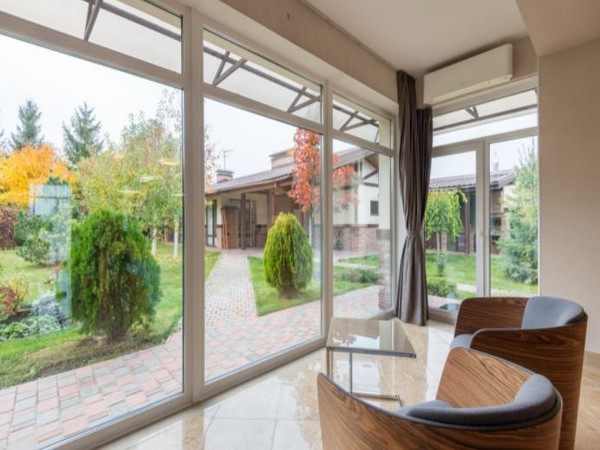
Brussels [Belgium], August 28 (ANI): According to new research, people who live in green neighbourhoods are less likely to develop cardiovascular disease.
The findings of the research were presented at ESC Congress 2021.
"Higher levels of greenness were associated with lower rates of heart conditions and stroke over time, both when an area maintained high greenness and when greenness increased," said study author Dr William Aitken of the University of Miami, US.
"It was remarkable that these relationships appeared in just five years, a relatively short amount of time for a positive environmental impact," Dr Aitken added.
Making streets and neighbourhoods greener has many benefits and this study investigated whether it had any relationship with rates of heart disease.
The researchers also examined whether planting more vegetation in a locality would be accompanied by reductions in heart disease over time.
The study included 243,558 US Medicare beneficiaries aged 65 and older who lived in the same area of Miami from 2011 to 2016. Medicare records were used to obtain the incidence of new cardiovascular conditions during the five-year study including heart attack, atrial fibrillation, heart failure, ischaemic heart disease, hypertension, and stroke/transient ischaemic attack.
Satellite images were used to assess the amount of visible and near-infrared (i.e. invisible) sunlight reflected from the Earth's surface.
Chlorophyll from plants typically absorbs visible light and reflects near-infrared light, so measuring both indicates the amount of vegetation. The greenness of city blocks was then classified as low, medium or high.
Participants were categorised based on whether they lived in low, medium or high greenness blocks in 2011.
The process was repeated for those same residents and the greenness of their blocks in 2016.
During that period of time, Miami-Dade County Parks conducted tree planting programmes so, for example, there was the possibility that someone in a low greenness block in 2011 could be living in a high greenness block in 2016.
The researchers analysed the odds of developing any new cardiovascular disease, and the number of new cardiovascular conditions, based on block-level greenness.
The analyses were adjusted for other factors that could be related to new-onset heart disease: age, sex, race/ethnicity, number of baseline cardiovascular conditions, and neighbourhood characteristics including median household income and walkability.
The researchers first compared heart health among those continually living in high versus low greenness areas during the five-year study.
Residents of high greenness blocks throughout the study had a 16 per cent lower odds of developing any new cardiovascular conditions compared to those in low greenness blocks (odds ratio [OR]=0.84; 95 per cent confidence interval [CI] 0.79-0.90; p<0.001).
Among participants who developed a cardiovascular condition during follow-up, those in high greenness areas developed 4 per cent fewer new diseases compared with those in low greenness blocks (OR=0.96; 95 per cent CI 0.92-0.99; p<0.05).
The researchers then compared heart health in participants whose neighbourhood became greener versus those who continued to live in areas with low vegetation.
When compared to residents of low greenness areas throughout the study, those living in areas that increased their greenness from low in 2011 to high in 2016 had 15 per cent lower odds of developing new cardiovascular conditions (OR=0.85; 95 per cent CI 0.75-0.97; p<0.001).
Among participants who developed a cardiovascular condition during follow-up, those whose neighbourhood became greener developed 9 per cent fewer new cardiovascular conditions compared to residents of localities with continually low levels of greenness throughout the study (OR=0.91; 95 per cent CI 0.83-0.99; p<0.05).
"We suspect that multiple factors may account for these observations. For instance, people living in greener areas may do more outdoor exercise and might feel less stressed due to being surrounded by nature," Dr Aitken said.
"In addition, vegetation could provide some protection from air and/or noise pollution. This is an area for further exploration," Dr Aitken added.
"Tree planting and greening of neighbourhoods is associated with multiple benefits and offers a relatively low-cost investment to enhance health and well-being in many circumstances," Dr Aitken explained.
"For the cost of one emergency room visit for a heart attack, trees could be planted in a neighbourhood with 100 residents and potentially prevent ten heart diseases in this group," Dr Aitken concluded. (ANI)
Get the App