 हिंदी खबर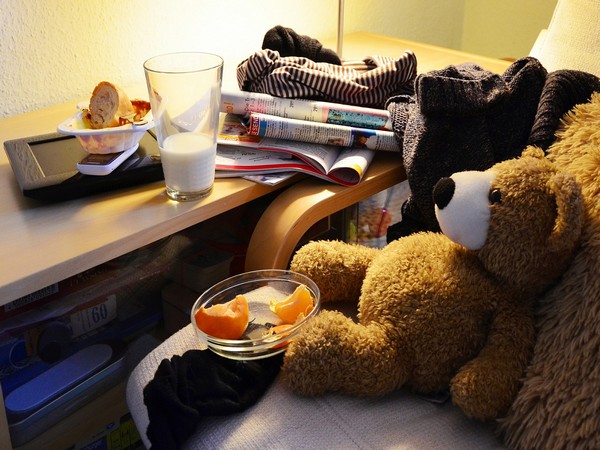

Norwich [UK], December 6 (ANI): According to a study conducted by the University of East Anglia, a clutter-free environment may not help people with dementia in carrying out daily tasks.
The research has been published in the 'Alzheimer Disease & Associated Disorders Journal'.
Researchers studied whether people with dementia were better able to carry out tasks, such as making a cup of tea, at home -- surrounded by their usual clutter -- or in a clutter-free environment.
They were surprised to find that participants with moderate dementia performed better when surrounded by their usual clutter.
But the different environments made no difference to people with mild and severe dementia, who were able to perform at the same level in both settings.
Prof Eneida Mioshi, from UEA's School of Health Sciences, said, "The majority of people with dementia live in their own home and usually want to remain living at home for as long as possible. So it's really important to know how people with dementia can be best supported at home -- one possible route would be by adapting the physical environment to best suit their needs."
"As dementia progresses, people gradually lose their ability to carry out daily tasks due to changes in their cognitive, perceptual and physical abilities. Participation in daily tasks could then be improved by adapting the person's environment," Mioshi added.
"To this end, we wanted to investigate the role of clutter in activity participation, given the potential to use de-cluttering to support people with dementia to continue to be independent. Environmental clutter has been defined as the presence of an excessive number of objects on a surface or the presence of items that are not required for a task," Mioshi continued.
"It is generally assumed that a person with dementia will be better able to carry out daily tasks when their home space is tidy and clutter-free. However there has been very little research to really test this hypothesis," Mioshi said.
"We wanted to see whether clutter was negatively affecting people with dementia. So we studied how people at different stages of dementia coped with carrying out daily tasks at home, surrounded by their usual clutter, compared to in a clutter-free setting -- a specially designed home research lab." Mioshi explained.
Occupational therapist and PhD student Julieta Camino carried out the study with 65 participants who were grouped into those with mild, moderate and severe dementia.
They were asked to carry out daily tasks including making a cup of tea and making a simple meal, both at their own home and at UEA's specially designed NEAT research bungalow -- a fully furnished research facility that felt just like a domestic bungalow.
The researchers evaluated the performance of activities in both settings, and also measured the amount of clutter in the participants' homes. Meanwhile, the NEAT home setting was completely clutter-free.
Julieta Camino, also from UEA's School of Health Sciences, said, "We thought that the complete absence of clutter in our research bungalow would play a beneficial role in helping people with dementia with daily living activities. But we were wrong."
"We were surprised to find that overall, people with moderate dementia, in particular, performed daily tasks better at home -- even though their homes were significantly more cluttered than our research bungalow," Camino added.
"And it didn't seem to make any difference how cluttered the participant's home was. The only factor that contributed to how well they could carry out tasks at home was their level of cognition -- with those with severe dementia encountering the same difficulties to perform the tasks at home and in the research bungalow," Camino explained.
This research received funding from the Alzheimer's Society and National Institute of Health Research (NIHR) Applied Research Collaboration East of England (ARC EoE) programme.
Sian Gregory, Research Information Manager at Alzheimer's Society, said, "We can sometimes make assumptions about what might help someone with dementia who's living at home, like de-cluttering so they can concentrate on tasks like making a cup of tea. But, as this study shows, our ideas might not always be right."
"Challenging assumptions is so important for carers to understand how to help someone with dementia to live well in their environment. That's why the Alzheimer's Society funds a variety of studies like this one to evaluate what actually works for people living with dementia today, as well as finding treatments for the future," Gregory concluded. (ANI)




