

ADD ANI AS A TRUSTED SOURCE
googleads
ANI Logo
Menu
Health

Study evaluates outcomes of drug meth among burn patients

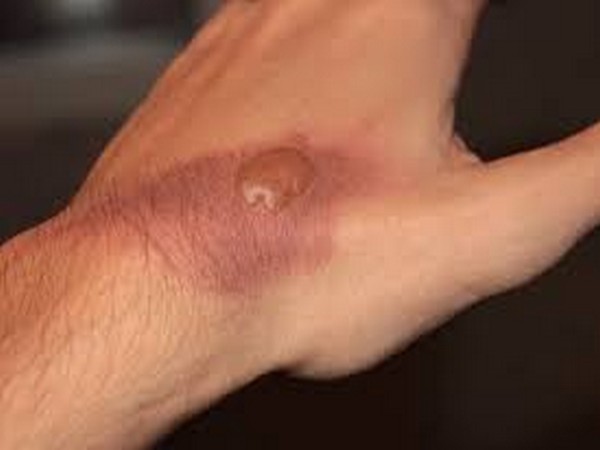
Washington D.C. [USA], Aug 4 (ANI): A recent study has revealed that a drug called Methamphetamine (Meth) is not associated with worse health outcomes among burn patients. However, it was linked to worse conditions for those patients after their release from the hospital.

ANI Aug 04, 2019 19:16 IST googleads

Representative Image

Washington D.C. [USA], Aug 4 (ANI): A recent study has revealed that a drug called Methamphetamine (Meth) is not associated with worse health outcomes among burn patients. However, it was linked to worse conditions for those patients after their release from the hospital.
The study was published in the 'Journal of Burn Care & Research'.
Meth-positive patients commonly sustain large total body surface area (TBSA) burn injuries. They are often a result of drug-related accidents or explosions during meth production, according to the study authors.
"At first, we expected that matched meth-positive patients would have worse outcomes than meth-negative patients," said senior author Kathleen Romanowski.
"We were surprised to find that they did not have higher mortality or require more procedures, ventilation days, operating room visits or ICU days."
Using a database of burn-injured patients over four years, the researchers examined all the burn-injury cases.
"This is the largest study to date to investigate methamphetamine use in burn-injured patients, with 264 meth-positive adult cases," Romanowski said.
Out of the 264 meth-positive cases, they matched 193 patients with meth-negative patients based on their age and the nature of their injuries.
The outcomes showed that meth-positive patients suffered worse injuries and stayed longer in hospital than meth-negative patients. Yet, more meth-positive patients left the hospital against medical advice. Fewer meth-positive patients had access to support such as skilled nursing facilities.
On average, meth-positive patients were more likely than meth-negative patients to be younger (42 vs. 46 years), male (81.5 per cent vs. 72.7 per cent) smokers (54 per cent vs. 29 per cent) and drug-dependent (81 per cent vs. 16 per cent). They also were less likely to have health issues such as congestive heart failure, high blood pressure requiring medication, obesity, diabetes and wheelchair dependency. (ANI)

Get the App

What to Read Next

Health

Study reveals which brain areas influence political intensity

Study reveals which brain areas influence political intensity

The study analyzed Vietnam War veterans with and without brain injuries. By comparing people who had very localized brain lesions with those who didn't, the study team was able to identify the brain structures that can modify the intensity of political feelings

Read More
Health

Antibody-based therapy closer to treat lethal mucormycosis

Antibody-based therapy closer to treat lethal mucormycosis

Mucormycosis, a fungus infection caused by Mucorales, has a high mortality rates in those with weakened immune systems and those who have suffered severe trauma, such as burns, blast injuries, or natural disaster victims.

Read More
Health

Researchers devise process to convert skin cell into neurons

Researchers devise process to convert skin cell into neurons

Researchers devised a process to convert a skin cell directly into a neuron, eliminating the need to generate induced pluripotent stem cells. Such neurons could be used to treat spinal cord injuries or diseases such as ALS.

Read More
Health

Good parenting helps, but has limits under major deprivation

Good parenting helps, but has limits under major deprivation

Good parenting can make a huge difference as newborns learn to communicate and process information. An increasing amount of early childhood development research has indicated that parent training is a worthwhile investment in improving childhood outcomes.

Read More
Health

Sleep patterns reveal comatose patients with hidden consciousness

Sleep patterns reveal comatose patients with hidden consciousness

Several studies conducted over the last decade have found that up to a quarter of unresponsive patients with recent brain injuries may have a level of consciousness that is generally hidden from their families and physicians.

Read More
Health

Stimulating hypothalamus restores walking in paralyzed patients

Stimulating hypothalamus restores walking in paralyzed patients

Researchers at EPFL and Lausanne University Hospital (CHUV), led by professors Gregoire Courtine and Jocelyne Bloch, have made significant advances in the treatment of spinal cord injuries (SCI). The scientists boosted the recovery of lower limb movements in two people with partial SCI by delivering deep brain stimulation (DBS) to an unanticipated region of the brain--the lateral hypothalamus (LH), considerably increasing their autonomy and well-being.

Read More
Health

Artificial blood vessels may improve heart bypass results

 Artificial blood vessels may improve heart bypass results

The treatment of cardiovascular disorders may be revolutionized by 3D-printed blood arteries, which closely resemble human veins in their characteristics.

Read More
Health

Study assesses therapeutic strategies for severe obesity

Study assesses therapeutic strategies for severe obesity

According to a study adolescents with severe obesity who got both meal-replacement therapy and financial incentives had a higher reduction in body mass index compared to those who just received meal-replacement therapy.

Read More
Health

Multi-component diabetes care improves long-term outcomes

Multi-component diabetes care improves long-term outcomes

A new study by the Centre for Cardiovascular Risk Reduction in South Asia (CARRS) has demonstrated significant long-term benefits of a multicomponent quality improvement (QI) strategy in managing type 2 diabetes in India and Pakistan.

Read More
Health

People with type 2 diabetes lack life-saving info

People with type 2 diabetes lack life-saving info

Disease management is critical to avoiding long-term complications, including limb amputations or heart problems. To avoid negative outcomes, it is critical that patients understand how to manage their disease on a daily basis.

Read More
Home About Us Our Products Advertise Contact Us Terms & Condition Privacy Policy

Copyright © aninews.in | All Rights Reserved.


