

ADD ANI AS A TRUSTED SOURCE
googleads
ANI Logo
Menu
Health

Study discovers handgrip strength as potential tool to identify people at high risk of type 2 diabetes

Washington [US], September 5 (ANI): To identify the patients at risk of Type 2 diabetes, health care professionals have identified a simple test, such as the strength of your handgrip, as a quick low cost, screening tool.

ANI Sep 05, 2020 19:09 IST googleads

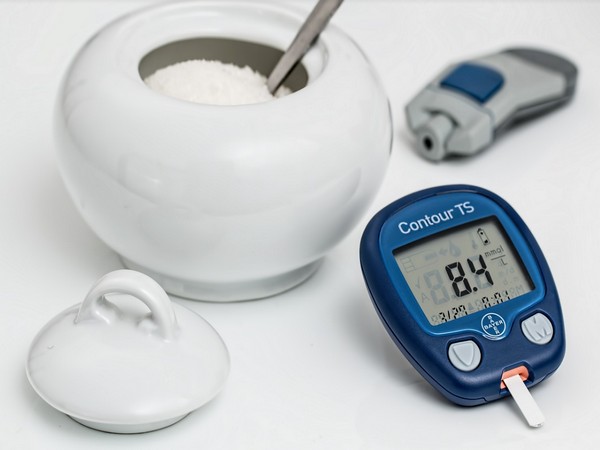
Representative image

Washington [US], September 5 (ANI): To identify the patients at risk of Type 2 diabetes, health care professionals have identified a simple test, such as the strength of your handgrip, as a quick low cost, screening tool.
In new research, scientists at the universities of Bristol and Eastern Finland measured the muscular handgrip strength of 776 men and women without a history of diabetes over a 20-year period and demonstrated that the risk of type 2 diabetes was reduced by around 50 per cent for every unit increase in handgrip strength value. The findings are published in the Annals of Medicine.
Diabetes in all forms is the ninth major cause of death in the world. Around 90 per cent of people with diabetes have type 2 diabetes. In the UK alone, one in ten people over 40 are now living with a diagnosis of type 2 diabetes. It is expected that if nothing changes, more than five million people will have developed diabetes by 2025.
Though older age, obesity, family history and lifestyle factors such as physical inactivity, smoking, unhealthy diet and excessive alcohol contribute substantially to the risk of developing type 2 diabetes, these factors alone do not explain all of the risks for Type 2 diabetes.
It appears other factors may be involved. Reduced muscular strength, which can be measured by handgrip strength, has consistently been linked to early death, cardiovascular disease, and disability.
Until recently, there was inconsistent evidence on the relationship between handgrip strength and Type 2 diabetes. In a recent literature review of ten published studies on the topic, the same researchers demonstrated that people with higher values of handgrip strength had a 27 per cent reduced risk of developing Type 2 diabetes.
However, while findings from this review suggested handgrip strength could potentially be used to predict type 2 diabetes, researchers needed to test this formally using individual patient data.

In this latest study, the researchers from Bristol Medical School and Eastern Finland's Institute of Public Health and Clinical Nutrition followed 776 men and women aged 60-72 years without a history of diabetes over a 20-year period and measured the power of their handgrip strength using a handgrip dynamometer.
Patients were asked to squeeze the handles of the dynamometer with their dominant hand with maximum isometric effort and maintain this for five seconds.

An analysis of the results demonstrated that the risk of type 2 diabetes was reduced by about 50 per cent for every unit increase in handgrip strength value. This association persisted even after taking into account several established factors that can affect type 2 diabetes such as age, family history of diabetes, physical activity, smoking, hypertension, waist circumference and fasting plasma glucose.
When information on handgrip strength was added to these established factors which are already known to predict type 2 diabetes, the prediction of type 2 diabetes improved further.
"These findings may have implications for the development of Type 2 diabetes prevention strategies. Assessment of handgrip is simple, inexpensive and does not require very skilled expertise and resources and could potentially be used in the early identification of individuals at high risk of future type 2 diabetes," said lead author Dr Setor Kunutsor from Bristol's Musculoskeletal Research Unit.
Importantly, the findings appeared to be marked in women compared to men in sex-specific analyses, suggesting that women are likely to benefit from the use of this potential screening tool.
"These results are based on the Finnish population. Given the low number of events in our analyses, we propose larger studies to replicate these findings in other populations and specifically in men and women," said Principal investigator, Professor Jari Laukkanen from the University of Eastern Finland.
The authors add that further research is needed to establish whether efforts to improve muscle strength such as resistance training are likely to reduce an individual's risk of type 2 diabetes. (ANI)


Get the App

What to Read Next

Health

The truth about ‘Eating for Two’ explained by doctors

The truth about ‘Eating for Two’ explained by doctors

Health experts warn that interpreting the advice literally can lead to excessive calorie intake, unhealthy weight gain and a higher risk of Gestational Diabetes Mellitus (GDM), a condition that affects blood sugar levels during pregnancy.

Read More
Health

High-fat keto diet may boost exercise benefits

High-fat keto diet may boost exercise benefits

A new study suggests that eating more fat rather than less could help the body gain greater benefits from exercise when blood sugar levels are high, offering an unexpected perspective on how diet and physical activity work together to support metabolic health.

Read More
Health

Pre-workout supplements may cut sleep in half for young users

Pre-workout supplements may cut sleep in half for young users

A popular fitness trend among young people may be quietly undermining their sleep. A new study led by researchers at the University of Toronto has found that teenagers and young adults who use pre-workout supplements are significantly more likely to experience extremely short sleep durations.

Read More
Health

The more you fear aging, the faster your body may age

The more you fear aging, the faster your body may age

Worrying about getting older especially fearing future health problems may actually speed up aging at the cellular level, according to new research from NYU.

Read More
Health

Scientists discover reason high altitude protects against diabete

Scientists discover reason high altitude protects against diabete

Living at high altitude appears to protect against diabetes, and scientists have finally discovered the reason. When oxygen levels drop, red blood cells switch into a new metabolic mode and absorb large amounts of glucose from the blood.

Read More
Health

Scientists reveal how exercise protects brain from Alzheimer's

Scientists reveal how exercise protects brain from Alzheimer's

Exercise may sharpen the mind by repairing the brain's protective shield. Researchers found that physical activity prompts the liver to release an enzyme that removes a harmful protein, causing the blood-brain barrier to become leaky with age.

Read More
Health

Scientists find clue to human brain evolution in finger length

Scientists find clue to human brain evolution in finger length

Human evolution has long been tied to growing brain size, and new research suggests prenatal hormones may have played a surprising role. By studying the relative lengths of the index and ring fingers, a marker of prenatal exposure to oestrogen and testosterone, researchers found that higher prenatal oestrogen exposure was associated with larger head size in newborn boys.

Read More
Health

MRI scans show exercise can make the brain look younger

MRI scans show exercise can make the brain look younger

New research suggests that consistent aerobic exercise can help keep your brain biologically younger. Adults who exercised regularly for a year showed brains that appeared nearly a year younger than those who didn't change their habits.

Read More
Health

Scientists solve a major roadblock in cancer cell therapy: Study 

Scientists solve a major roadblock in cancer cell therapy: Study 

Researchers have found a reliable way to grow helper T cells from stem cells, solving a major challenge in immune-based cancer therapy. Helper T cells act as the immune system's coordinators, helping other immune cells fight longer and harder.

Read More
Health

Swedish study reveals when fitness and strength begin to fade

Swedish study reveals when fitness and strength begin to fade

A long-running Swedish study has followed adults for nearly five decades, uncovering when physical decline truly begins. Fitness and strength start slipping around age 35, then worsen gradually with age.

Read More
Home About Us Our Products Advertise Contact Us Terms & Condition Privacy Policy

Copyright © aninews.in | All Rights Reserved.
