

ADD ANI AS A TRUSTED SOURCE
googleads
ANI Logo
Menu
Health

Study develops 3 systems together for baby's respiratory health

Rochester [New York], June 18 (ANI): The co-development of three systems, the gut microbiome, respiratory system, and immune system, is correlated with a baby's respiratory health, according to a new multidisciplinary study conducted by researchers at the University of Rochester Medical Center, and an infant can have negative respiratory outcomes if the development of one of these systems is disrupted.

ANI Jun 18, 2022 16:10 IST googleads

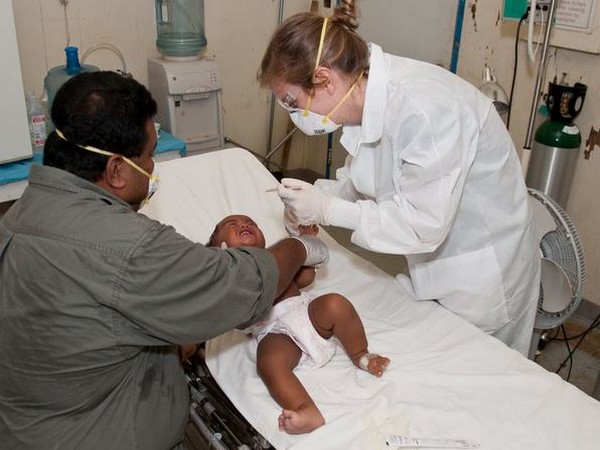
Representative image

Rochester [New York], June 18 (ANI): The co-development of three systems, the gut microbiome, respiratory system, and immune system, is correlated with a baby's respiratory health, according to a new multidisciplinary study conducted by researchers at the University of Rochester Medical Center, and an infant can have negative respiratory outcomes if the development of one of these systems is disrupted.
The findings of the research were published in the journal 'iScience'.
The project looked at 148 preterms and 119 full-term infants from birth through one year of age to examine the development of the microbiome, immune, and respiratory systems and how this co-development affects the health of a child. These systems typically develop concurrently and in sync with the baby during its first year of life.
The study found that disruption of any of the three systems resulted in greater respiratory morbidity for infants. In addition, the postmenstrual age (or weeks from conception) of the baby was a more accurate benchmark for predicting disruption of any of the systems than time since birth.
"When a baby is born, that is typically considered day zero for that child. We instead modelled it with the baby's age starting at the day of conception," said Scheible. "A baby's immune and microbial development at 2 months old doesn't look the same for a baby born at 32 weeks compared to one born at 42."
The implications of using postmenstrual age as a benchmark could potentially change how clinicians view the risk and benefit of immune or microbial-altering therapies, such as antibiotics or probiotics. This study found that prenatal antibiotics or infections disrupt the developmental trajectory. If babies are exposed to antibiotics - especially premature infants - that increases their risk for respiratory illnesses in the first year of life.
Additionally, caregivers should examine the usage of pro and prebiotics, according to Scheible. These interventions may not work when introduced at an inappropriate development timeline, and clinicians should consider using the postmenstrual age as a measure of readiness to see benefit from therapies targeting the microbiome and immune systems.
"When you take a baby that is born premature and strip away all the protections of the mother, such as the placenta, it's critical to know what happens to underdeveloped systems like the microbiome and the immune system. Interventions like intubation, central lines, oxygen and antibiotics are implemented and influence their development, and the impact of perturbing these systems may ripple more widely in those first two critical weeks for the baby," said Scheible.
To this point, the study found that when the fetus is exposed to antibiotics or infection right before birth, the normal T cell population developmental trajectory is disrupted, and this disruption predicts subsequent respiratory microbial colonization and respiratory illness.
In addition, the study authors found that when either the microbiome, immune, or respiratory system is disrupted, the three systems are no longer on a parallel path of development, and it takes several years for the affected system to catch up.
"We were able to model and measure immune and microbiome development and compare it with the clinical history of the patient, and the asynchrony of these systems directly leads to worse respiratory outcomes," said McDavid.
More research will be needed to validate these findings and to pin down the mechanisms linking microbial-immune co-development. If confirmed, these results could have major implications for determining the risk/benefits of perinatal antibiotic administration, the optimal timing for immune and microbiota targeting interventions, and for predicting potential respiratory morbidity for exposed pre-and full-term infants.
"We're not yet finding a magic bullet to determine who will develop illness. The utility is to suggest other models or interventions that can be trialed to try to see how the immune system or microbiome may be modified in which appropriate window based on age," said McDavid. (ANI)


Get the App

What to Read Next

Health

The truth about ‘Eating for Two’ explained by doctors

The truth about ‘Eating for Two’ explained by doctors

Health experts warn that interpreting the advice literally can lead to excessive calorie intake, unhealthy weight gain and a higher risk of Gestational Diabetes Mellitus (GDM), a condition that affects blood sugar levels during pregnancy.

Read More
Health

High-fat keto diet may boost exercise benefits

High-fat keto diet may boost exercise benefits

A new study suggests that eating more fat rather than less could help the body gain greater benefits from exercise when blood sugar levels are high, offering an unexpected perspective on how diet and physical activity work together to support metabolic health.

Read More
Health

Pre-workout supplements may cut sleep in half for young users

Pre-workout supplements may cut sleep in half for young users

A popular fitness trend among young people may be quietly undermining their sleep. A new study led by researchers at the University of Toronto has found that teenagers and young adults who use pre-workout supplements are significantly more likely to experience extremely short sleep durations.

Read More
Health

The more you fear aging, the faster your body may age

The more you fear aging, the faster your body may age

Worrying about getting older especially fearing future health problems may actually speed up aging at the cellular level, according to new research from NYU.

Read More
Health

Scientists discover reason high altitude protects against diabete

Scientists discover reason high altitude protects against diabete

Living at high altitude appears to protect against diabetes, and scientists have finally discovered the reason. When oxygen levels drop, red blood cells switch into a new metabolic mode and absorb large amounts of glucose from the blood.

Read More
Health

Scientists reveal how exercise protects brain from Alzheimer's

Scientists reveal how exercise protects brain from Alzheimer's

Exercise may sharpen the mind by repairing the brain's protective shield. Researchers found that physical activity prompts the liver to release an enzyme that removes a harmful protein, causing the blood-brain barrier to become leaky with age.

Read More
Health

Scientists find clue to human brain evolution in finger length

Scientists find clue to human brain evolution in finger length

Human evolution has long been tied to growing brain size, and new research suggests prenatal hormones may have played a surprising role. By studying the relative lengths of the index and ring fingers, a marker of prenatal exposure to oestrogen and testosterone, researchers found that higher prenatal oestrogen exposure was associated with larger head size in newborn boys.

Read More
Health

MRI scans show exercise can make the brain look younger

MRI scans show exercise can make the brain look younger

New research suggests that consistent aerobic exercise can help keep your brain biologically younger. Adults who exercised regularly for a year showed brains that appeared nearly a year younger than those who didn't change their habits.

Read More
Health

Swedish study reveals when fitness and strength begin to fade

Swedish study reveals when fitness and strength begin to fade

A long-running Swedish study has followed adults for nearly five decades, uncovering when physical decline truly begins. Fitness and strength start slipping around age 35, then worsen gradually with age.

Read More
Health

Scientists find hidden synapse hotspots in the teen brain: Study

Scientists find hidden synapse hotspots in the teen brain: Study

The scientists have discovered that the adolescent brain does more than prune old connections. During the teen years, it actively builds dense new clusters of synapses in specific parts of neurons.

Read More


