

ADD ANI AS A TRUSTED SOURCE
googleads
ANI Logo
Menu
Health

Specific gene mutations accelerate growth of pancreatic tumours: Study

The new study, which was released in Nature Communications, explains how specific gene mutations cause pancreatic cancer to proliferate uncontrollably by turning on a "super-enhancer" that activates other genes.

ANI Sep 06, 2023 16:22 IST googleads

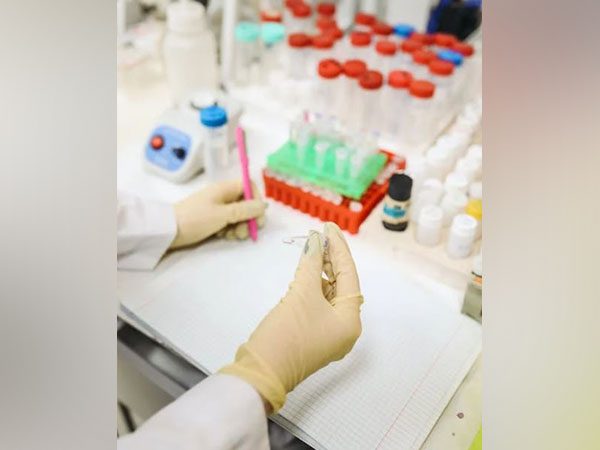
Representative Image (Image source: Pexels)

California [US], September 6 (ANI):  One of the most lethal and aggressive tumour kinds is pancreatic cancer, which has long eluded experts' efforts to treat it with potent medications.
The most prevalent form of pancreatic cancer, pancreatic ductal adenocarcinoma (PDAC), now has a new set of molecules that Salk researchers have discovered to be responsible for the formation of tumours.
The new study, which was released in Nature Communications, explains how specific gene mutations cause pancreatic cancer to proliferate uncontrollably by turning on a "super-enhancer" that activates other genes.
It also demonstrated the efficacy of a novel medication that slowed the development of pancreatic cancer by obstructing the actions of that super-enhancer.
“This is the first time anyone has looked in such detail at the role of super-enhancers in pancreatic cancer,” says senior author and Salk Professor Ronald Evans, director of Salk’s Gene Expression Laboratory.
“The discovery of this super-enhancer gives us both basic insight into PDAC and a new way to think of therapies.”
Enhancers are regions of DNA that, when bound by proteins, boost the expression of genes. This results in higher levels of those genes’ protein products. Super-enhancers are the most active type of enhancer, and they can be identified by their unique molecular tags.
Because super-enhancers can simultaneously and powerfully activate many genes, they can rapidly change the state of a cell, switching on cellular programs to encourage rapid growth or change the cell’s identity, for instance.
In the new work, Evans’ team analyzed 16 different human pancreatic cancer cell lines and identified hundreds of different super-enhancers. They pinpointed one, associated with the gene hnRNPF, which was far more active in pancreatic cancer cells than healthy cells.
Then, through a series of experiments, the group showed how hnRNPF sets off a cascade of events leading to an increase in the amounts of overall proteins cells were producing.
“It’s well-established that cancer cells upregulate protein production in order to fuel their rapid growth,” says first author Corina Antal, an assistant professor of pharmacology at UC San Diego School of Medicine who led the work as a postdoctoral researcher in Evans’ lab. “We have now identified how cells regulate this process at the super-enhancer level.”
The researchers went on to demonstrate that, by deleting the super-enhancer or the hnRNPF gene in the cell lines, they could slow the growth of pancreatic cancer cells by more than 80 per cent.
They also found that an experimental drug targeting Prmt1, one of the proteins impacted by hnRNPF activation, could stop the growth of isolated pancreatic tumours in the lab and the growth of pancreatic tumours in mice.
“We were excited to find that there’s not a lot of redundancy in this super-enhancer pathway, which means there might be multiple ways to impact it with therapeutics,” says Michael Downes, a senior staff scientist at Salk. “If you disrupt this network at any point, you have the same effect on blocking cellular growth.”
Additionally, the team discovered that Myc, a cancer-related gene that’s mutated in many cancers, including pancreatic cancer, can activate the hnRNPF super-enhancer.
Drugs effectively blocking Myc have been hard to develop, and the new results suggest a completely different way of stopping the effects of these Myc mutations—by targeting the pathway turned on by the super-enhancer.
Finally, the researchers tested cells from a patient with pancreatic cancer and found that the hnRNPF super-enhancer was active in these cells.
“These results clearly demonstrate that this super-enhancer is relevant in humans and could even be used as a marker to monitor pancreatic cancer progression,” says Evans, March of Dimes Chair in Molecular and Developmental Biology.
More work is needed to discover whether drugs targeting the super-enhancer or related molecules might be useful for treating pancreatic cancer in patients. (ANI)


Get the App

What to Read Next

Health

This simple diet could help protect memory: Study

This simple diet could help protect memory: Study

A new study led by investigators from Mass General Brigham, Harvard T.H. Chan School of Public Health, and the Broad Institute of MIT and Harvard suggests that a Mediterranean-style diet may help reduce dementia risk.

Read More
Health

Natural compound targets tumour metabolism: Study

Natural compound targets tumour metabolism: Study

Scientists in Japan have discovered that a natural compound found in a type of ginger called kencur can throw cancer cells into disarray by disrupting how they generate energy.

Read More
Health

Genes called 'Introners' proves to be source of gene complexity

Genes called 'Introners' proves to be source of gene complexity

It also provides evidence of eight instances in which introners have transferred between unrelated species in a process called 'horizontal gene transfer,' the first proven examples of this phenomenon.

Read More
Health

AI-designed DNA controls genes in healthy mammalian cells

AI-designed DNA controls genes in healthy mammalian cells

A recent study marks the first reported instance of generative AI designing synthetic molecules that can successfully control gene expression in healthy mammalian cells.

Read More
Health

Mammal's lifespans linked to brain size: Study

Mammal's lifespans linked to brain size: Study

An international team of scientists led by the University of Bath studied evolutionary differences between mammal species and found that those with bigger brains and longer lifespans tend to invest more heavily in immune-related genes.

Read More
Health

Early exposure to bacterial toxin can trigger Colorectal cancer

Early exposure to bacterial toxin can trigger Colorectal cancer

An international team of researchers has identified a potential microbial culprit behind the alarming rise in early-onset colorectal cancer: a bacterial toxin called colibactin.

Read More
Health

Antibody reduces tumor growth in ovarian cancers: Study

Antibody reduces tumor growth in ovarian cancers: Study

Immunotherapy, or antibody treatment that activates the patient's own immune system against cancer, is increasingly being studied as an alternative to chemotherapy and radiotherapy. This is because it directly targets cancer cells, reducing the negative effects associated with more conventional treatments.

Read More
Health

Study finds how to treat aggressive cancers

Study finds how to treat aggressive cancers

In a recent study, scientists from The Jackson Laboratory (JAX) and UConn Health not only show how cancer hijacks this tightly regulated splicing and rearranging of RNA but also introduce a potential therapeutic strategy that could slow or even shrink aggressive and hard-to-treat tumors. This discovery could transform how we treat aggressive cancers, such as triple-negative breast cancer and certain brain tumors, where current treatment options are limited.

Read More
Health

Scientists identifies genes likely make humans. Labradors obese

Scientists identifies genes likely make humans. Labradors obese

Researchers have discovered genes linked to obesity in both Labradors and humans. They say the effects can be over-ridden with a strict diet and exercise regime.

Read More
Health

Aspirin may prevent cancer from spreading: Study

Aspirin may prevent cancer from spreading: Study

Scientists have uncovered the mechanism by which aspirin stimulates the immune system and can reduce the metastasis of some cancers.

Read More
Home About Us Our Products Advertise Contact Us Terms & Condition Privacy Policy

Copyright © aninews.in | All Rights Reserved.
