Sound waves enhance cancer drug delivery, minimise toxicity
Washington D.C. [U.S.A.], Mar. 20 (ANI): Turns out, sound waves from ultrasound enhance drug delivery and minimise toxicity.
ANI
Mar 20, 2018 10:02 IST


Washington D.C. [U.S.A.], Mar. 20 (ANI): Turns out, sound waves from ultrasound enhance drug delivery and minimise toxicity.
According to the study led by The Translational Genomics Research Institute (TGen), enhancing cancer drug delivery and minimising its toxicity are some of the advantages of ultrasounds.
For decades now, ultrasound has been used to image organs such as the heart and kidneys, check blood flow, monitor the development of fetuses, reduce pain and even break up kidney stones.
Now, a Norwegian biotech company called Phoenix Solutions AS is working with the TGen, a Phoenix, Arizona-based biomedical research facility, to test the use of these pulsed sound waves to direct and focus cancer drug therapies.
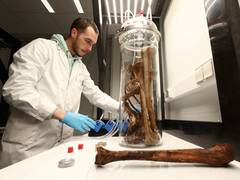
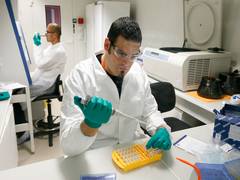
In laboratory tests, TGen will help analyze the effectiveness of a technology called Acoustic Cluster Therapy (ACT), a unique approach to target cancer cells by concentrating the delivery of chemotherapies, making them more effective and potentially reducing their toxicity.
Humanscan Co. Ltd., a South Korean manufacture of ultrasound diagnostic imaging, is developing clinically applicable hardware optimized for ACT, which TGen will then validate.
Phoenix Solutions is using funding from Innovation Norway to conduct this research in advance of pancreatic cancer clinical trials planned later this year.
"We are very pleased to receive this grant, which will enable us to develop and validate an optimal ultrasound platform for clinical use of ACT. In their respective fields, Humanscan and TGen both represent the cutting edge of science, and we are confident this will contribute to the clinical success of our program," said Dr. Per Sontum, CEO of Phoenix Solutions.
"We are pleased that this research program has become a reality, and look forward to working with ACT. The concept represents a novel approach to targeted drug delivery and looks very promising," said Dr. Haiyong Han, a Professor in TGen's Molecular Medicine Division and head of the Basic Research Unit in TGen's Pancreatic Cancer Program.
Among the advantages of ultrasound technology: it is generally painless; non-invasive; does not require needles, injections or incisions; and patients are not exposed to ionizing radiation, making the procedure safer than diagnostic techniques such as X-rays and CT scans.
Humanscan CEO Sungmin Rhim said, "We are excited to enter into this collaboration with Phoenix (Solutions) and participate in the development of ACT. Ultrasound mediated, targeted drug delivery is an emerging therapy approach with great potential and we are delighted to be in the forefront of this development."
Phoenix Solutions also is considering this technology for use in addressing other types of cancer, including: liver, prostate and triple-negative breast cancer; and other diseases, including those involving inflammation and the central nervous system.
It is an independent study carried by The Translational Genomics Research Institute. (ANI)
Tags:
Get the App