 हिंदी खबर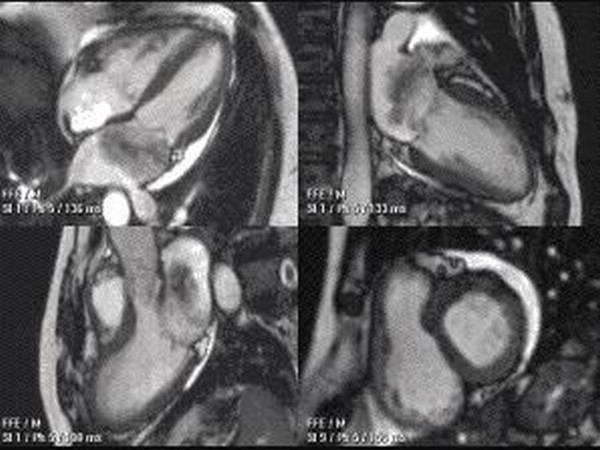

Washington D.C. [USA], Feb 14 (ANI): A study has used artificial intelligence (AI) for the first time to instantly and accurately measure blood flow in heart patients and its results were found to be able to predict chances of death, heart attack and stroke.
This technique developed by researchers from UCL and Barts Health NHS Trust can be used by doctors to help recommend treatments which could improve a patient's blood flow.
Heart disease is the leading global cause of death and illness. Reduced blood flow, which is often treatable, is a common symptom of many heart conditions. International guidelines, therefore, recommend a number of assessments to measure a patient's blood flow, but many are invasive and carry risk.
Non-invasive blood flow assessments are available, including Cardiovascular Magnetic Resonance (CMR) imaging, but up until now, the scan images have been incredibly difficult to analyse in a manner precise enough to deliver a prognosis or recommend treatment.
In the largest study of its kind, funded by British Heart Foundation and published in the journal Circulation, researchers took routine CMR scans from more than 1,000 patients attending St Bartholomew's Hospital and the Royal Free Hospital and used a new automated artificial intelligence technique to analyse the images. By doing this, the teams were able to precisely and instantaneously quantify the blood flow to the heart muscle and deliver the measurements to the medical teams treating the patients.
By comparing the AI-generated blood flow results with the health outcomes of each patient, the team found that the patients with reduced blood flow were more likely to have adverse health outcomes including death, heart attack, stroke and heart failure.
The AI technique was therefore shown for the first time to be able to predict which patients might die or suffer major adverse events, better than a doctor could on their own with traditional approaches.
Professor James Moon (UCL Institute of Cardiovascular Science and Barts Health NHS Trust) said: "Artificial intelligence is moving out of the computer labs and into the real world of healthcare, carrying out some tasks better than doctors could do alone. We have tried to measure blood flow manually before, but it is tedious and time-consuming, taking doctors away from where they are needed most, with their patients."
Dr Kristopher Knott (UCL Institute of Cardiovascular Science and Barts Health NHS Trust) added: "The predictive power and reliability of the AI was impressive and easy to implement within a patient's routine care. The calculations were happening as the patients were being scanned, and the results were immediately delivered to doctors. As poor blood flow is treatable, these better predictions ultimately lead to better patient care, as well as giving us new insights into how the heart works."
Dr Peter Kellman from the National Institutes of Health (NIH) in the US, who working with Dr Hui Xue at the NIH, developed the automated AI techniques to analyse the images that were used in the study, said: "This study demonstrates the growing potential of artificial intelligence-assisted imaging technology to improve the detection of heart disease and may move clinicians closer to a precision medicine approach to optimize patient care. We hope that this imaging approach can save lives in the future." (ANI)
Scientists use AI to accurately measure blood flow in heart patients
ANI | Updated: Feb 14, 2020 22:31 IST




