

ADD ANI AS A TRUSTED SOURCE
googleads
ANI Logo
Menu
Health

Scientists predict that COVID-19 will become a seasonal virus - but not yet

Washington D.C. [USA], September 15 (ANI): A new review published in Frontiers in Public Health suggests that COVID-19, the illness caused by the SARS-CoV-2 virus, will likely become seasonal in countries with temperate climates, but only when herd immunity is attained.

ANI Sep 15, 2020 11:14 IST googleads

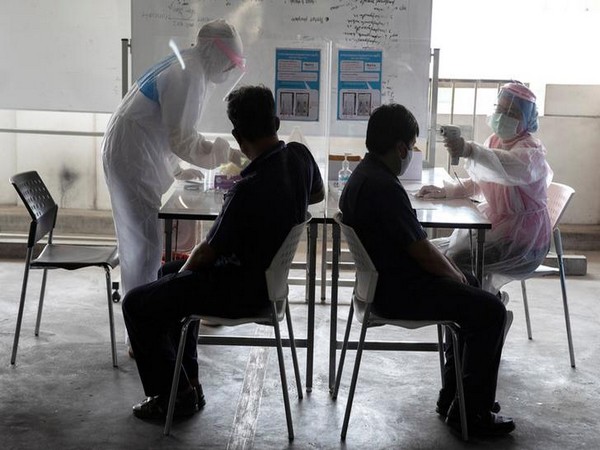
Representative image

Washington D.C. [USA], September 15 (ANI): A new review published in Frontiers in Public Health suggests that COVID-19, the illness caused by the SARS-CoV-2 virus, will likely become seasonal in countries with temperate climates, but only when herd immunity is attained.
Until that time, COVID-19 will continue to circulate across the seasons. These conclusions highlight the absolute importance of public health measures needed just now to control the virus.
"COVID-19 is here to stay and it will continue to cause outbreaks year-round until herd immunity is achieved. Therefore, the public will need to learn to live with it and continue practicing the best prevention measures, including wearing of masks, physical distancing, hand hygiene and avoidance of gatherings," said senior author of the study Dr. Hassan Zaraket, of the American University of Beirut in Lebanon.
Collaborating author Dr. Hadi Yassine, of Qatar University in Doha, affirms and states that there could be multiple waves of COVID-19 before herd immunity is achieved.
We know that many respiratory viruses follow seasonal patterns, especially in temperate regions. For instance, influenza and several types of coronaviruses that cause common cold are known to peak in winter in temperate regions but circulate year-round in tropical regions.
The authors reviewed these virus">seasonal viruses, examining the viral and host factors that control their seasonality as well as the latest knowledge on the stability and transmission of SARS-CoV-2.
The researchers explain that virus survival in the air and on surfaces, people's susceptibility to infections, and human behaviors, such as indoor crowding, differ across the seasons due to changes in temperature and humidity. These factors influence transmission of respiratory viruses at different times of the year.
However, in comparison to other respiratory viruses such as the flu, COVID-19 has a higher rate of transmission (R0), at least partly due to circulation in a largely immunologically naive population.
This means that unlike the flu and other respiratory viruses, the factors governing seasonality of viruses cannot yet halt the spread of COVID-19 in the summer months. But, once herd immunity is attained through natural infections and vaccinations, the R0 should drop substantially, making the virus more susceptible to seasonal factors.
Such seasonality has been reported for other coronaviruses, including those that emerged more recently such as NL63 and HKU1, which follow the same circulation pattern like influenza.
"This remains a novel virus and despite the fast-growing body of science about it there are still things that are unknown. Whether our predictions hold true or not remains to be seen in the future. But we think it's highly likely, given what we know so far, COVID-19 will eventually become seasonal, like other coronaviruses," adds Zaraket.
"The highest global COVID-19 infection rate per capita was recorded in the Gulf states, regardless of the hot summer season. Although this is majorly attributed to the rapid virus spread in closed communities, it affirms the need for rigorous control measures to limit virus spread, until herd immunity is achieved," Dr. Yassine said. (ANI)


Get the App

What to Read Next

Health

Risk of long Covid in kids doubles after second infection

Risk of long Covid in kids doubles after second infection

Children and adolescents were twice as likely to experience long Covid after contracting Covid for the second time, compared to their peers with a single previous infection.

Read More
Health

Childhood cancer survivors face risk of COVID 19

Childhood cancer survivors face risk of COVID 19

The results show that childhood cancer survivors had a lower risk of contracting COVID 19, but were 58 per cent more likely to develop severe disease if they did become infected.

Read More
Health

Researchers develop innovative model to study sense of smell

Researchers develop innovative model to study sense of smell

Using a newly devised, three-dimensional model to study the regeneration of nerve tissue in the nose, researchers at Tufts University School of Medicine and the Graduate School of Biomedical Sciences (GSBS) and colleagues have discovered that one type of stem cell thought to be dormant may play a more significant role in preserving the sense of smell than originally believed.

Read More
Health

New mRNA vaccine is more effective, less costly to develop

New mRNA vaccine is more effective, less costly to develop

A new type of mRNA vaccine is more scalable and adaptable to continuously evolving viruses such as SARS-CoV-2 and H5N1, according to a study by researchers at the University of Pittsburgh School of Public Health and the Pennsylvania State University.

Read More
Health

Study finds how obesity linked to long Covid

Study finds how obesity linked to long Covid

People with excess weight are more likely to experience long-term neurological and mental health symptoms after Covid-19, including headache, vertigo, smell and taste disorders, sleep disturbance, and depression.

Read More
Health

Current antivirals may be less effective against bird flu virus

Current antivirals may be less effective against bird flu virus

Existing antivirals may be less effective against this H5N1 bird flu strain, and prevention measures, such as avoiding raw milk consumption and reducing exposure in dairy workers, may be the most effective way to protect against the virus.

Read More
Health

Study explains how antidepressants can protect against infections

Study explains how antidepressants can protect against infections

Antidepressants, such as Prozac, are routinely used to treat mental health issues, but recent research reveals they may also protect against major infections and life-threatening sepsis. Scientists at the Salk Institute have now discovered how medications regulate the immune system and protect against infectious disease, providing insights that could lead to a new generation of life-saving treatments and improve global readiness for future pandemics.

Read More
Health

Antibody treatment helps prevent severe bird flu in monkeys

Antibody treatment helps prevent severe bird flu in monkeys

The antibodies target a stable part of the bird flu virus, ensuring that the immune protection can resist new variants and offer long-term protection against the globally spreading airborne infection. It helps in preventing severe bird flu in monkeys.

Read More
Health

White blood cell count may predict severity of COVID-19: Study

White blood cell count may predict severity of COVID-19: Study

A Covid-19 diagnosis is no longer as frightening as it used to be, thanks to developments in treatment choices. However, a new study reveals that leukocyte (white blood cell) count may now be used to identify who is more likely to develop more significant disease symptoms.

Read More
Health

Herpes virus likely to have have connection with Alzheimer's

Herpes virus likely to have have connection with Alzheimer's

The University of Pittsburgh researchers uncovered a surprising link between Alzheimer's disease and herpes simplex virus-1 (HSV-1) which suggests that viral infections may play a role in the disease.

Read More
Home About Us Our Products Advertise Contact Us Terms & Condition Privacy Policy

Copyright © aninews.in | All Rights Reserved.
