

ADD ANI AS A TRUSTED SOURCE
googleads
ANI Logo
Menu
Health

Scientists discover why vaccination against malaria loses its effect in short time

Washington [US], June 21 (ANI): Scientists at the German Cancer Research Center have studied the human immune response after immunization with the malaria pathogen Plasmodium falciparum. Their findings could explain why natural infections, to which people in endemic areas are constantly exposed, offer little protection against new diseases with other strains, and why the effect of the vaccination available to date lasts only a short time.

ANI Jun 21, 2022 22:51 IST googleads

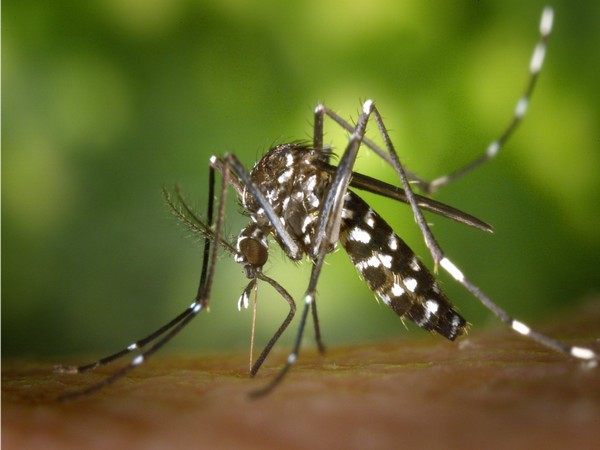
Representative Image

Washington [US], June 21 (ANI): Scientists at the German Cancer Research Center have studied the human immune response after immunization with the malaria pathogen Plasmodium falciparum. Their findings could explain why natural infections, to which people in endemic areas are constantly exposed, offer little protection against new diseases with other strains, and why the effect of the vaccination available to date lasts only a short time.
Despite impressive successes in controlling malaria, more than 600,000 people worldwide still die from the tropical disease every year, according to the World Health Organization. The vast majority of fatal cases of malaria are caused by the pathogen Plasmodium falciparum. To date, there is only one approved vaccine against this single-celled organism, and its efficacy, which is already rather low, does not last long.
The vaccine is directed against CSP, the quantitatively dominant protein on the surface of the "sporozoites." Sporozoites are the stage of the malaria pathogen which is transmitted with the bite of the mosquito and enters human blood. "To improve the vaccine, we need to understand which protective antibodies are induced by the immunization. But the production of such antibodies depends to a large extent on help from the so-called follicular T helper cells," says Hedda Wardemann of the German Cancer Research Center. "They ensure that B cells transform into antibody-producing plasma cells and memory B cells."
To study the T helper cell response against CSP in detail, the team led by DKFZ immunologist Wardemann examined the blood of volunteers infected with killed P. falciparum sporozoites from the vaccine strain. The volunteers were of European descent and had no prior contact with malaria pathogens. The researchers analyzed the induced Plasmodium-specific follicular T helper cells at the single cell level. In particular, they focused their investigation on which sequences of CSP are recognized by the receptors of the T helper cells.
The analyses revealed that the T-cell receptors mainly targeted amino acids 311 to 333 of the CSP. But another observation stunned the researchers: there was virtually no cross-reactivity between the individual T-cell clones. "The receptors highly specifically bind only the CSP epitopes of the vaccine strain used. Even deviations of only a single amino acid component were not tolerated in some cases," Wardemann explains.
The immunologist points out that in the natural population of P. falciparum, sequence polymorphisms occur to a high degree in this region of the CSP. "The specificity of the T-cell clones prevents the constantly recurring natural infections with the pathogen from acting as a natural 'booster.' This could possibly explain why the protective effect of the malaria vaccine wears off so quickly," Wardemann said. The researcher recommends that further development of the vaccine should test whether inducing a broader spectrum of T helper cells could generate longer-lasting immune protection. (ANI)


Get the App

What to Read Next

Health

The more you fear aging, the faster your body may age

The more you fear aging, the faster your body may age

Worrying about getting older especially fearing future health problems may actually speed up aging at the cellular level, according to new research from NYU.

Read More
Health

Scientists discover reason high altitude protects against diabete

Scientists discover reason high altitude protects against diabete

Living at high altitude appears to protect against diabetes, and scientists have finally discovered the reason. When oxygen levels drop, red blood cells switch into a new metabolic mode and absorb large amounts of glucose from the blood.

Read More
Health

Scientists find clue to human brain evolution in finger length

Scientists find clue to human brain evolution in finger length

Human evolution has long been tied to growing brain size, and new research suggests prenatal hormones may have played a surprising role. By studying the relative lengths of the index and ring fingers, a marker of prenatal exposure to oestrogen and testosterone, researchers found that higher prenatal oestrogen exposure was associated with larger head size in newborn boys.

Read More
Health

MRI scans show exercise can make the brain look younger

MRI scans show exercise can make the brain look younger

New research suggests that consistent aerobic exercise can help keep your brain biologically younger. Adults who exercised regularly for a year showed brains that appeared nearly a year younger than those who didn't change their habits.

Read More
Health

Scientists solve a major roadblock in cancer cell therapy: Study 

Scientists solve a major roadblock in cancer cell therapy: Study 

Researchers have found a reliable way to grow helper T cells from stem cells, solving a major challenge in immune-based cancer therapy. Helper T cells act as the immune system's coordinators, helping other immune cells fight longer and harder.

Read More
Health

Injection turns sleeping tumour immune cells into cancer fighters

Injection turns sleeping tumour immune cells into cancer fighters

The Korea Advanced Institute of Science and Technology (KAIST) researchers have developed a way to reprogram immune cells already inside tumours into cancer-killing machines.

Read More
Health

High-fat diets give liver cancer a dangerous head start: Study

High-fat diets give liver cancer a dangerous head start: Study

A high-fat diet does more than overload the liver with fat. New research from MIT shows that prolonged exposure to fatty foods can push liver cells into a survival mode that quietly raises the risk of cancer.

Read More
Health

Researchers have decoded rare cancer fighting plant compound

Researchers have decoded rare cancer fighting plant compound

UBC Okanagan researchers have uncovered how plants create mitraphylline, a rare natural compound linked to anti-cancer effects.

Read More
Health

Scientists reverse Alzheimer’s in mice and restore memory: Study

Scientists reverse Alzheimer’s in mice and restore memory: Study

Alzheimer's has long been considered irreversible, but new research challenges that assumption. Scientists discovered that severe drops in the brain's energy supply help drive the disease, and restoring that balance can reverse damage, even in advanced cases.

Read More
Health

This gut molecule shows remarkable anti-diabetes power: Study

This gut molecule shows remarkable anti-diabetes power: Study

Researchers revealed that the microbial metabolite TMA can directly block the immune protein IRAK4, reducing inflammation and improving insulin sensitivity.

Read More
Home About Us Our Products Advertise Contact Us Terms & Condition Privacy Policy

Copyright © aninews.in | All Rights Reserved.
