

ADD ANI AS A TRUSTED SOURCE
googleads
ANI Logo
Menu
Health

Researchers reveal how fasting affects neurons in brain

Boston [US], September 9 (ANI): Calorie restriction has long been linked to fewer seizures in people with epilepsy. Novel research from Boston Children's Hospital helps to explain how fasting affects neurons in the brain and may pave the door for new treatments that do not require fasting or restrictive diets.

ANI Sep 09, 2022 06:54 IST googleads

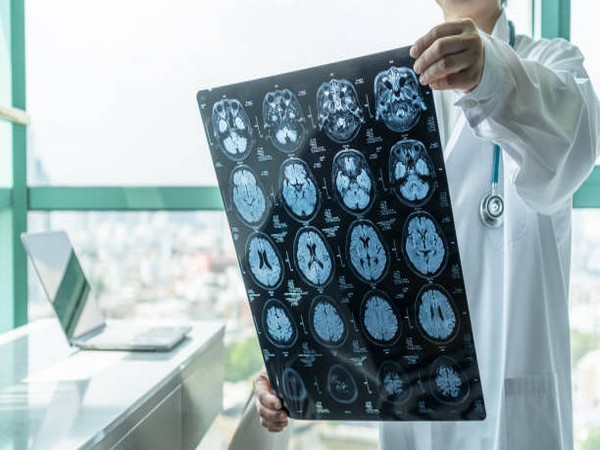
Representative Image

Boston [US], September 9 (ANI): Calorie restriction has long been linked to fewer seizures in people with epilepsy. Novel research from Boston Children's Hospital helps to explain how fasting affects neurons in the brain and may pave the door for new treatments that do not require fasting or restrictive diets.
The findings of the study were published in the journal Cell Reports.
"This study is the first step in understanding how dietary therapies for epilepsy work," says first author Christopher J. Yuskaitis, MD, PhD, a neurologist with the Epilepsy Center and Epilepsy Genetics Program at Boston Children's Hospital. "The mechanisms have until now been completely unknown."
DEPDC5, mTOR, and fasting
To connect the dots between diet and seizures, the researchers began with existing knowledge. They knew that the well-known mTOR cellular pathway is involved in many neurological disorders and had shown previously that over-activation of this pathway in neurons increases susceptibility to seizures. Studies by others had shown that mTORC activity is inhibited by acute fasting, though these studies didn't look at the brain.
Finally, Yuskaitis and colleagues knew that signaling by a protein called DEPDC5 acts as a brake on the mTOR pathway. That was intriguing, since mutations in the DEPDC5 gene have recently been found in many people with epilepsy. DEPDC5 mutations have been linked to focal epilepsy, infantile spasms, and sudden death in children.
"When we used an animal model that knocks out DEPDC5 specifically in the brain, we found that we could reduce seizures by using an mTOR inhibitor," says Yuskaitis. "That gave us the idea to explore the connection between DEPDC5, mTOR, and fasting."
Amino acid sensing
In the new study, they showed in a mouse seizure model that mTOR signaling was reduced in the brain after fasting. Additional studies of cultured rat neurons in a dish suggest that this fasting effect is primarily driven by the lack of three amino acids (leucine, arginine, and glutamine).
Going further, the team demonstrated that the presence of these nutrients is sensed by the DEPDC5 protein. When they knocked out DEPDC5 in the brain, mTOR activity was not reduced and fasting no longer protected the mice against seizures.
"Amino acid sensing seems to be critical for the beneficial effects of fasting on seizures," says Yuskaitis. "This suggests that patients with DEPDC5 mutations can't sense the loss of amino acids and may not benefit from dietary manipulation. But patients who don't have DEPDC5 mutations may benefit from a targeted dietary strategy."
This could take the form of diets with lower levels of the three amino acids, or medications or supplements that block absorption of those amino acids, he adds.
Next step: Ketogenic diet
This study is only a first step. Yuskaitis and colleagues now want to try diets in animal models that eliminate specific amino acids and observe the effects on seizures. They also want to explore how the ketogenic diet, a popular approach to treating epilepsy, helps curb seizures. No one currently knows why this low-carbohydrate, high-fat diet works.
"We're hoping this will hope us uncover additional dietary-based therapies other than ketogenic diet, which is sometimes difficult to follow long term due to side effects," says Yuskaitis.
Such work may also provide a new lens on neurologic disorders overall.
"Using these rare genetic disorders, we are starting to gain fundamental insights into the role of nutrients in brain function," says senior investigator Mustafa Sahin, MD, PhD, managing director of the Rosamund Stone Zander Translational Neuroscience Center at Boston Children's. "Findings from these rare disorders may open doors for better treatments of epilepsy in general." (ANI)


Get the App

What to Read Next

Health

Scientists reveal how exercise protects brain from Alzheimer's

Scientists reveal how exercise protects brain from Alzheimer's

Exercise may sharpen the mind by repairing the brain's protective shield. Researchers found that physical activity prompts the liver to release an enzyme that removes a harmful protein, causing the blood-brain barrier to become leaky with age.

Read More
Health

Scientists find clue to human brain evolution in finger length

Scientists find clue to human brain evolution in finger length

Human evolution has long been tied to growing brain size, and new research suggests prenatal hormones may have played a surprising role. By studying the relative lengths of the index and ring fingers, a marker of prenatal exposure to oestrogen and testosterone, researchers found that higher prenatal oestrogen exposure was associated with larger head size in newborn boys.

Read More
Health

MRI scans show exercise can make the brain look younger

MRI scans show exercise can make the brain look younger

New research suggests that consistent aerobic exercise can help keep your brain biologically younger. Adults who exercised regularly for a year showed brains that appeared nearly a year younger than those who didn't change their habits.

Read More
Health

Scientists find hidden synapse hotspots in the teen brain: Study

Scientists find hidden synapse hotspots in the teen brain: Study

The scientists have discovered that the adolescent brain does more than prune old connections. During the teen years, it actively builds dense new clusters of synapses in specific parts of neurons.

Read More
Health

Memory loss can suddenly speed up with age: Study

Memory loss can suddenly speed up with age: Study

A massive international brain study has revealed that memory decline with age isn't driven by a single brain region or gene, but by widespread structural changes across the brain that build up over time.

Read More
Health

Collaborating minds think alike in shared task: Study

Collaborating minds think alike in shared task: Study

When two people work on a shared task, they process information alike, a new study revealed.

Read More
Health

This body trait helps keep your brain young: Study

This body trait helps keep your brain young: Study

Scientists discovered that more muscle and less hidden abdominal fat are linked to a younger biological brain age.

Read More
Health

Boosting this protein helps brain protect itself from Alzheimer’s

Boosting this protein helps brain protect itself from Alzheimer’s

Researchers discovered that raising the protein Sox9 can help the brain's astrocytes clear out toxic plaque buildup linked to Alzheimer's.

Read More
Health

New genetic tool and chromosome changes linked to pregnancy loss

New genetic tool and chromosome changes linked to pregnancy loss

Pregnancy loss affects up to 25 per cent of all pregnancies, with most miscarriages occurring in the first trimester and roughly half caused by genetic or chromosomal abnormalities. But when pregnancy loss occurs three or more times, identifying the underlying cause becomes significantly more challenging, and often remains unknown.

Read More
Health

Hypertension affects brain much earlier than expected: Study

Hypertension affects brain much earlier than expected: Study

Hypertension may impair the brain far earlier than previously understood -- even before a measurable rise in blood pressure occurs -- according to a new preclinical study from Weill Cornell Medicine. The changes help explain why hypertension is a major risk factor for developing cognitive disorders, such as vascular cognitive impairment and Alzheimer's disease.

Read More
Home About Us Our Products Advertise Contact Us Terms & Condition Privacy Policy

Copyright © aninews.in | All Rights Reserved.
