Researchers map how city people get health boost from nature
Washington [US], May 11 (ANI): The findings of a recent study by researchers from Stanford University suggest that even your local city park may be improving your health.
ANI
May 11, 2021 09:23 IST

Washington [US], May 11 (ANI): The findings of a recent study by researchers from Stanford University suggest that even your local city park may be improving your health.
The research, published in Proceedings of the National Academy of Sciences, lays out how access to nature increases people's physical activity - and therefore overall health - in cities. Lack of physical activity in the U.S. results in USD 117 billion a year in related health care costs and leads to 3.2 million deaths globally every year.
It may seem like an intuitive connection, but the new research closes an important gap in understanding how building nature into cities can support overall human wellbeing.
"Over the past year of shelter-in-place restrictions, we've learned how valuable and fulfilling it can be to spend time outdoors in nature, especially for city-dwellers," said study lead author Roy Remme, a postdoctoral researcher at the Stanford Natural Capital Project at the time of research. "We want to help city planners understand where green spaces might best support people's health, so everyone can receive nature's benefits."
In cities, nature provides cooling shade to neighborhood streets, a safe harbor for pollinators, and rainwater absorption to reduce flooding. It's widely understood that physical activity improves human health, but how parks, lakes, trees and other urban green spaces boost physical activity and overall wellbeing is an unsolved piece of the puzzle.
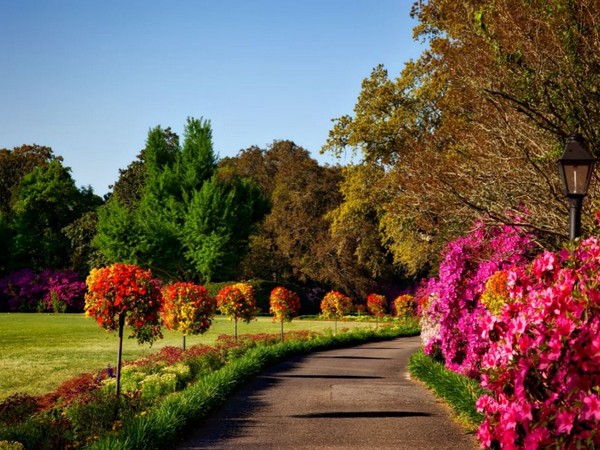
The team combined decades of public health research with information on nature's benefits to people in cities. They considered how activities like dog walking, jogging, cycling and community gardening are supported by cities' natural spaces. They also factored in things like distance to urban greenery, feelings of safety and accessibility to understand how those elements can alter the benefits of nature for different people. From tree-lined sidewalks to city parks and waterfronts, the team created a model framework to map out urban nature's physical health benefits.
The researchers' framework explores how people might choose to walk an extra few blocks to enjoy a blooming garden or bike to work along a river path, reaping the health benefits of physical activity they may have missed if not motivated by natural spaces.
In Amsterdam, city planners are currently implementing a new green infrastructure plan. Using the city as a hypothetical case study, the researchers applied their framework to understand how Amsterdam's plans to build or improve new parks might affect physical activity for everyone in the city. They also looked at the effects on different sub-populations, like youth, elderly and low-income groups. This example illustrates how the city could invest in urban nature to have the greatest physical activity benefits for human health.
The research will ultimately serve as the basis for a new health model in Natural Capital Project software - free, open-source tools that map the many benefits nature provides people. The software was recently used to inform an assessment of 775 European cities to understand the potential of nature-based solutions for addressing climate change. Eventually, the new health model software will be available to city planners, investors and anyone else interested in new arguments and tools for targeting investments in nature in cities.
Nature's contributions are multidimensional - they can support cognitive, emotional and spiritual well-being, as well as physical health. Previous work from the Natural Capital Project has shown many of these connections, but the new research adds an important link to physical health that had been missing from the equation.
"Nature experience boosts memory, attention and creativity as well as happiness, social engagement and a sense of meaning in life," said Gretchen Daily, senior author on the paper and faculty director of the Stanford Natural Capital Project. "It might not surprise us that nature stimulates physical activity, but the associated health benefits - from reducing cancer risks to promoting metabolic and other functioning - are really quite astonishing."
As our world becomes more urbanized and city-centric, the ability to easily access outdoor natural spaces becomes increasingly challenging, especially for overburdened communities. Identifying where urban nature is missing in vulnerable or overburdened communities - then working to fill those gaps - could provide people with valuable new opportunities to improve their health. The researchers hope the new study will equip urban planners with a more complete understanding of the benefits nature can provide their communities.
"Our ultimate goal is to create more healthy, equitable and sustainable cities," said Anne Guerry, co-author and Chief Strategy Officer at the Natural Capital Project. "This research is actionable - and gets us one big step closer." (ANI)
Get the App