Researchers give insight into possible link between head injury, increased rates of brain cancer
he UCL Cancer Center researchers have offered essential molecular insights of how injury may lead to the formation of glioma, a relatively rare but typically aggressive kind of brain tumour.
ANI
Feb 24, 2023 23:07 IST

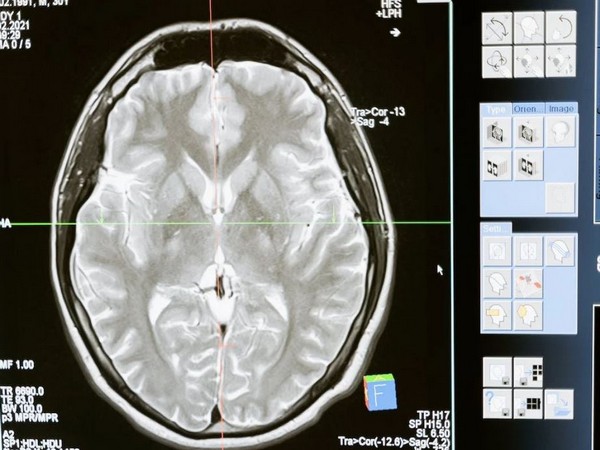
London [UK], February 24 (ANI): The UCL Cancer Center researchers have offered essential molecular insights of how injury may lead to the formation of glioma, a relatively rare but typically aggressive kind of brain tumour.
Previous studies have suggested a possible link between head injury and increased rates of brain tumours, but the evidence is inconclusive. The UCL team have now identified a possible mechanism to explain this link, implicating genetic mutations acting in concert with brain tissue inflammation to change the behaviour of cells, making them more likely to become cancerous. Although this study was largely carried out in mice, it suggests that it would be important to explore the relevance of these findings to human gliomas.
The study was led by Professor Simona Parrinello (UCL Cancer Institute), Head of the Samantha Dickson Brain Cancer Unit and co-lead of the Cancer Research UK Brain Tumour Centre of Excellence. She said: "Our research suggests that a brain trauma may contribute to an increased risk of developing brain cancer in later life."
Gliomas are brain tumours that often arise in neural stem cells. More mature types of brain cells, such as astrocytes, have been considered less likely to give rise to tumours. However, recent findings have demonstrated that after injury astrocytes can exhibit stem cell behaviour again.
Professor Parrinello and her team therefore set out to investigate whether this property may make astrocytes able to form a tumour following brain trauma using a pre-clinical mouse model.
Young adult mice with brain injury were injected with a substance which permanently labelled astrocytes in red and knocked out the function of a gene called p53 - known to have a vital role in suppressing many different cancers. A control group was treated the same way, but the p53 gene was left intact. A second group of mice was subjected to p53 inactivation in the absence of injury.
Professor Parrinello said: "Normally astrocytes are highly branched - they take their name from stars - but what we found was that without p53 and only after an injury the astrocytes had retracted their branches and become more rounded. They weren't quite stem cell-like, but something had changed. So we let the mice age, then looked at the cells again and saw that they had completely reverted to a stem-like state with markers of early glioma cells that could divide.".
This suggested to Professor Parrinello and team that mutations in certain genes synergised with brain inflammation, which is induced by acute injury and then increases over time during the natural process of ageing to make astrocytes more likely to initiate a cancer. Indeed, this process of change to stem-cell like behaviour accelerated when they injected mice with a solution known to cause inflammation.
The team then looked for evidence to support their hypothesis in human populations. Working with Dr Alvina Lai in UCL's Institute of Health Informatics, they consulted electronic medical records of over 20,000 people who had been diagnosed with head injuries, comparing the rate of brain cancer with a control group, matched for age, sex and socioeconomic status. They found that patients who experienced a head injury were nearly four times more likely to develop a brain cancer later in life, than those who had no head injury. It is important to keep in mind that the risk of developing a brain cancer is overall low, estimated at less than 1% over a lifetime, so even after an injury the risk remains modest.
Professor Parrinello said: "We know that normal tissues carry many mutations which seem to just sit there and not have any major effects. Our findings suggest that if on top of those mutations, an injury occurs, it creates a synergistic effect. In a young brain, basal inflammation is low so the mutations seem to be kept in check even after a serious brain injury. However, upon ageing, our mouse work suggests that inflammation increases throughout the brain but more intensely at the site of the earlier injury. This may reach a certain threshold after which the mutation now begins to manifest itself." (ANI)
Get the App