 हिंदी खबर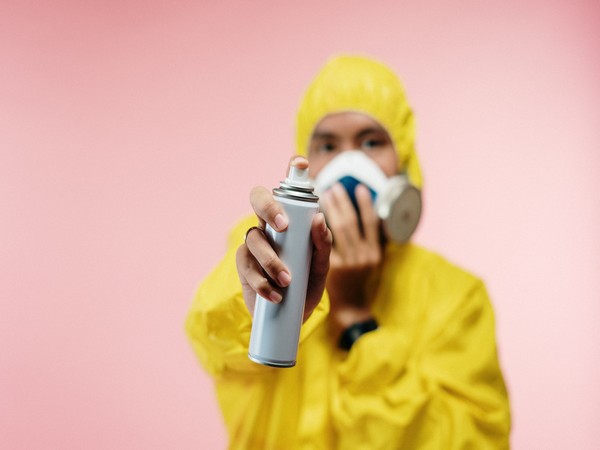

Sydney [Australia], July 22 (ANI): A team of Australian researchers has developed a first-of-its-kind sprayable coating that can prevent the surface spread of infection from bacteria and viruses, including COVID-19, for an extended period of time.
The spray, described in the journal Advanced Science, works in two ways: it repels viruses and bacteria through an air-filled barrier, and it kills pathogens through microscopic materials if the layer is damaged or submerged for an extended period of time. The spray is made from a combination of plastics that are strong enough to be used in place of bullet-proof glass.
The coating is the only permanent surface layer proven to protect surfaces from virus contamination, making it a reliable alternative to standard disinfectants, which are becoming less effective and require regular reapplication. It is safer than existing disinfectant alternatives, with no harmful side effects and more stable potency - unlike silver nanoparticles, the next most promising non-disinfectant agent that kills bacteria.
The coating, according to the authors, could be applied to public surfaces such as lift buttons, stair rails, and surfaces in hospitals, nursing homes, schools, and restaurants to prevent the spread of common viruses and bacteria.
According to Professor Antonio Tricoli of the University of Sydney's School of Biomedical Engineering, the spread of viral and bacterial pathogens through contact with surfaces is a leading cause of infection worldwide. Surface contamination also contributes significantly to the evolution of antibiotic-resistant bacterial strains.
"Without a barrier, viruses such as coronaviruses can remain infectious on surfaces for up to a week." Other viruses, such as reoviruses, which can cause colds or diarrhoea, can remain on surfaces for several weeks, causing large outbreaks in hospitals and nursing homes," Professor Tricoli explained.
"The surface spray, like a lotus leaf, creates a water-repellent coating." Because pathogens prefer to be in the water, they remain trapped in the droplets, protecting the surface from contamination. If this mechanism fails, carefully designed nanomaterials dispersed in the coating trigger a secondary burst of ions," Professor Tricoli explained.
The spray was developed over a five-year collaboration by a multi-university research team, with funding from the Australian Research Council and the National Health and Medical Research Council.
The team evaluated the coating's mechanical stability and surface energy. They also tested its resistance to bacteria and viruses by exposing it to high concentrations of both. To test the spray's resistance to contamination, the samples were submerged for extended periods of time and then sprayed surfaces were deliberately damaged.
"We've identified the mechanical processes that underpin how the spray works and quantified its effectiveness in various environments," Professor Nisbet said.
"We tested metal surfaces for this study." However, we have previously demonstrated that the spray can be applied to any surface, including blotting paper, plastic, bricks, tiles, glass, and metal. Our coating successfully prevented up to 99.85% and 99.94% of bacteria strain growth. We also noticed an 11-fold decrease in virus contamination."
The spray is applied in the same way that sprays paint is, but in much smaller quantities.
"To provide ultra-durability, the coating was engineered using a simple and scalable technique and a careful selection of materials." "We also believe that our explanation of the mechanism underlying the antimicrobial and antiviral effects could significantly advance research in antipathogen technologies, allowing for the low-cost production of an effective surface spray to protect people from viruses and bacteria," Professor Nisbet said.
The researchers have formed a start-up company to advance the technology and make the spray commercially available within three years. (ANI)




