Researchers find new evidence for a blood-based biomarker for Alzheimer's disease
Washington D.C.[USA], May 28 (ANI): Thanks to new research, a potential blood-based biomarker for Alzheimer's and other neurodegenerative diseases seems even more promising. According to this team's work, neurofilament light chain (NfL) has great potential as a biomarker for early detection of Alzheimer's disease and could be also useful for monitoring treatment response for that condition.
ANI
May 28, 2020 08:32 IST


Washington D.C.[USA], May 28 (ANI): Thanks to new research, a potential blood-based biomarker for Alzheimer's and other neurodegenerative diseases seems even more promising. According to this team's work, neurofilament light chain (NfL) has great potential as a biomarker for early detection of Alzheimer's disease and could be also useful for monitoring treatment response for that condition.
The study was carried out by a team co-led by thanks to new research from a Massachusetts General Hospital. Yakeel T. Quiroz, PhD, Assistant Professor at Harvard Medical School, and Director of the Familial Dementia Neuroimaging Lab at Massachusetts General Hospital (MGH) carried out the study that was recently published in the journal - The Lancet Neurology.
Additional co-first authors were Henrik Zetterberg, PhD, of Sahlgrenska University Hospital in Sweden, and Eric Reiman, MD, from the University of Arizona.
"We wanted to determine the earliest age at which plasma NfL levels could distinguish individuals at high risk of Alzheimer's," says Quiroz, who is also an MGH Research Scholar 2020-2025.
They found that NfL levels increased with age among people at genetic risk because of a specific mutation (PSEN1 E280A) and began to differentiate carriers from noncarriers at age 22, an average of 22 years before their estimated age of cognitive impairment (age 44).
Neurofilament light chain (NfL) is a biomarker of neurodegeneration - damage to neurons. Measures of NfL concentrations in the cerebral spinal fluid (CSF) and blood have been used to detect and track neurodegeneration in individuals with Alzheimer's disease and other brain disorders.
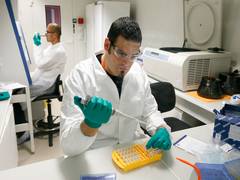
The team used an ultrasensitive single-molecule array immunoassay to measure NfL concentrations in serum and plasma. Earlier studies have shown close correlations between blood-based and CSF measurements in people and animal models of neurodegenerative diseases.
The team studied over 2,000 members of the world's largest kindred with familial Alzheimer's because of a single mutation (PSEN1 E280A) --the familial Alzheimer's disease Colombian kindred, which was aged 8-75 years and had no other neurological or health conditions.
Next, they used a single-molecule array immunoassay to examine the relationship between plasma NfL concentrations and age to establish the earliest age at which NfL concentrations start to diverge between mutation carriers and non-carriers. The team enrolled 1070 PSEN1 E280A mutation carriers and 1074 non-carriers with baseline assessments.
Plasma NfL measurements increased with age in both groups (p<0*0001), and began to differentiate carriers from non-carriers at 22 years - the estimated median age of onset of mild cognitive impairment is 44 years. The ability of plasma NfL to discriminate between carriers and noncarriers only reached high sensitivity close to the age of clinical onset.
"Our findings add to the growing evidence that blood-based NfL can be useful in detecting neurodegeneration, starting with very early, subtle elevations way before the onset of clinical symptoms. We need more studies to further explore NfL as a way to inform prognosis and evaluate treatments in Alzheimer's disease," says Quiroz. (ANI)
Get the App