Researchers discover new strategy to treat brain cancer patients
Washington D.C. [USA], July 1 (ANI): A team of investigators has uncovered a potentially promising strategy to target brain tumours -- isocitrate dehydrogenase (IDH) genes, which are the most common brain tumours diagnosed in younger adults aged 18 to 45 years.
ANI
Jul 01, 2020 12:35 IST

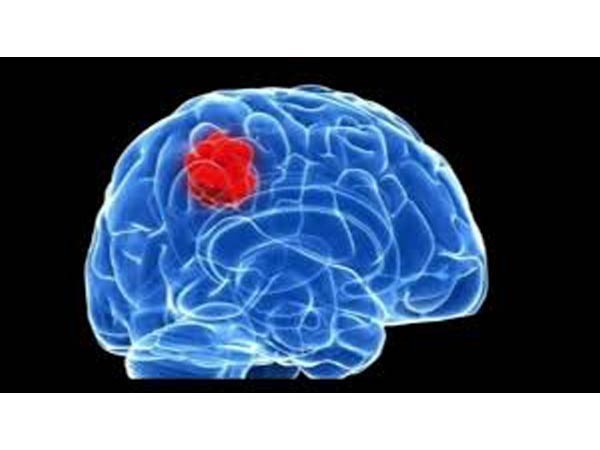
Washington D.C. [USA], July 1 (ANI): A team of investigators has uncovered a potentially promising strategy to target brain tumours -- isocitrate dehydrogenase (IDH) genes, which are the most common brain tumours diagnosed in younger adults aged 18 to 45 years.
Led by investigators at Massachusetts General Hospital, the finding of their study are published in Cancer Discovery, a journal of the American Association for Cancer Research.
Prior work by the group, led by Mass General's Daniel Cahill, MD, PhD, Hiroaki Wakimoto, MD, PhD, and Julie Miller, MD, PhD, revealed that IDH mutant gliomas have a metabolic weakness making them especially susceptible to treatments that lower NAD+ levels, a ubiquitous and vital metabolic molecule commonly thought of as the "currency of metabolism" in cells.
Also, previous work by other researchers found that chemotherapy activates an enzyme that stimulates NAD+ molecules to join together to make poly(ADP-ribose), or PAR, a key DNA damage signal. This PAR signal is a known susceptibility in IDH mutant gliomas.
Researchers also discovered that activation of the enzyme by chemotherapy causes available NAD+ to be critically depleted for the production of PAR in IDH mutant glioma cells, but not normal cells.
These findings indicated that maintaining high PAR levels (and low NAD+ levels), in combination with chemotherapy, may uniquely target IDH mutant glioma cells. Considering this, Hiroaki Nagashima, MD, PhD, research fellow and lead author, devised a new treatment strategy and tested it in tumour cells and animal models.
"We found that maximum effectiveness was achieved by combining two agents: temozolomide, the chemotherapy most commonly used to treat patients with IDH mutant gliomas, with a drug that blocks PAR breakdown, known as a PAR glycohydrolase inhibitor," said Dr Cahill, a Neurosurgical Oncologist at Mass General and an Associate Professor of Neurosurgery at Harvard Medical School.
"We showed, for the first time, that PAR glycohydrolase inhibitors can be used to enhance the effectiveness of chemotherapy in tumours with metabolic weaknesses in the NAD+ pathway," said Dr Wakimoto, an Associate Professor of Neurosurgery at Harvard Medical School.
Dr Miller, an Instructor in Neurology and a Neuro-Oncologist at Mass General who treats patients with IDH mutant glioma, noted that PAR glycohydrolase inhibitors are a newly-emerging class of drugs.
"The long-term significance is that, based on our findings, they could be tested in individuals with IDH mutant gliomas, with a goal of hopefully improving outcomes in these patients," she said. (ANI)
Get the App