

ADD ANI AS A TRUSTED SOURCE
googleads
Menu
Health

Researchers develop new MRI tool to detect, track progression of cancer

Waterloo [Canada], March 21 (ANI): A team of researchers at the University of Waterloo recently developed a new magnetic resonance imaging (MRI) tool that makes cancerous tissue glow in medical images. It could help doctors more accurately detect and track the progression of cancer over time.

ANI Mar 21, 2022 18:42 IST googleads

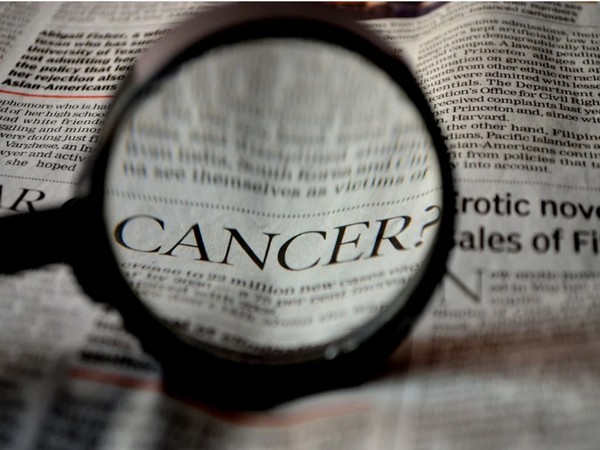
Representative image

Waterloo [Canada], March 21 (ANI): A team of researchers at the University of Waterloo recently developed a new magnetic resonance imaging (MRI) tool that makes cancerous tissue glow in medical images. It could help doctors more accurately detect and track the progression of cancer over time.
The innovation will be able to create images in which cancerous tissue appear to light up compared to healthy tissue, making it easier to see.
The tool was developed as a part of a study, which was published in the journal 'Scientific Reports'.
"Our studies show this new technology has promising potential to improve cancer screening, prognosis and treatment planning," said Alexander Wong, Canada Research Chair in Artificial Intelligence and Medical Imaging and a professor of systems design engineering at Waterloo.
Irregular packing of cells leads to differences in the way water molecules move in cancerous tissue compared to healthy tissue. The new technology, called synthetic correlated diffusion imaging, highlights these differences by capturing, synthesizing and mixing MRI signals at different gradient pulse strengths and timings.
In the largest study of its kind, the researchers collaborated with medical experts at the Lunenfeld-Tanenbaum Research Institute, several Toronto hospitals and the Ontario Institute for Cancer Research to apply the technology to a cohort of 200 patients with prostate cancer.
Compared to standard MRI techniques, synthetic correlated diffusion imaging was better at delineating significant cancerous tissue, making it a potentially powerful tool for doctors and radiologists.
"Prostate cancer is the second most common cancer in men worldwide and the most frequently diagnosed cancer among men in more developed countries," said Wong, also a director of the Vision and Image Processing (VIP) Lab at Waterloo. "That's why we targeted it first in our research.
"We also have very promising results for breast cancer screening, detection, and treatment planning. This could be a game-changer for many kinds of cancer imaging and clinical decision support," Wong added. (ANI)


Get the App

What to Read Next

Health

The truth about ‘Eating for Two’ explained by doctors

The truth about ‘Eating for Two’ explained by doctors

Health experts warn that interpreting the advice literally can lead to excessive calorie intake, unhealthy weight gain and a higher risk of Gestational Diabetes Mellitus (GDM), a condition that affects blood sugar levels during pregnancy.

Read More
Health

High-fat keto diet may boost exercise benefits

High-fat keto diet may boost exercise benefits

A new study suggests that eating more fat rather than less could help the body gain greater benefits from exercise when blood sugar levels are high, offering an unexpected perspective on how diet and physical activity work together to support metabolic health.

Read More
Health

Pre-workout supplements may cut sleep in half for young users

Pre-workout supplements may cut sleep in half for young users

A popular fitness trend among young people may be quietly undermining their sleep. A new study led by researchers at the University of Toronto has found that teenagers and young adults who use pre-workout supplements are significantly more likely to experience extremely short sleep durations.

Read More
Health

The more you fear aging, the faster your body may age

The more you fear aging, the faster your body may age

Worrying about getting older especially fearing future health problems may actually speed up aging at the cellular level, according to new research from NYU.

Read More
Health

Scientists discover reason high altitude protects against diabete

Scientists discover reason high altitude protects against diabete

Living at high altitude appears to protect against diabetes, and scientists have finally discovered the reason. When oxygen levels drop, red blood cells switch into a new metabolic mode and absorb large amounts of glucose from the blood.

Read More
Home About Us Our Products Advertise Contact Us Terms & Condition Privacy Policy

Copyright © aninews.in | All Rights Reserved.


