 हिंदी खबर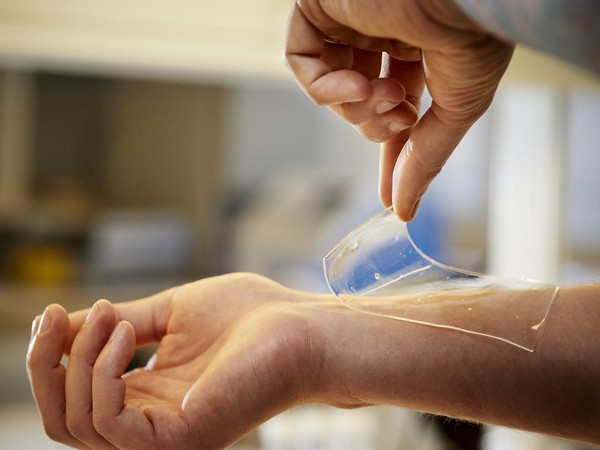

Gothenburg [Sweden], May 11 (ANI): A team of researchers at Chalmers University of Technology, Sweden, has developed a new material that prevents infections in wounds - a specially designed hydrogel, that works against all types of bacteria, including antibiotic-resistant ones.
The new material offers great hope for combating a growing global problem.
The World Health Organization describes antibiotic-resistant bacteria as one of the greatest threats to global health. To deal with the problem, there needs to be a shift in the way we use antibiotics, and new, sustainable medical technologies must be developed.
"After testing our new hydrogel on different types of bacteria, we observed a high level of effectiveness, including against those which have become resistant to antibiotics," says Martin Andersson, research leader for the study and Professor at the Department of Chemistry and Chemical Engineering at Chalmers University of Technology.
Research and development of the material has been ongoing for many years at Martin Andersson's group at Chalmers, growing in scope along the way, with a particular focus on the possibilities for wound care. Now, the important results are published as a scientific article in the journal ACS Biomaterials Science & Engineering.
The main purpose of the studies so far has been to explore new medical technology solutions to help reduce the use of systemic antibiotics. Resistant bacteria cause what is referred to as hospital-acquired infection - a life-threatening condition and is increasing in incidence worldwide.
Mimicking the natural immune system
The active substance in the new bactericidal material consists of antimicrobial peptides, small proteins which are found naturally in our immune system.
"With these types of peptides, there is a very low risk for bacteria to develop resistance against them since they only affect the outermost membrane of the bacteria. That is perhaps the foremost reason why they are so interesting to work with," says Martin Andersson.
Researchers have long tried to find ways to use these peptides in medical devices, but so far without much success. The problem is that they break down quickly when they come into contact with bodily fluids such as blood. The current study describes how the researchers managed to overcome the problem through the development of a nanostructured hydrogel, into which the peptides are permanently bound, creating a protective environment.
"The material is very promising. It is harmless to the body's own cells and gentle on the skin. In our measurements, the protective effect of the hydrogel on the antimicrobial peptides is clear - the peptides degrade much slower when they are bound to it," says Edvin Blomstrand, a doctoral student at the Department of Chemistry and Chemical Engineering at Chalmers, and one of the main authors of the article.
"We expected good results, but we were really positively surprised at quite how effective the material has proven," adds Martin Andersson.
According to the researchers, this new material is the first medical device to make successful use of antimicrobial peptides in a clinically and commercially viable manner. There are many varied and promising opportunities for clinical application.
Startup company Amferia takes the research from lab to market
In recent years, foundational research into the antimicrobial peptide hydrogel has run in parallel with the commercial development of the innovation through the spin-off company Amferia AB.
The company was founded in 2018 by Martin Andersson together with Saba Atefyekta and Anand Kumar Rajasekharan, who both defended their dissertations at Chalmers' Department of Chemistry and Chemical Engineering.
The material and the idea, which is currently developed as an antibacterial wound patch, has generated interest around the world, attracting significant investment and receiving several awards. The company is working intensively to get the material to market so that it can benefit wider society.
Before the new material can benefit hospitals and patients, clinical studies are needed, which are ongoing. A CE marking of the material is expected to be completed in 2022. Furthermore, the wound patch version of the new material is undergoing trials in veterinary care, for treating pets. The company Amferia AB is already collaborating with a number of veterinary clinics around Europe where the hydrogel is now being tested.
"Amferia has recently entered into a strategic partnership with Sweden's largest distributor of premium medical & diagnostic devices to jointly launch these wound care products for the Swedish veterinary market during 2021" says Martin Andersson.
More about antimicrobial peptides and the new material
The beneficial properties of antimicrobial peptides have been known for some decades, and thousands of different varieties occurring in the natural immune systems of humans, animals and plants have been discovered. Researchers have long tried to mimic and use their natural function to prevent and treat infections without having to use traditional antibiotics. However, because the peptides are broken down as soon as they come in contact with blood or other body fluids, successful clinical usage has proved elusive.
The researchers knew that smart new solutions were needed to protect the peptide from degradation. The new material in the study has been shown to work very well, allowing the peptides to be applied directly to wounds and injuries on the body, with the effect of both preventing and treating infection. The material is also non-toxic, so it can be used directly on the skin. The potential of this new material can also be seen in the flexibility that it offers for different types of products.
"So far, we have mainly envisioned the material as a wound care dressing, but we are working on a new study investigating the potential for a wound care spray," says Edvin Blomstrand. (ANI)




