Research finds autism develops differently in girls than boys
Washington [US], April 19 (ANI): The findings of a new study shed light on how autism spectrum disorder (ASD) manifests in the brains of girls. This prompted scientists to warn that conclusions drawn from studies conducted primarily on boys should not be assumed to hold true for girls.
ANI
Apr 19, 2021 13:34 IST


Washington [US], April 19 (ANI): The findings of a new study shed light on how autism spectrum disorder (ASD) manifests in the brains of girls. This prompted scientists to warn that conclusions drawn from studies conducted primarily on boys should not be assumed to hold true for girls.
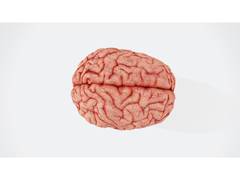
The research published in the journal Brain discovered that there is a significant difference in the genes and "genetic burden" that underpin the condition in girls and boys. They also identified specific ways the brains of girls with ASD respond differently to social cues such as facial expressions and gestures than do those of girls without ASD.
"This new study provides us with a roadmap for understanding how to better match current and future evidence-based interventions to the underlying brain and genetic profiles so that we can get the right treatment to the right individual," said lead investigator Kevin Pelphrey, PhD, a top autism expert at the University of Virginia School of Medicine and UVA's Brain Institute.
Pelphrey added, "This advances our understanding of autism broadly by revealing that there may well be different causes for boys vs. girls; this helps us understanding the heterogeneity within and across genders."
Understanding Autism-Spectrum Disorder
The new insights come from a sweeping research project, led by Pelphrey at UVA, that brings together expertise from Yale; Harvard; University of California, Los Angeles; Children's National; University of Colorado, Denver; and Seattle Children's. At UVA, key players included both Pelphrey, of the School of Medicine's Department of Neurology and the Curry School of Education and Human Development, and John D. Van Horn, PhD, of the School of Data Science and UVA's Department of Psychology.
The research combined cutting-edge brain imaging with genetic research to better understand ASD's effects in girls. Those effects have remained poorly explored because the condition is four times more common in boys.
Pelphrey and colleagues used functional magnetic resonance imaging (fMRI) to examine brain activity during social interactions. They found that autistic girls used different sections of their brains than girls who did not have ASD. And, most surprisingly, the difference between girls with and without autism was not the same as the difference in the brain seen when comparing boys with and without autism, revealing different brain mechanisms at play in autism depending on a person's gender.
Likewise, the underlying genetic contributors were quite different, the researchers found. Girls had much larger numbers of rare variants of genes active during the early development of a brain region known as the striatum. This suggests that the effects on the striatum may contribute to ASD risk in girls. (Scientists believe a section of the striatum called the putamen is involved in interpreting both social interaction and language.)
"The convergence of the brain imaging and genetic data provides us with an important new insight into the causes of autism in girls," Pelphrey said. "We hope that by working with our colleagues in UVA's Supporting Transformative Autism Research (STAR), we will be able to leverage our findings to generate new treatment strategies tailored to autistic girls." (ANI)
Get the App