Protein coat makes viruses more infectious, links them to Alzheimer's
Washington DC [USA], May 27 (ANI): A new study has found that a layer of protein forms on the viral surface when they interact with the biological fluids of their host. The coat of protein makes the virus more infectious and helps in the formation of plaques linked to Alzheimer's disease.
ANI
May 27, 2019 23:12 IST

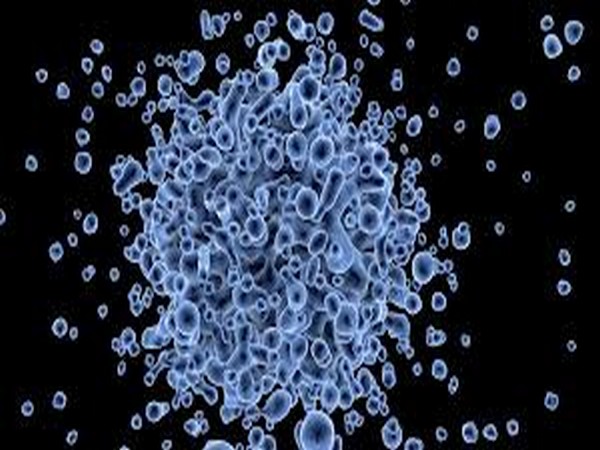
Washington DC [USA], May 27 (ANI): A new study has found that a layer of protein forms on the viral surface when they interact with the biological fluids of their host. The coat of protein makes the virus more infectious and helps in the formation of plaques linked to Alzheimer's disease.
The study was published in the journal 'Nature Communications'.
"Imagine a tennis ball falling into a bowl of milk and cereals. The ball is immediately covered by the sticky particles in the mix and they remain on the ball when you take it out of the bowl. The same thing happens when a virus gets in contact with blood or lung fluids that contain thousands of proteins. Many of these proteins immediately stick to the viral surface forming a so-called protein corona," explained Kariem Ezzat of Stockholm University and Karolinska Institutet.
Kariem Ezzat and his colleagues studied the protein corona of respiratory syncytial virus (RSV) in different biological fluids.
RSV is the most common cause of acute lower respiratory tract infections in young children worldwide, leading up to 34 million cases and 196,000 fatalities each year.
"The protein corona signature of RSV in the blood is very different from that in lung fluids. It is also different between humans and other species such as rhesus macaque monkeys, which also can be infected with RSV," said Ezzat.
"The virus remains unchanged on the genetic level. It just acquires different identities by accumulating different protein coronae on its surface depending on its environment. This makes it possible for the virus to use extracellular host factors for its benefit, and we have shown that many of these different coronae make RSV more infectious," Ezzat added.
The researchers from Stockholm University and Karolinska Institutet have also found that viruses such as RSV and herpes simplex virus type 1 (HSV-1) can bind a special class of proteins called amyloid proteins.
Amyloid proteins aggregate into plaques that play a part in Alzheimer's disease where they lead to neuronal cell death.
The mechanism behind the connection between viruses and amyloid plaques has been hard to find till now, but Kariem Ezzat and his colleagues found that HSV-1 is able to accelerate the transformation of soluble amyloid proteins into thread-like structures that constitute the amyloid plaques.
"The novel mechanisms described in our paper can have an impact not only on understanding new factors determining how infectious a virus is but also on devising new ways to design vaccines," said Ezzat.
"In addition, describing a physical mechanism that links viral and amyloid causes of disease adds weight to the increasing research interest in the role of microbes in neurodegenerative disorders such as Alzheimer's disease and opens up new avenues for treatments," the researcher added. (ANI)
Get the App