ADD ANI AS A TRUSTED SOURCE
googleads
ANI Logo
Menu
Health

People who walk slowly at 45 have older brains, bodies: Study

Washington D.C. [USA], Oct 12 (ANI): Walking slowly could be a sign to identify how quickly your brain and body are likely to age, suggests a study.

ANI Oct 12, 2019 18:49 IST googleads

'Doctors know that slow walkers in their seventies and eighties tend to die sooner than fast walkers their same age.'

Washington D.C. [USA], Oct 12 (ANI): Walking slowly could be a sign to identify how quickly your brain and body are likely to age, suggests a study.
Slower walkers were shown to have "accelerated aging" on a 19-measure scale devised by researchers, and their lungs, teeth and immune systems tended to be in worse shape than the people who walked faster.
"The thing that's really striking is that this is in 45-year-old people, not the geriatric patients who are usually assessed with such measures," said lead researcher Line JH Rasmussen, a post-doctoral researcher in the Duke University's Department of Psychology and Neuroscience.
Equally striking, neurocognitive testing that these individuals took as children could predict who would become the slower walkers.
At the age of three, their scores on IQ, understanding language, frustration tolerance, motor skills, and emotional control predicted their walking speed at age 45.
"Doctors know that slow walkers in their seventies and eighties tend to die sooner than fast walkers their same age," said senior author Terrie E Moffitt, the Nannerl O Keohane University Professor of Psychology at Duke University, and Professor of Social Development at King's College London.
"But this study covered the period from the preschool years to midlife, and found that a slow walk is a problem sign decades before old age," added Prof Moffitt.
The data come from a long-term study of nearly 1,000 people who were born during a single year in Dunedin, New Zealand, reported the study published in -- JAMA Network Open.
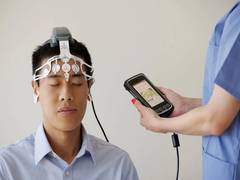
MRI examinations during their last assessment showed the slower walkers tended to have lower total brain volume, lower mean cortical thickness, less brain surface area and higher incidence of white matter "hyperintensities," small lesions associated with small vessel disease of the brain. In short, their brains appeared somewhat older.
Adding insult to injury perhaps, the slower walkers also looked older to a panel of eight screeners who assessed each participant's 'facial age' from a photograph.
Gait speed has long been used as a measure of health and aging in geriatric patients, but what's new in this study is the relative youth of these study subjects and the ability to see how walking speed matches up with health measures the study has collected during their lives.
"It's a shame we don't have gait speed and brain imaging for them as children," Rasmussen said. (The MRI was invented when they were five, but was not given to children for many years after.)
Some of the differences in health and cognition may be tied to lifestyle choices these individuals have made. But the study also suggests that there are already signs in the early life of who would become the slowest walkers, Rasmussen said.
"We may have a chance here to see who's going to do better health-wise in later life," he added. (ANI)

Get the App

What to Read Next

Health

The more you fear aging, the faster your body may age

The more you fear aging, the faster your body may age

Worrying about getting older especially fearing future health problems may actually speed up aging at the cellular level, according to new research from NYU.

Read More
Health

MRI scans show exercise can make the brain look younger

MRI scans show exercise can make the brain look younger

New research suggests that consistent aerobic exercise can help keep your brain biologically younger. Adults who exercised regularly for a year showed brains that appeared nearly a year younger than those who didn't change their habits.

Read More
Health

Scientists find hidden proteins that may drive Alzheimer's

Scientists find hidden proteins that may drive Alzheimer's

A surprising new study has uncovered over 200 misfolded proteins in the brains of aging rats with cognitive decline, beyond the infamous amyloid and tau plaques long blamed for Alzheimer's.

Read More
Health

In healthy aging, carb quality counts

In healthy aging, carb quality counts

A new study has found a link between midlife intakes of high-quality carbohydrates and dietary fibre to better health in older women.

Read More
Health

Mammal's lifespans linked to brain size: Study

Mammal's lifespans linked to brain size: Study

An international team of scientists led by the University of Bath studied evolutionary differences between mammal species and found that those with bigger brains and longer lifespans tend to invest more heavily in immune-related genes.

Read More
Health

Researchers discover the brain cells that regulate eating

Researchers discover the brain cells that regulate eating

Scientists have found specialized neurons in the brains of mice that order the animals to stop eating. Though many feeding circuits in the brain are known to play a role in monitoring food intake, scientists also believe that the neurons in those circuits do not make the final decision to cease eating a meal.

Read More
Health

Protein likely to help retain muscle mass without fat loss: Study

Protein likely to help retain muscle mass without fat loss: Study

The recent surge in popularity of weight loss drugs like Ozempic, altogether called GLP-1s, has resulted in renewed scientific interest in understanding how our bodies regulate muscle growth. In a recent study, scientists have linked the protein BCL6 to the maintenance of muscle mass and further suggested that BCL6-boosting therapeutics could help GLP-1 users retain muscle while losing fat.

Read More
Health

A study suggest a connection between diet and brain health

A study suggest a connection between diet and brain health

The scientists at the Allen Institute for Brain Science have identified the molecular changes that occur in the brains of ageing mice and located a hot spot where most damage is centralized. The cells in the area are also connected with metabolism, thus suggesting a connection between diet and brain health.

Read More
Health

Long-term benefit from anti-hormonal treatment

Long-term benefit from anti-hormonal treatment

"Younger women generally have a higher risk of recurrence than older postmenopausal women, but most studies on anti-hormonal therapy have mainly included postmenopausal women. We therefore wanted to compare the long-term benefit from the treatment in both groups," says Linda Lindstrom, associate professor and research group leader at the Department of Oncology-Pathology, Karolinska Institutet, who led the study.

Read More
Health

Low-impact yoga, exercise can help older women, here is how

Low-impact yoga, exercise can help older women, here is how

Older women suffering from urine incontinence can benefit from frequent, low-impact exercise, including yoga, stretching, and strengthening, according to a new study.

Read More
Home About Us Our Products Advertise Contact Us Terms & Condition Privacy Policy

Copyright © aninews.in | All Rights Reserved.