

ADD ANI AS A TRUSTED SOURCE
googleads
ANI Logo
Menu
Health

Oranges could help reduce obesity and risk of heart disease: Study

Ontario [Canada], Mar 4 (ANI): Everybody's favourite citrus fruit - Orange - has a lot to offer in addition to its tangy flavour and juicy pulp.

ANI Mar 04, 2020 10:11 IST googleads

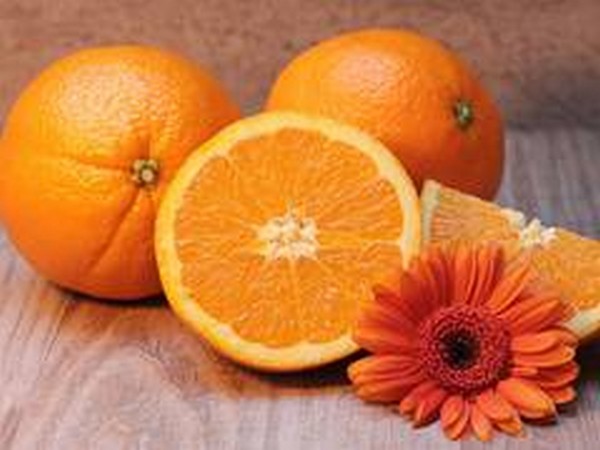
Representative image

Ontario [Canada], Mar 4 (ANI): Everybody's favourite citrus fruit - Orange - has a lot to offer in addition to its tangy flavour and juicy pulp.
A new study published in the Journal of Lipid Research suggests that the equivalent of just two and a half glasses of orange juice a day could reverse obesity and reduce the risk of heart disease and diabetes.
The study was conducted by the researchers at Western University who are currently studying a molecule found in sweet oranges and tangerines called nobiletin, which they have shown to drastically reduce obesity and reverse its negative side-effects.
But why it works remains a mystery.
New research published in the Journal of Lipid Research demonstrates that mice fed a high-fat, high-cholesterol diet, that were also given nobiletin were noticeably leaner and had reduced levels of insulin resistance and blood fats compared to mice that were fed a high-fat, high-cholesterol diet alone.
"We went on to show that we can also intervene with nobiletin. We've shown that in mice that already have all the negative symptoms of obesity, we can use nobelitin to reverse those symptoms, and even start to regress plaque build-up in the arteries, known as atherosclerosis," said a researcher Murray Huff.
But Huff says he and his team at Robarts Research Institute at Western still haven't been able to pinpoint exactly how nobiletin works.
The researchers hypothesized that the molecule was likely acting on the pathway that regulates how fat is handled in the body. Called AMP Kinase, this regulator turns on the machinery in the body that burns fats to create energy, and it also blocks the manufacture of fats.
However, when the researchers studied nobiletin's effects on mice that had been genetically modified to remove AMP Kinase, the effects were the same.
"This result told us that nobiletin is not acting on AMP Kinase, and is bypassing this major regulator of how fat is used in the body. What it still leaves us with is the question - how is nobiletin doing this?" said Huff.
Huff says while the mystery remains, this result is still clinically important because it shows that nobiletin won't interfere with other drugs that act on the AMP Kinase system. He says current therapeutics for diabetes like metformin, for example, work through this pathway.
The next step is to move these studies into humans to determine if nobiletin has the same positive metabolic effects in human trials.
"Obesity and its resulting metabolic syndromes are a huge burden to our health care system, and we have very few interventions that have been shown to work effectively," said Huff. "We need to continue this emphasis on the discovery of new therapeutics."(ANI)


Get the App

What to Read Next

Health

The truth about ‘Eating for Two’ explained by doctors

The truth about ‘Eating for Two’ explained by doctors

Health experts warn that interpreting the advice literally can lead to excessive calorie intake, unhealthy weight gain and a higher risk of Gestational Diabetes Mellitus (GDM), a condition that affects blood sugar levels during pregnancy.

Read More
Health

High-fat keto diet may boost exercise benefits

High-fat keto diet may boost exercise benefits

A new study suggests that eating more fat rather than less could help the body gain greater benefits from exercise when blood sugar levels are high, offering an unexpected perspective on how diet and physical activity work together to support metabolic health.

Read More
Health

Pre-workout supplements may cut sleep in half for young users

Pre-workout supplements may cut sleep in half for young users

A popular fitness trend among young people may be quietly undermining their sleep. A new study led by researchers at the University of Toronto has found that teenagers and young adults who use pre-workout supplements are significantly more likely to experience extremely short sleep durations.

Read More
Health

The more you fear aging, the faster your body may age

The more you fear aging, the faster your body may age

Worrying about getting older especially fearing future health problems may actually speed up aging at the cellular level, according to new research from NYU.

Read More
Health

Scientists discover reason high altitude protects against diabete

Scientists discover reason high altitude protects against diabete

Living at high altitude appears to protect against diabetes, and scientists have finally discovered the reason. When oxygen levels drop, red blood cells switch into a new metabolic mode and absorb large amounts of glucose from the blood.

Read More
Health

Scientists reveal how exercise protects brain from Alzheimer's

Scientists reveal how exercise protects brain from Alzheimer's

Exercise may sharpen the mind by repairing the brain's protective shield. Researchers found that physical activity prompts the liver to release an enzyme that removes a harmful protein, causing the blood-brain barrier to become leaky with age.

Read More
Health

MRI scans show exercise can make the brain look younger

MRI scans show exercise can make the brain look younger

New research suggests that consistent aerobic exercise can help keep your brain biologically younger. Adults who exercised regularly for a year showed brains that appeared nearly a year younger than those who didn't change their habits.

Read More
Health

Swedish study reveals when fitness and strength begin to fade

Swedish study reveals when fitness and strength begin to fade

A long-running Swedish study has followed adults for nearly five decades, uncovering when physical decline truly begins. Fitness and strength start slipping around age 35, then worsen gradually with age.

Read More
Health

Memory loss can suddenly speed up with age: Study

Memory loss can suddenly speed up with age: Study

A massive international brain study has revealed that memory decline with age isn't driven by a single brain region or gene, but by widespread structural changes across the brain that build up over time.

Read More
Health

Injection turns sleeping tumour immune cells into cancer fighters

Injection turns sleeping tumour immune cells into cancer fighters

The Korea Advanced Institute of Science and Technology (KAIST) researchers have developed a way to reprogram immune cells already inside tumours into cancer-killing machines.

Read More
Home About Us Our Products Advertise Contact Us Terms & Condition Privacy Policy

Copyright © aninews.in | All Rights Reserved.


