

ADD ANI AS A TRUSTED SOURCE
googleads
ANI Logo
Menu
Health

Newly-discovered virus has ability to kill resistant bacteria

A Danish creek has surprised researchers with the presence of previously unknown virus species.

ANI Feb 17, 2023 22:51 IST googleads

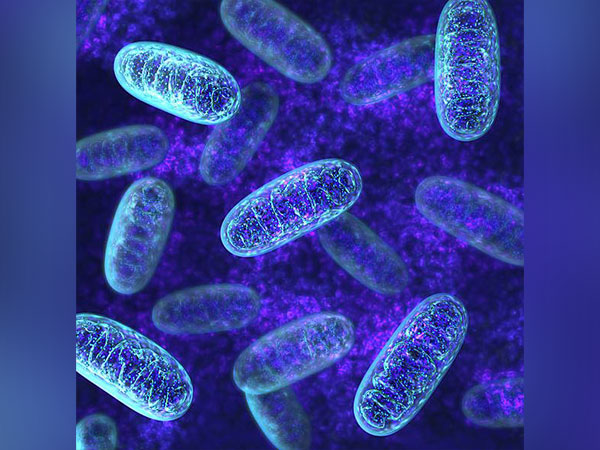
Representative Image

Copenhagen [Denmark], February 17 (ANI): A Danish creek has surprised researchers with the presence of previously unknown virus species.
The Danish creeks, Odense A and Lindved A have surprised researchers and students at SDU with previously unknown virus species.
"We have found five new species that we believe are unknown to science," said associate professor Clare Kirkpatrick, who studies bacterial stress response at the Department of Biochemistry and Molecular Biology at the University of Southern Denmark.
The somewhat surprising discovery was made during the coronavirus pandemic when some of Kirkpatrick's students could not carry out their normal microbe studies in the laboratory and therefore went on field trips to local creeks to see if they had any interesting microbes to offer.
The fact that viruses exist in nature is not surprising, as they are the world's most widespread organism. They are everywhere and part of all kinds of microbial cycles and ecosystems, but the fact that five potentially new species have appeared in local creeks, did surprise Clare Kirkpatrick.
While four of the five have not yet had their genome mapped in a genome sequencing, one species has now been fully sequenced, scientifically described, named and published in Microbiology Resource Announcements. The name is Fyn8.
Many viruses are so-called bacteriophages (or phages), meaning that they kill bacteria, and Fyn8 is no exception. It can attack and kill the bacteria Pseudomonas aeruginosa.
Pseudomonas aeruginosa is a bacterium found naturally in soil and water. It is normally harmless towards healthy people, but like many other bacteria, it has developed resistance to antibiotics and is found in hospitals.
For example, patients with wounds (like burn patients) and ventilator patients are at risk of getting an infection that cannot be fought with antibiotics.
The researchers have no doubt that Fyn8 can effectively kill Pseudomonas aeruginosa:
"We could see it with the naked eye: Clear holes appeared in the layer of Pseudomonas aeruginosa bacteria in our Petri dishes, where Fyn8 had infected the bacterial cells, killed them, multiplied and proceeded to attack the next."
Considering that the world is facing a resistance crisis, where more people will die from infection with resistant bacteria than from cancer, the new finding is of course interesting and raises the question; Can phages help us in the fight against resistant bacteria?
Research in this field has been uncommon until recently, both in academic research institutions and pharmaceutical companies. In the past and in other parts of the world, however, there has been some research, and phages have also been used to treat infections in Eastern European countries in particular.
The phages were discovered at the beginning of the 20th century by researchers who had their bacterial cultures destroyed by virus infections.
The benefits of that discovery were obvious, but antibiotics, not phages, became the most widespread cure against bacterial infections.
One reason was perhaps that antibiotics were easy to produce and easy to use, while the phages were difficult to isolate and give to patients.
Another reason was probably also that an antibiotic dose could kill many different bacteria, while a phage only matches a single bacterial species.
"But today it is relatively easy to make precision medicine for the individual patient. First, you find out what exact bacteria a patient is infected with -- and then you can treat the patient with exactly the phage that will kill the bacteria," explained Clare Kirkpatrick.
She adds that this strategy works even on bacteria which are resistant to all known antibiotics.
Time will tell whether there are more new virus species in the local creeks near the University of Southern Denmark campus, but it is quite probable, Clare Kirkpatrick believes. (ANI)


Get the App

What to Read Next

Health

The truth about ‘Eating for Two’ explained by doctors

The truth about ‘Eating for Two’ explained by doctors

Health experts warn that interpreting the advice literally can lead to excessive calorie intake, unhealthy weight gain and a higher risk of Gestational Diabetes Mellitus (GDM), a condition that affects blood sugar levels during pregnancy.

Read More
Health

High-fat keto diet may boost exercise benefits

High-fat keto diet may boost exercise benefits

A new study suggests that eating more fat rather than less could help the body gain greater benefits from exercise when blood sugar levels are high, offering an unexpected perspective on how diet and physical activity work together to support metabolic health.

Read More
Health

Pre-workout supplements may cut sleep in half for young users

Pre-workout supplements may cut sleep in half for young users

A popular fitness trend among young people may be quietly undermining their sleep. A new study led by researchers at the University of Toronto has found that teenagers and young adults who use pre-workout supplements are significantly more likely to experience extremely short sleep durations.

Read More
Health

The more you fear aging, the faster your body may age

The more you fear aging, the faster your body may age

Worrying about getting older especially fearing future health problems may actually speed up aging at the cellular level, according to new research from NYU.

Read More
Health

Scientists discover reason high altitude protects against diabete

Scientists discover reason high altitude protects against diabete

Living at high altitude appears to protect against diabetes, and scientists have finally discovered the reason. When oxygen levels drop, red blood cells switch into a new metabolic mode and absorb large amounts of glucose from the blood.

Read More
Health

Scientists find clue to human brain evolution in finger length

Scientists find clue to human brain evolution in finger length

Human evolution has long been tied to growing brain size, and new research suggests prenatal hormones may have played a surprising role. By studying the relative lengths of the index and ring fingers, a marker of prenatal exposure to oestrogen and testosterone, researchers found that higher prenatal oestrogen exposure was associated with larger head size in newborn boys.

Read More
Health

MRI scans show exercise can make the brain look younger

MRI scans show exercise can make the brain look younger

New research suggests that consistent aerobic exercise can help keep your brain biologically younger. Adults who exercised regularly for a year showed brains that appeared nearly a year younger than those who didn't change their habits.

Read More
Health

Scientists find hidden synapse hotspots in the teen brain: Study

Scientists find hidden synapse hotspots in the teen brain: Study

The scientists have discovered that the adolescent brain does more than prune old connections. During the teen years, it actively builds dense new clusters of synapses in specific parts of neurons.

Read More
Health

Memory loss can suddenly speed up with age: Study

Memory loss can suddenly speed up with age: Study

A massive international brain study has revealed that memory decline with age isn't driven by a single brain region or gene, but by widespread structural changes across the brain that build up over time.

Read More
Health

High-fat diets give liver cancer a dangerous head start: Study

High-fat diets give liver cancer a dangerous head start: Study

A high-fat diet does more than overload the liver with fat. New research from MIT shows that prolonged exposure to fatty foods can push liver cells into a survival mode that quietly raises the risk of cancer.

Read More
Home About Us Our Products Advertise Contact Us Terms & Condition Privacy Policy

Copyright © aninews.in | All Rights Reserved.


