New biosealant therapy might help stabilize injury caused by cartilage breakdown
Pennsylvania [US], April 11 (ANI): The findings of a recent animal-based study suggests that a new biosealant therapy may help to stabilize injuries that cause the cartilage to break down, paving the way for a future fix, or even better, begin working right away with new cells to enhance healing.
ANI
Apr 11, 2021 09:11 IST

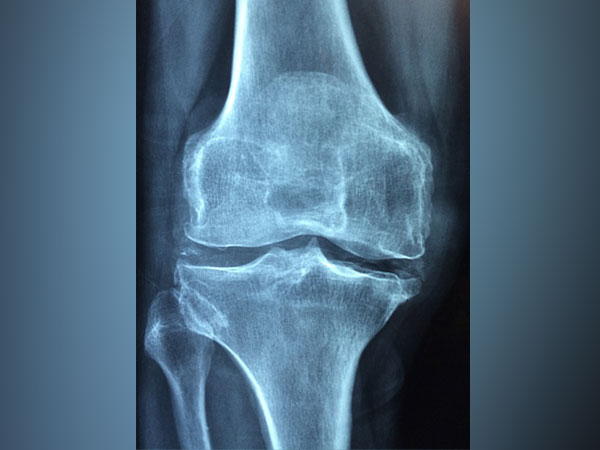
Pennsylvania [US], April 11 (ANI): The findings of a recent animal-based study suggests that a new biosealant therapy may help to stabilize injuries that cause the cartilage to break down, paving the way for a future fix, or even better, begin working right away with new cells to enhance healing.
The study by researchers at the Perelman School of Medicine at the University of Pennsylvania was published in Advanced Healthcare Materials.
"Our research shows that using our hyaluronic acid hydrogel system at least temporarily stops cartilage degeneration that commonly occurs after injury and causes pain in joints," said the study's senior author, Robert Mauck, PhD, a professor of Orthopaedic Surgery and the director of Penn Medicine's McKay Orthopaedic Research Laboratory. "In addition to pausing cartilage breakdown, we think that applying this therapy can present a surface that is 'sticky' for cells, such as stem cells that are routinely injected into joints to counteract injury. This reinforcing hydrogel could actually synergize with those cells to create a long-term solution."
Articular cartilage is the tissue that covers the ends of bones at joints. It keeps bones from painfully grinding together, and its density and resilience allow it to undergo a lot of forces amid human movement.
Unfortunately, this routine yet complex stresses cause the cartilage to wear down easily - particularly amid some form of injury - and is hard to replace or regrow. This means that it is especially important to keep the remaining cartilage strong and stable.
To that end, Mauck, study lead author Jay Patel, PhD, a former post-doctoral fellow in the McKay Lab and now an assistant professor at Emory University, and their team developed a therapy to use a modified version of hyaluronic acid - a substance naturally produced by the body's connective tissue - that could be introduced to the injured cartilage site. They recognized that this therapy needed to follow a twofold key to preserving cartilage: reinforcement and sealing.
"We often relate this combined approach to treating a damaged deck in your backyard," Patel said. "To fortify the existing wood structure, you need something like a wood hardener, then you can apply a wood sealer to prevent future wear. In the same way, we applied a substance that seeps into the pores of the tissue and provides reinforcement, then 'sealed' it by guiding the behavior of injected stem cells towards forming a layer that caps the whole structure."
In a large animal model, the researchers introduced the biogel to damaged cartilage, showing that it intertwined with the cartilage's matrix structure to stabilize the cartilage. They also demonstrated that it was retained for at least one week in the joint environment. When living cartilage was tested in the lab, the researchers found that applying the hyaluronic acid biogel restored regular activity to chondrocytes, the cells within cartilage tissue. This meant that the microenvironment around the cells was now being reinforced.
Once reinforced, the researchers shifted to sealing the cartilage, so that further tissue loss at the injury site didn't erode the cartilage's structure. To that end, the team combined the hyaluronic acid hydrogel system with an injection of mesenchymal stem/stromal cells, to promote the formation of a thin "living" barrier on the cartilage surface to protect it from further wear.
When the researchers compared models that received the treatment to ones that did not, the treatment models displayed a thicker layer of protective tissue that could protect the cartilage's structure and preserve function.
"We've shown that this is an innovative technology and methodology for potentially addressing the complexities of treating damaged cartilage tissue that traditionally has made it so difficult," said Patel. "Next, we hope to translate this technology to more large animal studies and to the clinic in the near future."
These findings led to a translational grant from Penn Health Tech, the interdisciplinary center that combines teams from Penn Medicine and Penn Engineering to create new medical technology. Further, the technology is at the heart of a new company (Forsagen LLC) spun out of Penn with support from the Penn Center for Innovation (PCI) Ventures Program, which will attempt to spearhead the system's entry into the clinic.
It is co-founded by both Mauck and Patel, along with study co-author Jason Burdick, a professor of Bioengineering at Penn, and Ana Peredo, a PhD student in Bioengineering. (ANI)
Get the App