

ADD ANI AS A TRUSTED SOURCE
googleads
ANI Logo
Menu
Health

Microbiome discovery may aid treatments for gastrointestinal diseases: Study

Ottawa [Canada], November 15 (ANI): Researchers probing the gut have for the first time discovered specific factors in its workings that in the future may help improve treatment for patients facing the gastrointestinal disease.

ANI Nov 15, 2021 15:35 IST googleads

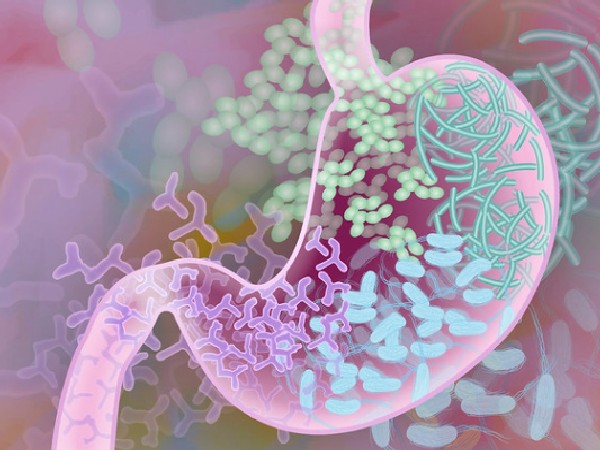
Representative image

Ottawa [Canada], November 15 (ANI): Researchers probing the gut have for the first time discovered specific factors in its workings that in the future may help improve treatment for patients facing the gastrointestinal disease.
The findings of the study were published in the journal 'Microbiome'.
The findings from Snyder Institute for Chronic Diseases researchers immediately improve the understanding of factors that help regulate the enteric nervous system, the system of nerves that control the gastrointestinal tract.
Researchers can now explore novel ways to treat gastrointestinal disorders using approaches based on these new findings, though the transition to treatment is likely years away.
The study's findings may impact future treatments for gastrointestinal diseases and disorders such as irritable bowel syndrome, inflammatory bowel disease and slow transit constipation, among others.
"We have uncovered microbial factors that help regulate the function and structural integrity of the enteric nervous system," said Dr Keith Sharkey, PhD, a professor in the Cumming School of Medicine's Department of Physiology and Pharmacology.
He is also a member of the Snyder Institute and the Hotchkiss Brain Institute. Sharkey is a senior author of the study and made the discovery with a research team from UCalgary and the University of Colorado.
"These and other gastrointestinal diseases with manifested changes in enteric neural control are all hard to treat. Our findings could impact approaches to their treatment," said Sharkey.
"Be aware, though, that there is a big jump from mice to men. In other words, translating our findings will be important, and our results are only at the starting point of this journey," added Sharkey.
The study examined the effects of microbiome depletion and restoration in animal models using approaches that cause structural and functional changes in the gut. The researchers discovered that while microbiome depletion caused a loss of neurons, natural microbiome recovery restored gut function and promoted the growth of new neurons.
"The findings from our work provide clues as to the mechanisms that control 'plasticity' or the ability of the gut nervous system to be repaired if it undergoes damage," said Sharkey.
Dr Fernando Vicentini, PhD, first author of the study, said, "The most challenging aspect of researching the unknown physiological roles of the intestinal microbiota lies in identifying specific microbial-derived molecules that may affect the host, as there is a myriad of molecules with the potential to do so."
He added that after many discussions and brainstorming sessions with the research team, they were able to hypothesize and demonstrate a link for two different bacterial molecules involved in the regulation of neuronal integrity.
For Dr Simon Hirota, PhD, the study's co-senior author, in addition to the thrill of discovery, this research was exciting in that it allowed him to collaborate with a great team of people who contributed the complementary expertise needed to test these novel hypotheses.
The research was funded in part by the Canadian Institutes of Health Research, Canada's federal funding agency for health research.
The next steps for Sharkey and the research team include exploring other potential microbial factors and their role in the neural control of the gut.
"There is a rising awareness among the public through discussions in social media, on the internet and even through the promotion of products such as yoghurts that contain probiotics, that the gut microbiome plays a vital role in health as well as disease. These conversations are making their way into physicians' offices," said Sharkey.
"As our understanding increases regarding the role the gut microbiome plays in gut health, I think we will ultimately have new ways to diagnose and treat gastrointestinal diseases on an individual level," added Sharkey. (ANI)


Get the App

What to Read Next

Health

The truth about ‘Eating for Two’ explained by doctors

The truth about ‘Eating for Two’ explained by doctors

Health experts warn that interpreting the advice literally can lead to excessive calorie intake, unhealthy weight gain and a higher risk of Gestational Diabetes Mellitus (GDM), a condition that affects blood sugar levels during pregnancy.

Read More
Health

High-fat keto diet may boost exercise benefits

High-fat keto diet may boost exercise benefits

A new study suggests that eating more fat rather than less could help the body gain greater benefits from exercise when blood sugar levels are high, offering an unexpected perspective on how diet and physical activity work together to support metabolic health.

Read More
Health

Pre-workout supplements may cut sleep in half for young users

Pre-workout supplements may cut sleep in half for young users

A popular fitness trend among young people may be quietly undermining their sleep. A new study led by researchers at the University of Toronto has found that teenagers and young adults who use pre-workout supplements are significantly more likely to experience extremely short sleep durations.

Read More
Health

The more you fear aging, the faster your body may age

The more you fear aging, the faster your body may age

Worrying about getting older especially fearing future health problems may actually speed up aging at the cellular level, according to new research from NYU.

Read More
Health

Scientists reveal how exercise protects brain from Alzheimer's

Scientists reveal how exercise protects brain from Alzheimer's

Exercise may sharpen the mind by repairing the brain's protective shield. Researchers found that physical activity prompts the liver to release an enzyme that removes a harmful protein, causing the blood-brain barrier to become leaky with age.

Read More
Health

MRI scans show exercise can make the brain look younger

MRI scans show exercise can make the brain look younger

New research suggests that consistent aerobic exercise can help keep your brain biologically younger. Adults who exercised regularly for a year showed brains that appeared nearly a year younger than those who didn't change their habits.

Read More
Health

Swedish study reveals when fitness and strength begin to fade

Swedish study reveals when fitness and strength begin to fade

A long-running Swedish study has followed adults for nearly five decades, uncovering when physical decline truly begins. Fitness and strength start slipping around age 35, then worsen gradually with age.

Read More
Health

Memory loss can suddenly speed up with age: Study

Memory loss can suddenly speed up with age: Study

A massive international brain study has revealed that memory decline with age isn't driven by a single brain region or gene, but by widespread structural changes across the brain that build up over time.

Read More
Health

Injection turns sleeping tumour immune cells into cancer fighters

Injection turns sleeping tumour immune cells into cancer fighters

The Korea Advanced Institute of Science and Technology (KAIST) researchers have developed a way to reprogram immune cells already inside tumours into cancer-killing machines.

Read More
Health

Eating more vitamin C can physically change your skin

Eating more vitamin C can physically change your skin

Scientists discovered that vitamin C from food travels through the bloodstream into every layer of the skin, boosting collagen and skin renewal.

Read More
Home About Us Our Products Advertise Contact Us Terms & Condition Privacy Policy

Copyright © aninews.in | All Rights Reserved.
