Lung cancer screening helps to increase survival rate of cancer patients
Researchers found lung cancer screenings useful to increase survival rate of cancer patients. Early-stage lung cancer is detected by low-dose computed tomography (CT) screening.
ANI
Nov 22, 2022 18:35 IST

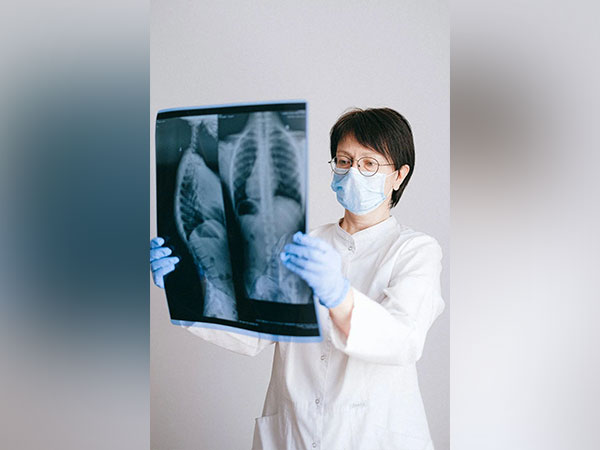
New York [US], November 22 (ANI): Over a 20-year period, the survival rate of cancer patients is significantly increased when early-stage lung cancer is detected by low-dose computed tomography (CT) screening.
According to a large-scale international study being presented by Mount Sinai researchers at the annual meeting of the Radiological Society of North America.
The results show that patients diagnosed with lung cancer at an early stage via CT screening have a 20-year survival rate of 80 percent. The average five-year survival rate for all lung cancer patients is 18.6 percent because only 16 percent of lung cancers are diagnosed at an early stage. More than half of people with lung cancer die within one year of being diagnosed, making it the leading cause of cancer deaths. By the time symptoms appear, it is often too late.
The findings are the latest to demonstrate the importance of routine and early screening in detecting cancers when they are small enough to be cured by surgical removal. Unfortunately, fewer than 6 percent of the people eligible for screening get it.
"While screening doesn't prevent cancers from occurring, it is an important tool in identifying lung cancers in their early stage when they can be surgically removed," said the study's lead author, Claudia Henschke, PhD, MD, Professor of Diagnostic, Molecular and Interventional Radiology and Director of the Early Lung and Cardiac Action Program at the Icahn School of Medicine at Mount Sinai in New York. "Ultimately, anyone interested in being screened needs to know that if they are unfortunate enough to develop lung cancer, it can be cured if found early."
While treatments of more advanced cancers with targeted therapy and immunotherapy have come a long way, the best tool against lung cancer deaths is early diagnosis through low-dose CT screening before symptoms occur, according to the study authors.
"Symptoms occur mainly in late-stage lung cancer," Dr. Henschke said. "Thus, the best way to find early-stage lung cancer is by enrolling in an annual screening program."
The U.S. Preventive Services Task Force recommends annual lung cancer screening with low-dose CT in adults aged 50 to 80 years who have a 20 pack-year smoking history, which equals at least a pack a day for 20 years, and who currently smoke or have quit within the past 15 years.
The study tracked the 20-year survival rate of 1,285 patients who were screened in the International Early Lung Cancer Action Program (I-ELCAP) and who were later diagnosed with early-stage lung cancer. While the overall survival of the participants was 80 percent, the survival rate for the 139 participants with nonsolid cancerous lung nodules and the 155 participants with nodules that had a partly solid consistency was 100 percent. For the 991 participants with solid nodules, the survival rate was 73 percent. For participants with Stage 1A cancers that measured 10 mm or less, the 20-year survival rate was 92 percent.
Dr. Henschke and colleagues have been studying the effectiveness of cancer detection with low-dose CT screening for years. The efforts of the researchers to advance CT screening for early lung disease led to the creation of the I-ELCAP. Started in 1992, this multi-institution, multi-national research program has enrolled more than 87,000 participants from over 80 institutions.
In 2006, the researchers identified a 10-year survival rate of 80 percent for the patients whose cancer was identified by CT screening. For this study, they looked at 20-year survival rates.
"What we present here is the 20-year follow-up on participants in our screening program who were diagnosed with lung cancer and subsequently treated," Dr. Henschke said. "The key finding is that even after this long a time interval they are not dying of their lung cancer. And even if new lung cancers were found over time, as long as they continued with annual screening, they would be OK." (ANI)
Tags:
Get the App