 हिंदी खबर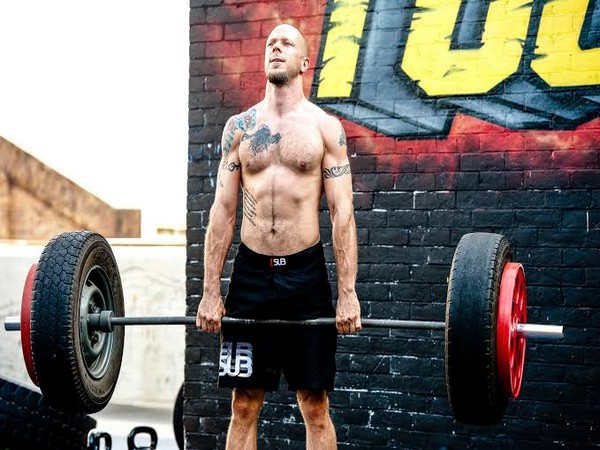

London [UK], Feb 1 (ANI): According to new research, weightlifters can get stronger by lifting less but changing the amount of weights that they lift in each session.
Scientists from the University of Lincoln conducted the study by comparing average weights, that two groups of weightlifters lift for a period of six weeks. One of the groups lifted with the traditional training method if 'one-rep max' and the other one being through load velocity profile where weights were tailored in a way that they lifted less or more in every session.
In the study that was published in the Journal of Strength and Conditioning Research found out that the group that used the load velocity profile were stronger despite lifting less.
After the study, researchers established one rep max in two groups and then used a linear positional transducer which is a specialised stopwatch and tape measure for recording the length of time that it took to lift the weight and also the distance that the weight moved to establish velocity measurement in one of the groups.
This when couples with one rep max led to establishment of load velocity profile of the weightlifter.
At every session, the group doing the load velocity completed a warm-up that consisted of a series of repetitions where the load of the weight was increased and the velocity measurement was taken. Each of the reps were recorded and compared with their pre-established load-velocity profile.
This comparison further enabled the participants training load to get adjusted on the basis of their performance on the day and if the athlete was moving the same load at a faster velocity the weight lifted by him was increased. In case they were lifting slower then the weight load would be reduced.
These findings thus can be used to improve the muscular power and strength, and have positive implications for managing fatigue during resistance training.
"The velocity-based training enabled us to see if they were up or down on their normal performance and thus adjust the load accordingly. It's about making sure the athlete is lifting the optimal load for them. If you lift too little then you won't stimulate the body as you intend to; but if you lift too much you'll be fatigued, which increases the risk of injury," said the lead researcher, Dr Harry Dorrell.
"This fatigue won't necessarily happen immediately, either. You could lift too much regularly, and three weeks down the line this will catch up with you and you'll find that the muscles are too fatigued to manage what you believe should be in your ability," added Dorrell.
Sixteen men from the age group 18 to 29 years, having body masses ranging from 70kg to 120kg having at least two years of experience in weight training, took part in the trial which included two training sessions a week over a course of six weeks.
They performed a back squat, bench press, strict overhead press, and conventional deadlift, and the results at the start and end of the six weeks training were recorded.
Researchers also recorded the athlete's countermovement jump, a term used to describe the explosive lower-body power and found that only the velocity groups had improved.
Those who used the velocity-based training method could lift an average of 15kg more on the back squat as compared to the time they started, rising from 147kg to 162kg, despite their training loads being an average of nine per cent less at each session.
They lifted six per cent less on the bench press per session but could take on an extra 8kg by the final session, the overhead press saw a 4kg increase in the one rep max despite lifting six per cent less during training, and the deadlift rose from 176kg to 188kg even with an average decrease of two per cent on their training loads.
"While some of these changes could be considered as only "small improvements" and were similar to the group using the traditional training method, the velocity group lifted significantly less in order to see the gains they made," said Dr Dorrell.
"The idea of velocity-based training has been around for a while, but until now there hasn't been any science to prove that it actually works; the science has finally caught up," added Dorrell. (ANI)
Lifting less can make you stronger, suggests study
ANI | Updated: Feb 01, 2020 09:13 IST




